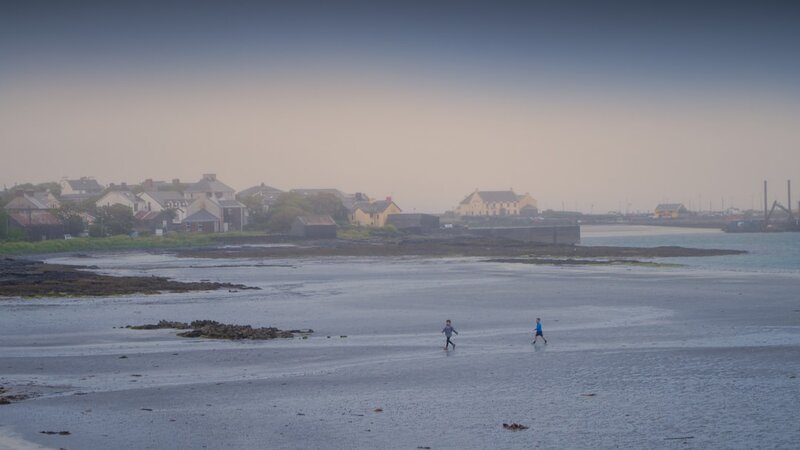
There is something about the sea that soothes. Whether it is the rhythmic sound of waves, the salt-tinged air, or simply the wide-open horizon, most of us feel better near the coast. If you are over 50 and living in Ireland — a country blessed with over 7,500 kilometres of coastline — you have one of the finest natural health resources in the world right on your doorstep.
But this is not just a feeling. A growing body of research now confirms what coastal communities have long known: spending time near the sea is genuinely good for your physical and mental health, particularly as you age.
TL;DR
- Research from the EU-funded BlueHealth project confirms that living near or visiting the coast is linked to better mental health, lower stress, and increased physical activity — benefits that become more important after 50.
- Coastal walking is one of the most accessible and joint-friendly forms of exercise for older adults, with Ireland’s coastline offering thousands of kilometres of waymarked trails.
- Sea swimming and cold-water immersion are increasingly popular among Irish adults over 50, with evidence supporting benefits for mood, circulation, and inflammation — though safety precautions are essential.
- Ireland’s growing network of accessible beaches (including beach wheelchairs through Beach Wheelchairs Ireland) means coastal health is available to people of all mobility levels.
- Resources like Críonna Health, the Irish Heart Foundation, and local sports partnerships can help you get started safely with coastal activities at any age.
What Is ‘Blue Health’ and Why Does It Matter After 50?
The term blue health refers to the health and wellbeing benefits associated with being near, in, or on water — particularly the sea. The concept gained significant scientific backing through the BlueHealth project, a major EU-funded research initiative involving 18 countries, which found consistent links between proximity to coastal and freshwater environments and improved mental health outcomes.
For people over 50, these findings are particularly relevant. As we age, we face increased risk of social isolation, reduced physical activity, and conditions like depression and anxiety. Blue spaces offer a low-cost, accessible, and enjoyable way to address all three.
Dr Mathew White, a leading researcher in blue health at the University of Exeter, notes that even two hours per week spent in natural environments — including coastlines — is associated with meaningfully better health and wellbeing. That is a strikingly achievable goal, especially in a country like Ireland where few of us live more than an hour from the coast.
Coastal Walking: Gentle Exercise With Big Returns
Walking along the coast is one of the simplest and most rewarding forms of physical activity for older adults. The uneven but manageable terrain of a sandy beach provides a gentle challenge for balance and proprioception — two things that become increasingly important for falls prevention after 50. Walking on sand also engages more muscle groups than flat pavement, burning roughly 20–50% more energy for the same distance.
Ireland’s coastline is rich with opportunities:
- The Wild Atlantic Way stretches over 2,500 km along the western seaboard, with many sections suitable for shorter, accessible walks.
- Slí na Sláinte (Path to Health) routes, developed by the Irish Heart Foundation, include several coastal trails marked with distance indicators — ideal for building up fitness gradually.
- Local Sports Partnerships (LSPs) in coastal counties like Donegal, Galway, Kerry, and Cork regularly organise guided coastal walks for older adults, often free of charge.
- The East Coast Trail Wicklow and Causeway Coast Way in Northern Ireland offer spectacular routes for those on the eastern and northern coasts.
If mobility is a concern, many Irish beaches now have improved accessibility. Beach Wheelchairs Ireland provides free all-terrain beach wheelchairs at locations across the country, ensuring that everyone can enjoy the coastline regardless of physical ability.
Sea Swimming: Ireland’s Growing Wellness Movement
Open-water swimming has seen an extraordinary surge in popularity in Ireland, particularly among adults over 40. From the Forty Foot in Dublin to Ladies’ Beach in Galway, from Myrtleville in Cork to Rossnowlagh in Donegal, groups of regular sea swimmers gather daily — and many of them will tell you it has transformed their health.
The science is catching up with the anecdote. Research published in the British Medical Journal Open and the International Journal of Environmental Research and Public Health suggests that regular cold-water swimming may:
- Improve mood and reduce symptoms of depression — cold-water immersion triggers the release of endorphins and noradrenaline, sometimes called a ‘natural high’.
- Reduce chronic inflammation — cold exposure has been linked to lower levels of inflammatory markers, which is relevant to conditions like arthritis and cardiovascular disease.
- Boost circulation — the body’s response to cold water improves vascular function over time.
- Strengthen the immune system — regular swimmers report fewer colds and infections, though more research is needed in older populations.
A Word of Caution
Sea swimming is not without risk, especially for older adults. Cold-water shock, hypothermia, and cardiac events are real dangers. If you are considering taking it up:
- Speak to your GP first, particularly if you have a heart condition, high blood pressure, or take medications that affect circulation.
- Never swim alone. Join a local group — they know the tides, currents, and safe entry points.
- Enter gradually. Acclimatise over weeks, not days. Start with a quick dip and build up slowly.
- Wear a brightly coloured swim cap and consider a tow float for visibility.
- Check Water Safety Ireland (watersafety.ie) for beach safety information and lifeguard schedules.
The Mental Health Benefits of the Coast
Beyond physical activity, there is something uniquely restorative about coastal environments. Psychologists describe the sea as a source of ‘soft fascination’ — it holds our attention gently, without demanding effort, allowing the mind to rest and recover from the mental fatigue of daily life.
For older adults dealing with bereavement, retirement adjustment, or the stress of caring for a loved one, time by the sea can be a form of natural therapy. Research from TILDA (The Irish Longitudinal Study on Ageing) has consistently highlighted the link between access to green and blue spaces and better mental health outcomes among adults over 50 in Ireland.
You do not need to swim or even walk far. Simply sitting on a bench overlooking the sea, listening to the waves, or watching the light change across the water has measurable effects on stress hormones and emotional wellbeing.
Practical Ways to Bring More Coastal Time Into Your Life
Making the most of Ireland’s coast does not require major lifestyle changes. Here are some practical starting points:
- Start with a weekly coastal visit. Even once a week adds up — aim for that two-hour-per-week threshold that research supports.
- Join a local walking group. Many Active Retirement Ireland branches and Age & Opportunity Go for Life programmes include coastal walks in their schedules.
- Try beachcombing or rockpooling. These gentle activities combine light movement with the cognitive stimulation of observation and identification — excellent for brain health.
- Take up coastal photography or sketching. Creative engagement with natural landscapes has been shown to enhance wellbeing beyond simple exposure.
- Use the Free Travel Pass (available to over-66s and some others) to reach coastal towns by bus or rail at no cost.
- Explore accessible beaches. Visit beachwheelchairs.ie for locations and booking information across Ireland.
Irish Supports and Resources
Ireland is increasingly recognising the health value of its coastal environments. Several resources can help you get started:
- Get Ireland Walking (getirelandwalking.ie) — lists walking groups and trails, including coastal routes, searchable by county.
- Swim Ireland (swimireland.ie) — provides open-water swimming resources and links to clubs welcoming older members.
- Water Safety Ireland (watersafety.ie) — beach safety information, risk assessments, and the Ring of Kerry lifeguard schedule.
- Local Sports Partnerships — contact your county LSP for guided coastal activities designed for older adults.
- HSE CDM Programme — if you have a chronic condition, your GP can support you in building coastal activity into your health plan under the Chronic Disease Management Programme.
- Fáilte Ireland — provides accessibility information for beaches and coastal attractions.
At Críonna Health, we believe that healthy ageing is about finding joy in movement, connection, and the natural world around us. Ireland’s coastline is one of our greatest — and most underused — health assets. Whether you are a seasoned sea swimmer or someone who simply enjoys watching the waves from a warm coat and a bench, the sea has something to offer your health at every stage of life.
Getting Started Safely
If you have not been active recently or have existing health conditions, have a conversation with your GP before starting any new physical activity by the coast. Ask about:
- Whether sea swimming is suitable for you, given your current medications and health status.
- Any specific precautions you should take for walking on uneven terrain.
- Whether a referral to a physiotherapist or occupational therapist might help you prepare.
The coast is not going anywhere — there is no rush. Start gently, build gradually, and enjoy every moment of it.
📷 Photo by Gunnar Ridderström on Unsplash