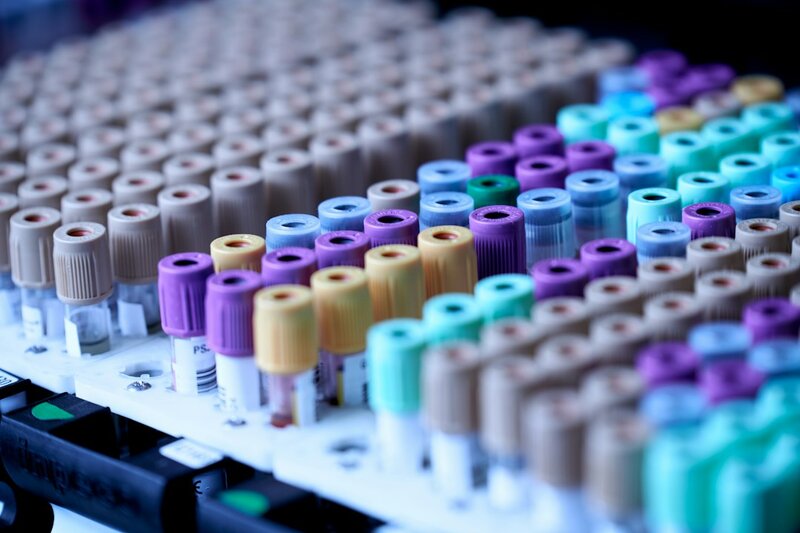
A man in his late fifties goes looking for an explanation. He is tired in a way that sleep does not fix, the gym has stopped giving back what it used to, and his interest in sex has quietly drifted off somewhere he cannot follow. Between the third advert and the second podcast, a word arrives: testosterone. One morning blood draw later there is a figure on a page, the figure sits at the low end of a reference range, and from there it is a very short walk to a prescription.
The walk is too short. Not because low testosterone is imaginary, and not because treating it is wrong when it is genuinely there. It is too short because the single number that the whole thing gets hung on is the least reliable part of the process, and the Irish product label for the gel men are being handed says so, in plain language, in a document anyone can download for free.
TL;DR
- The Irish label for testosterone gel requires deficiency to be confirmed by two separate blood testosterone measurements, states that there is no consensus on age-specific reference values, and says all of a man’s tests should be run by the same laboratory. One result from one lab is not a diagnosis.
- The large European study that defined late-onset hypogonadism found that only three sexual symptoms clustered with low testosterone. Fatigue and low mood, the symptoms most men actually present with, did not form part of the syndrome.
- A 2026 Swedish study measured the same men on two different immunoassays and got systematically different testosterone concentrations, which shifted how many men counted as biochemically hypogonadal.
- TRAVERSE, the 5,246-man safety trial, found testosterone non-inferior to placebo for major cardiac events, but a higher incidence of atrial fibrillation, acute kidney injury and pulmonary embolism in the testosterone group.
- The HPRA detained 94,647 units of anabolic steroids in 2025, 12% of all illegal medicines it seized, arriving in just under 14,000 individual packages each tied to a separate purchase by a member of the public.
What “low testosterone” actually means
Testosterone does fall with age. That part is not in dispute and never has been. The disputed part is how much of what men notice in their fifties and sixties is caused by that fall, and the best attempt to answer it is still the European Male Ageing Study, published in the New England Journal of Medicine in 2010.
The researchers surveyed a random population sample of 3,369 men aged 40 to 79 across eight European centres. They took morning blood samples, measured total testosterone by mass spectrometry rather than by the cheaper immunoassays most labs use, calculated free testosterone, and then went looking for which symptoms actually travelled with a low result. They collected data on general, sexual, physical and psychological health, then split the data into separate training and validation sets so the findings had to survive being tested twice.
Several symptoms were significantly related to testosterone level: poor morning erections, low sexual desire, erectile dysfunction, inability to perform vigorous activity, depression and fatigue. But when the researchers asked which of those actually hung together as a syndrome, the answer narrowed sharply. Only the three sexual symptoms had a syndromic association with decreased testosterone. The more of those three a man had, the lower his testosterone was likely to be.
Their conclusion set the bar that most European guidance has worked from since: late-onset hypogonadism can be defined by the presence of at least three sexual symptoms together with a total testosterone below 11 nmol/L and a free testosterone below 220 pmol/L. Not one symptom. Not one of the two thresholds. All of it, together.
This matters enormously for the man who walks in tired. Fatigue and low mood were related to testosterone in the data, but they did not survive as part of the syndrome, because they are related to a great many other things as well: sleep, thyroid function, iron, depression, alcohol, and simply being fifty-eight and working too much. If tiredness is the main complaint, testosterone is one of the less likely answers, and we have written separately about how to work through persistent fatigue after 50.
One blood test is not a diagnosis
You do not have to take a blog’s word for any of this. The Summary of Product Characteristics for Testogel 50 mg transdermal gel, as authorised in Ireland and published by the Health Products Regulatory Authority on 29 January 2025, is a free PDF, and it is unusually direct.
The licensed indication reads: “testosterone replacement therapy for male hypogonadism when testosterone deficiency has been confirmed by clinical features and biochemical tests”. The warnings section goes further. The medicine “should be used only if hypogonadism has been demonstrated and if other etiology, responsible for the symptoms, has been excluded before treatment is started”. Deficiency “should be clearly demonstrated by clinical features” and “confirmed by two separate blood testosterone measurements“.
Then comes the line that ought to be printed on every clinic’s waiting room wall: “Currently, there is no consensus about age specific testosterone reference values.” The regulator licensing the drug is saying, on the label, that nobody has agreed what normal looks like at 62. And immediately after it: “Due to variability in laboratory values, all measures of testosterone for any given individual should be carried out in the same laboratory.”
Three requirements, then, before a prescription is reasonable: symptoms that fit, other causes excluded, and two measurements from the same lab. A service that offers a single test and a same-week prescription has met one of the three. Testosterone is also at its highest in the early morning and falls through the day, which is why both the trial literature and ordinary clinical practice use early morning samples. An afternoon result in a man who has not fasted tells you considerably less than the number’s three decimal places suggest.
Why the lab machine can change the answer
The same-laboratory instruction is not regulatory fussiness. A study published in Frontiers in Endocrinology in July 2026 shows exactly what it is protecting against.
Researchers analysed 657 men from the Swedish Vara-Skövde cohort who gave blood at baseline between 2002 and 2005 and again at follow-up between 2012 and 2014, and who completed the Aging Male Symptom questionnaire at the second visit. Total testosterone was measured by two different immunoassays. The concentrations at the second visit came out systematically higher, enough that the team had to recalculate the values to compare the two visits fairly. When they did, directly measured testosterone produced a lower prevalence of biochemical hypogonadism than the recalculated figures did.
Read that again from a patient’s chair. The same men, the same blood, a different machine, and a different count of who is deficient. Men who move between a GP practice, a private clinic and an online service are not being measured on one ruler. They are being measured on three, and the one that returns the lowest number is the one most likely to end in a prescription.
The Swedish study found one more thing worth carrying. In cross-section, men with low total testosterone did score higher on the sexual symptom domain, consistent with the European findings. But baseline testosterone was not associated with total symptom score ten years later. A low reading today is a poor prophet of how a man will feel in his late sixties.
Look for the cause before treating the number
Clinicians draw a line between organic hypogonadism, where the testes or the pituitary have genuinely failed, and functional hypogonadism, where the axis is being suppressed by something else that is often fixable. The distinction decides almost everything about what should happen next.
Suppressing factors that turn up constantly in men in their fifties and sixties include excess weight, particularly around the waist, obstructive sleep apnoea, long-term opioid painkillers, oral corticosteroids, heavy alcohol intake, poorly controlled diabetes, and acute illness of almost any kind. Testing during or shortly after an illness is a reliable way to generate a low number that means nothing.
A proper work-up does not stop at total testosterone. It repeats the morning sample, and it adds LH and FSH to establish whether the signal is failing at the testes or above them, along with prolactin, SHBG and a general screen that can pick up the thyroid and iron problems that produce the same complaints. Haemochromatosis is worth a particular mention in an Irish context, because this country carries one of the highest frequencies of the relevant gene variant in the world and iron overload can damage the pituitary. If a man presents with fatigue and low libido, that is a diagnosis you want excluded rather than assumed away.
Where the cause is functional, treating the cause frequently lifts the testosterone without any testosterone being prescribed. Weight loss, treating sleep apnoea and reviewing opioid doses are all slower and less satisfying than a gel. They are also the only route that addresses what is actually happening.
What the biggest safety trial found
For a decade the honest answer about testosterone and the heart was that nobody knew. TRAVERSE, published in the New England Journal of Medicine in 2023, was built to settle it.
The trial enrolled 5,246 men aged 45 to 80 who had existing cardiovascular disease or a high risk of it, who reported symptoms of hypogonadism, and who had two fasting testosterone levels below 300 ng/dL. Note that entry requirement: even the trial would not accept a single reading. Participants received either daily 1.62% transdermal testosterone gel or placebo gel, with a mean treatment duration of about 21.7 months and a mean follow-up of 33 months.
The headline result was reassuring. A primary cardiac event, meaning cardiovascular death, non-fatal heart attack or non-fatal stroke, occurred in 182 men (7.0%) on testosterone and 190 men (7.3%) on placebo, a hazard ratio of 0.96. Testosterone was non-inferior to placebo. The decade-old fear that replacement therapy causes heart attacks did not hold up.
The secondary findings are where the care is required, because they are routinely left out of the summary. The trial recorded a higher incidence of atrial fibrillation, acute kidney injury and pulmonary embolism in the testosterone group. The Irish label aligns with that last one: it advises caution in men with thrombophilia or risk factors for venous thromboembolism, notes post-marketing reports of deep-vein thrombosis, pulmonary embolism and ocular thrombosis, and records that clots have occurred even in men already on anticoagulation. It also warns that testosterone can raise blood pressure.
“Not a heart attack risk” and “harmless” are different claims. TRAVERSE supports the first one. It does not support the second.
The diabetes result everybody quotes
The study most often waved at men who are overweight is T4DM, published in The Lancet Diabetes & Endocrinology in 2021, and it deserves to be quoted properly rather than in headline form.
Researchers pre-screened 19,022 men to find 1,007 who met the criteria, a yield of 5%. Those randomised were aged 50 to 74, had a waist of 95 cm or more, a testosterone of 14.0 nmol/L or less but without pathological hypogonadism, and either impaired glucose tolerance or newly diagnosed type 2 diabetes. Every participant, in both arms, was enrolled in a community lifestyle programme. Testosterone was tested as an addition to that programme, never as a replacement for it.
After two years, a two-hour glucose of 11.1 mmol/L or higher on an oral glucose tolerance test was found in 87 of 413 men (21%) in the placebo group and 55 of 443 men (12%) on testosterone. That is a real effect, and it came with gains in muscle mass, grip strength and sexual function.
It also came with a cost. A safety trigger for haematocrit above 54%, meaning blood thickening enough to warrant concern, occurred in 6 of 484 men (1%) on placebo and 106 of 491 men (22%) on testosterone, with 25 men stopping treatment because of it. Prespecified serious adverse events ran at 7.4% on placebo and 10.9% on testosterone. The authors’ own verdict, in their paper, was this: “We consider it premature to advocate for the widespread use of testosterone for diabetes prevention in men without pathological hypogonadism.” When the investigators themselves put the brakes on, a clinic citing their trial as a sales argument is not representing it honestly.
The supply route nobody declares
Not all of this goes through a prescription pad, and Ireland has numbers on the part that does not.
The HPRA detained 763,027 dosage units of falsified and other illegal medicines in 2025, down from 1,000,984 the previous year. Of that total, anabolic steroids accounted for 12%, or 94,647 units, the third-largest category after sedatives at 27% and erectile dysfunction medicines at 14%. The detail that changes the picture is how they arrived: just under 14,000 individual packages, each one linked to a separate purchase by a member of the public. These are not a handful of commercial consignments. They are thousands of individual men ordering hormones to their own front doors.
Enforcement cases rose from 4,950 in 2024 to 13,898 in 2025, and the HPRA had 4,762 websites, e-commerce listings and social media pages amended or shut down over the year. The agency has also reported finding vials containing nothing but water sold as steroid products, and others containing a different active ingredient from the one on the label, or none at all.
There is no quality assurance in that supply chain, no monitoring of haematocrit, no baseline prostate assessment, and no way to know the dose. Anyone taking that route is running the risks described above without any of the safeguards designed to catch them.
If you are prescribed it: what good care looks like in Ireland
None of this is an argument against treatment. Men with genuine hypogonadism, organic or functional, benefit from it, and withholding it is its own harm. It is an argument for the treatment being set up properly.
Before starting, the Irish label requires a detailed examination to exclude pre-existing prostate cancer. The medicine is contraindicated outright in known or suspected prostate or breast cancer, and androgens may accelerate sub-clinical prostate cancer and benign prostatic hyperplasia, which is a good reason to read our guide to prostate health after 50 before you start rather than after. Once on treatment, the prostate and breast should be monitored by digital rectal examination and PSA at least once a year, and twice a year for older men and those with clinical or family risk factors. Haematocrit and testosterone levels need regular checking too, and dosing adjusted to keep levels in range rather than above it.
One practical warning is routinely skipped at the pharmacy counter. Testosterone gel transfers by skin contact. The label instructs men to wash their hands thoroughly with soap and water after applying it, to let it dry and then cover the site with clean clothing, to wait at least an hour before showering, and to wash the application site before close physical contact with another adult or a child. It should not be applied to the genital area. For a man with young grandchildren, that is not a footnote. It is the difference between a safe treatment and an accidental exposure.
On cost, testosterone is a prescription-only medicine in Ireland and is dispensed through the usual channels. Medical card holders pay the standard prescription charge. Everyone else can register for the Drugs Payment Scheme, under which a family pays a maximum of €80 a month for approved prescribed medicines, a threshold unchanged since 1 March 2022. Using one pharmacy in a given month avoids paying over the cap, and a refund can be claimed if two pharmacies push you past it.
If sexual symptoms are the main issue, start with your GP rather than an online form, and ask for a cardiovascular risk assessment at the same appointment. Erectile difficulty is a vascular signal before it is a hormonal one, and it tends to arrive two to three years before a first cardiac event. A testosterone result that distracts from that assessment has cost you more than it gave.
And if what you are really describing is strength that has quietly gone, the more likely explanation is age-related muscle loss, which responds to resistance training and protein rather than to a hormone. That is duller advice. It is also the advice with the better evidence behind it.
At Críonna Health we keep coming back to the same principle: the measurement is not the diagnosis, and the fastest route to a prescription is rarely the route to the right one. Ask for the second test. Ask for the same laboratory. Ask what else was excluded. A clinician who welcomes those questions is a clinician worth staying with.
This article is for general information and is not medical advice. If you have symptoms that concern you, speak to your GP or pharmacist. For an Irish man looking for a way back into looking after his own health, local Men’s Sheds remain one of the most effective starting points in the country.
📷 Photo by Testalize.me on Unsplash




