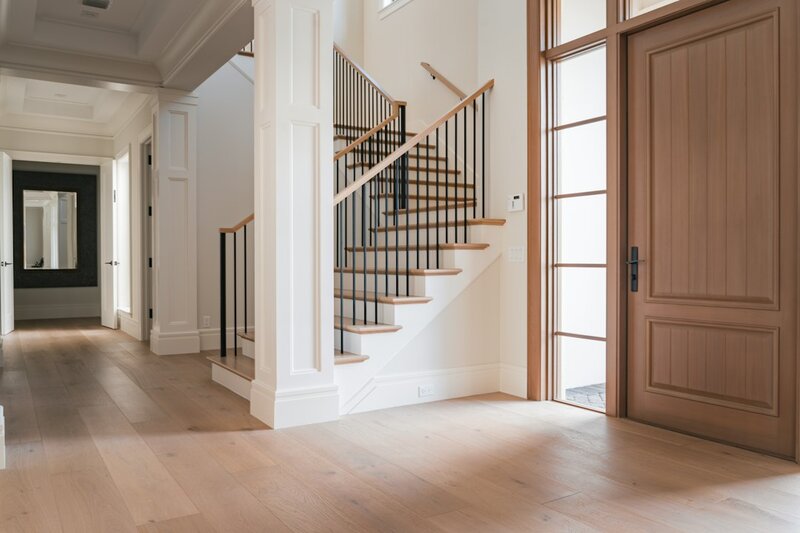
For a lot of people, the house gives in before the body does. The stairs become a two-stop journey. The bath turns into something that has to be planned. The only toilet is upstairs, the hall is too narrow for a frame, and the back step is one step too many. None of that is a medical event, so nobody books an appointment for it, and the house quietly shrinks around the person living in it.
Ireland has three state grants built for exactly this moment, all run by your local authority and all funded from the same pot. In 2026 that pot is €129.5 million in exchequer funding, rising to a projected €152 million once councils add their own contribution, enough for roughly 17,000 grant claims. In 2025, the 31 local authorities processed 15,700. Since the scheme opened in November 2007, more than 150,000 grants have been paid.
The money is real, and for most households it is generous. The part nobody mentions until you are halfway through is that the grant lands at the end, and two of the three schemes do not cover the VAT.
TL;DR
- Three grants share one application form: up to €40,000 for disability adaptations, €10,700 for essential repairs if you are 66 or over, and €8,000 for mobility aids.
- Every limit and income band changed on 1 December 2024 under S.I. No. 612/2024. Any guide still quoting €30,000, €6,000 and €8,000 is out of date.
- The grant is paid after the work is finished and inspected, so the household pays the contractor first. Some councils offer staged payments and some do not. Ask yours in writing before work starts.
- The two disability grants are paid exclusive of VAT. At 13.5% on construction services that is about €5,400 on a €40,000 job, and Revenue’s refund scheme covers qualifying goods, not labour.
- The Department’s own estimate is that about 82% of households with a member aged 66 or over qualify for some level of grant, and over half qualify at the full 100% rate. Do not rule yourself out on gross income alone.
Three grants, one form
Housing Adaptation Grant for People with a Disability. The big one. It covers ramps, wheelchair access, downstairs bedrooms and bathrooms, accessible showers, grab rails, stairlifts, through-floor lifts and fixed track hoists. The maximum is €40,000 or 100% of the approved cost, whichever is less. Households with income up to €37,500 get the full 100%. From there the share tapers: 85% up to €43,750, 75% up to €50,000, 50% up to €62,500, and 30% up to €75,000. Above €75,000 there is no grant. If the house is less than 12 months old, every figure halves.
Housing Aid for Older People. For people aged 66 and over whose problem is the fabric of the house rather than access to it: roofs, rewiring, windows, doors, heating repairs. Maximum €10,700, same income bands, and crucially this one does include VAT. Since 1 January 2025 it will not fund a new fossil fuel boiler, although it will still repair an existing one, extend a system into a new extension, or install electric or biomass heating.
Mobility Aids Grant. The small, fast one, capped at €8,000 and limited to households under €37,500. Grab rails, an accessible shower, ramps, a stairlift, a hoist. Like the big grant, it is paid exclusive of VAT.
All three come from the same local authority form, which is where applications go wrong: people tick the wrong scheme, or apply for the €8,000 grant when the work they need falls under the €40,000 one.
You probably qualify, even if you think you don’t
The means test looks at gross household income for the previous tax year, but only after a long list of disregards and deductions, and most people never get that far before deciding they earn too much.
Not counted at all: Child Benefit, Working Family Payment, Domiciliary Care Allowance, Carer’s Support Grant, Carer’s Benefit and Carer’s Allowance where the payment relates to the person needing the grant, Fuel Allowance, the Household Benefits Package, the Living Alone Increase and Foster Care Allowance.
Then come the deductions: €6,250 for each household member under 18, €6,250 for each member aged 18 to 23 in full-time education, €6,250 if the person getting the grant is cared for full-time by a relative, up to €6,250 for mortgage or rent on the home being adapted, up to €12,500 towards a spouse’s or co-owner’s residential care fees, and up to €12,500 towards homecare fees.
Those changes came in with the 2024 regulations, and the Department’s own modelling put the effect plainly: roughly 82% of households containing someone aged 66 or over now qualify for some proportion of a grant, and over half qualify at the top 100% rate. A household on €50,000 gross with a full-time family carer and a mortgage can land in a far better band than the headline number suggests.
Two conditions catch people regardless of income. Your tax affairs and Local Property Tax must be in order, and any grant over €10,000 needs tax clearance from Revenue. Social housing tenants are not eligible for these three schemes at all and should ask their council about the Disabled Person’s Grant Scheme instead.
The money you have to find first
Here is the sentence that should be at the top of every leaflet. The grant is paid when the work is completed, after a second council inspection. You pay the contractor in full, and the council reimburses you afterwards.
For a €4,000 wet room that is awkward. For a €50,000 extension it is a different problem entirely, and the Department knows it. The 2024 review of the schemes recorded submissions asking for an end to the requirement to pay VAT upfront and for payment routes that do not force families to source bridging finance. What came back was Recommendation 9: the Department will “continue to support local authorities to make staged grant payments”. Some councils already do it. Others do not. Two years on it is still a matter of where you live, which makes one question worth asking the housing section before you sign anything: does this council do stage payments, and can I have that in writing?
Then there is the VAT. The Housing Adaptation Grant and the Mobility Aids Grant are both paid exclusive of VAT, and construction services in Ireland carry VAT at 13.5%. On a €40,000 job that is roughly €5,400 the household funds itself, on top of any share the taper leaves you.
People are routinely told they can claim it back, and that is only partly true. Revenue’s refund scheme for aids and appliances covers qualifying goods: stairlifts, hoists, specially adapted showers and baths, handrails and ramps built for a person with a disability. Revenue states explicitly that services and rental costs are excluded, and that renovations of existing buildings generally do not qualify, though qualifying goods used in the work may be assessed case by case. The stairlift itself may be recoverable. The labour that fitted it is not. Claims go through MyAccount or form VAT 61A, within four years, and you must disclose any State grant received.
What the work actually costs
The €40,000 headline sounds like it covers anything. The review’s own survey of councils says otherwise. Indicative costs submitted to five local authorities for a bedroom and bathroom extension, excluding VAT, ran from €45,000 in Longford and €50,000 in Kerry to €52,000 in Cavan, €67,793 in Cork County and €70,000 in Wicklow. In 2013 the same extensions cost €22,000 to €38,000. The grant limit rose by a third; the work more than doubled.
So for an extension, even the maximum grant now leaves a gap in every county sampled. That is worth knowing before anyone draws a plan.
The flip side is reassuring. The average Housing Adaptation Grant paid in 2023 was €8,162. Most of this scheme is not extensions at all. It is wet rooms, ramps, rails and stairlifts, the kind of work that comes in comfortably under the limit and is fully covered for most pensioner households.
Five things that sink applications
- Starting the work early. The regulations are blunt: no grant is paid for works already commenced or completed before the application is submitted and approved. There is no retrospective route, no matter how urgent it felt at the time.
- Skipping the occupational therapist’s report. One is required for an extension, a stairlift or through-floor lift, a fixed track hoist, or a major change to how a room is used. The council can arrange the assessment, or you can hire a private OT and claim up to €300 back as part of the grant. The Association of Occupational Therapists of Ireland lists registered practitioners.
- Leaving tax or LPT outstanding. Both yours and the contractor’s. The council needs the contractor’s tax reference number and tax clearance details before it can pay anything.
- Applying late in the year. Councils are instructed not to commit more than 75% of the previous year’s allocation before their own allocation arrives, and some have had to close the scheme mid-year and clear the backlog the following year. A January application and a November one are not the same application.
- Accepting a refusal without appealing. You have three weeks to appeal in writing to the local authority. Someone not involved in the original assessment reassesses it, and a result can take up to six weeks.
Priority goes to crisis, which is awkward advice
Applications are ranked on medical urgency. Priority 1 covers people who are terminally ill or dependent on family or a carer, and people who could come home from hospital or residential care if the adaptations existed. Priority 2 is for those who are mobile but need help to reach a bedroom or bathroom. Priority 3 is everyone else, including the sensible soul who wants to future-proof the house before anything goes wrong.
That ranking is defensible, and it does mean the person planning ahead waits longest. The answer is not to game it but to time it: the moment a real functional change appears, a fall, a new diagnosis, a hip that has stopped co-operating, get the OT assessment and the form in. If a hospital discharge is involved, say so loudly to the ward occupational therapist and the discharge coordinator, because an adaptation that gets someone home sits in Priority 1.
At the earlier stage, falls prevention and the right mobility aid cost little or nothing.
Why this is a health story
Adapting a house reads like a housing matter. It is not. The Department’s own case for the scheme costs 2.7 years at home with adaptations and a homecare package at €38,629, against €115,690 for a private nursing home bed and €214,250 for a public one, measured as net cost to the State.
The health evidence points the same way. A 2018 Healthy and Positive Ageing Initiative survey, cited in the review, found a strong association between poor housing conditions such as damp and rot and respiratory illness: respondents reporting housing condition problems were 89% more likely to have at least one respiratory condition, and still 37% more likely once smoking, physical activity and demographics were controlled for. Cold, damp and inaccessible housing is a clinical problem wearing a planning hat, which is the same argument we made about cold homes and winter grants.
And the thing these grants prevent is specific. A downstairs toilet is the difference between managing at home and not. After a hip fracture or a joint replacement, the house decides how much of the recovery actually happens.
What to do this month
- Ring your local authority’s housing section and ask for the current Housing Adaptation Grants application form, the one updated for the rules that apply from 1 December 2024.
- Ask two questions while you have them: does this council offer staged payments, and what is the current processing time.
- Get the OT assessment moving if the work involves an extension, a lift, a hoist or a change of room use.
- Get three quotes, with VAT shown separately, so you can see the real cash requirement.
- Budget for the VAT and the taper as money you will spend, not money you will recover.
- For small jobs such as handrails, draught-proofing and trip hazards, Age Action’s Care and Repair service does them free of charge for older people on 0818 91 11 09.
- If the form is defeating you, the Citizens Information Phone Service is 0818 07 4000, Monday to Friday, 9am to 8pm, and local Citizens Information Centres will sit down and fill it in with you.
These grants are one of the better things the Irish State does for people ageing at home, and the December 2024 overhaul made them meaningfully more generous. They are also built around a household that can carry the cost for a few months, which is exactly the household least likely to be able to. Knowing that in advance is the difference between a plan and a shock. At Críonna Health we treat ageing in place as a practical project, and the paperwork is part of the project.
This article is general information, not individual financial, legal or medical advice. Grant limits, income bands and scheme rules change, so confirm current figures with your local authority, gov.ie or Citizens Information before you apply.
📷 Photo by Stephen Olmo on Unsplash