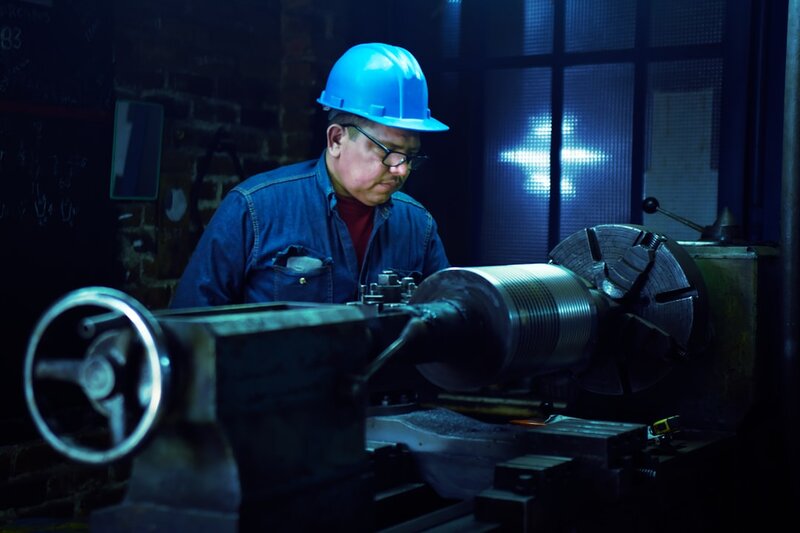
More of us are working later in life. People aged 55 and over made up around 20% of Ireland’s labour force in the second quarter of 2026, almost double the share in 2000, and employment among people aged 65 and over is up by nearly 30% since 2022. A good deal of that work happens while the rest of the country sleeps: in hospitals, care homes, security, transport and 24-hour services.
Here is the part nobody mentions at the rota meeting. The night shift you handled at 32 is a different proposition at 58. That is not weakness, it is measurable biology, and Irish law recognises it with protections many night workers have never been offered.
TL;DR
- Tolerance for night work falls from roughly the mid-40s. The Health and Safety Authority notes the ability to adapt to shift work “decreases with age anyway”, and lists older workers as a sensitive risk group.
- If you meet the legal definition of a night worker, your employer must offer you a free health assessment before you start nights and at regular intervals afterwards, and must consider moving you to day work if a doctor finds night work is making you ill.
- A 2025 meta-analysis of 3.3 million people linked night shift work to a 13% higher risk of cardiovascular events, rising about 7% per extra five years worked.
- Complaints under the Organisation of Working Time Act 1997 go to the Workplace Relations Commission, normally within six months.
Why nights get harder after 50
Your body clock does not wear out with age, but it changes shape. The circadian rhythms governing body temperature, melatonin and cortisol shift earlier and flatten in amplitude, so the internal signal holding sleep in place gets quieter exactly when you need it most: lying down at nine in the morning with daylight at the edge of the curtains. Daytime sleep becomes shorter and more broken, and recovery after a run of nights takes longer.
Research across many countries puts the critical age for reduced shift work tolerance between 40 and 50. The HSA’s guidance says it plainly: the ability to adapt “decreases with age anyway”. It also tells employers to treat older workers as a sensitive risk group when assessing night work.
What the evidence says about risk
In June 2019 the International Agency for Research on Cancer classified night shift work as probably carcinogenic to humans (Group 2A), on limited human evidence for cancers of the breast, prostate, colon and rectum. A 2025 dose-response meta-analysis in Frontiers in Public Health, pooling 23 cohort studies and 3.3 million participants, linked it to a 13% higher risk of cardiovascular events and a 27% higher risk of cardiovascular death, rising roughly 7% for each additional five years worked.
Keep that in proportion: these are relative risks across populations, not predictions about you. But if you have been on nights since your twenties, you are at the end of that curve, and the free health assessment stops being a formality.
Your rights in Ireland
Under section 16 of the Organisation of Working Time Act 1997, “night time” runs from midnight to 7am. You are a night worker if you normally work at least three hours in that window and at least half your annual hours fall within it. Night workers should not work more than an average of eight hours in any 24, averaged over two months. Where the work involves special hazards or heavy physical or mental strain, eight hours in any 24 becomes an absolute limit, and your employer must identify and assess those hazards.
The health and safety protections sit in Chapter 3 of Part 6 of the Safety, Health and Welfare at Work (General Application) Regulations 2007. Two obligations matter most:
- A free health assessment, offered before you begin night work and at regular intervals while you continue. The doctor tells your employer only whether you are fit or unfit for night work; your medical details stay between you and the doctor.
- Transfer to day work where a doctor is of the opinion that you are, or could become, ill as a result of night work, and suitable day work is available.
There is a catch. Many people who work nights are not night workers in the legal sense. A rotating three-shift pattern typically puts less than a third of annual hours between midnight and 7am, so those employees are shift workers but not night workers, and the assessment entitlement does not automatically apply. The limits also exclude An Garda Síochána, the Defence Forces on active service, some transport workers and junior hospital doctors.
If your employer is not meeting its obligations, complaints go to the Workplace Relations Commission via its online form, normally within six months of the breach and up to twelve with reasonable cause. Its information service is on (059) 917 8990. One more point: an employer cannot move you off nights simply because of your age, which would raise questions under the Employment Equality Acts 1998 to 2015. The trigger is a health assessment and your own preference, not a birthday.
What good rota design looks like
The HSA’s checklist is worth raising with a manager, and most of it costs nothing:
- Avoid permanent night shifts, and offer a choice between fixed and rotating schedules.
- Rotate forwards (mornings, then evenings, then nights) rather than backwards.
- Rotate either very quickly (every two to three days) or slowly (every three to four weeks); weekly and fortnightly patterns are the worst of both.
- Limit night shifts to eight hours, and cap consecutive nights at two or three.
- Allow at least two nights of full sleep when switching between days and nights.
Practical things that help
The sharpest risk is the drive home, where fatigue impairs reaction time just as your alertness hits its floor. Get a lift or use public transport if you can, and pull in to rest if sleepiness creeps up. For sleep itself, treat the bedroom as a job to be done properly: blackout blinds, a cool room, phone on silent, family and neighbours briefed on your schedule. Keep meals light during the shift, treat caffeine as a tool rather than a foundation, and remember alcohol backfires as a sleep aid by fragmenting the sleep that follows.
Above all, tell your GP you work nights. It changes how blood pressure readings, HbA1c results and medication timing should be read, and it matters for reviews under the HSE’s Chronic Disease Management Programme. Most people never mention it.
When to get it looked at
Ask for the health assessment, or a GP appointment, if you are nodding off at the wheel or during the shift, if your blood pressure is climbing, if a partner reports loud snoring or pauses in your breathing, or if two or three days off no longer restore you the way they used to. That last one gets dismissed as ordinary tiredness more than any other, and it is the one worth taking seriously.
Working nights in your fifties and sixties is entirely possible, and for many it suits life better than a nine to five. It simply needs doing with the protections that already exist switched on. At Críonna Health we treat ageing well as something you plan for, and a rota is as good a place to start as a diet.
General information only, not individual medical or legal advice. Speak to your GP, occupational health service or the WRC about your own circumstances.
📷 Photo by Rafael Juárez on Unsplash