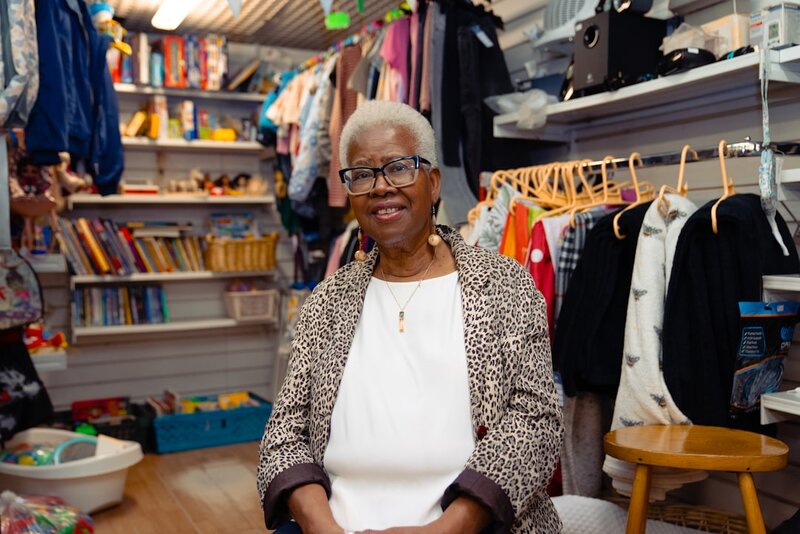
Sit through a morning of Irish advertising and you could be forgiven for thinking the country stops at 45. There are young families in bright kitchens, twenty-somethings on nights out, a couple viewing their first house. Then, abruptly, the tone shifts: stairlifts, funeral plans, incontinence products, all delivered in a slower voice over a piano.
There is almost nothing in between. Which is odd, because the space in between is where roughly a third of the population actually lives.
TL;DR
- Census 2022 counted 781,000 people in Ireland aged 65 and over, and the CSO projects that will roughly double to about 1.6 million by 2051. Add the 50 to 64 group and you are looking at close to a third of the country.
- Older adults are badly under-represented in advertising imagery, and when they do appear it is often as frail, confused or technologically helpless. An AARP survey found 62% of people over 50 wished ads showed realistic images of people their age.
- The “they are not online” assumption is simply wrong. CSO figures for 2024 show 87% of people aged 60 to 74 use internet banking, up from 70% in 2021, and 65% went online for health information.
- The European Accessibility Act has applied in Ireland since 28 June 2025. If you sell or take bookings online, WCAG 2.1 Level AA is now a legal requirement, enforced by the CCPC, not a nice-to-have.
- Age Friendly Ireland runs a free Age Friendly Business Recognition Programme built around small, low-cost changes: seating, signage, reading glasses at the counter, staff training.
The numbers Irish businesses keep ignoring
Census 2022 counted 781,000 people aged 65 and over in Ireland, about one in six of us. The CSO expects that figure to pass one million by 2030 and to reach roughly 1.6 million by 2051. The number of people aged 80 and over, 181,000 at the last census, is projected to more than triple by 2052.
Widen the lens to everyone over 50 and the picture is harder to dismiss. This is the cohort most likely to have cleared a mortgage, to hold accumulated savings and pension income, and to be spending on home improvements, travel, cars, health and hospitality. Across the EU, the over-50s account for something close to half of consumer spending, and nobody seriously argues the pattern is reversed here. Yet marketing budgets stay fixed on a younger demographic with less disposable income and, frequently, less brand loyalty.
The representation problem
Research on advertising imagery finds older adults appear far less often than their share of the population or of spending would suggest, and that when they do appear the portrayal is narrow. Three stereotypes recur: incapable with technology, physically frail, and slightly slow on the uptake.
Customers notice. In an AARP survey, 62% of people aged 50 and over said they wished advertising showed more realistic images of people their age, and 47% felt ads featuring their age group reinforced outdated stereotypes. Older women fare worst, largely absent from campaigns not selling hair dye or hearing aids. The commercial cost is straightforward: people do not buy from brands that appear to find them faintly embarrassing.
Stop treating 50-plus as a single market
The most common mistake is lumping four decades of life into one segment. A 52-year-old at the peak of her earning power, still working, possibly supporting both adult children and an ageing parent, has almost nothing in common commercially with an 82-year-old living alone in a rural parish.
Think in life stages rather than birth years. Someone in their fifties is typically time-poor and cash-rich. Someone newly retired has the inverse problem and is often looking for things to fill a reshaped week. Someone in their eighties may be prioritising ease, delivery and trust above all else. Same “demographic”, three entirely different propositions.
Identity matters too. Very few people over 60 in Ireland think of themselves as old, and campaigns that lead with age as the defining characteristic tend to repel the exact people they are aimed at.
The digital assumption that costs you money
The belief that older customers are offline is both patronising and expensive. CSO data for 2024 shows that 87% of people aged 60 to 74 used internet banking, up sharply from 70% in 2021. Almost two thirds, 65%, went online looking for health information. Nearly half were using social networking, and 39% of internet users in that age band bought books, magazines or newspapers online.
What is true is that 12% of people aged 60 to 74 had never used the internet in 2024, and that proportion rises steeply after 75. So the answer is not to abandon offline channels. It is to keep a phone number that a human answers, keep a printed option available, and stop designing digital journeys that assume perfect eyesight and a fast, confident tap.
Accessibility is now the law
This is the part many Irish businesses have missed entirely. The European Accessibility Act has applied here since 28 June 2025. If your website sells products, takes bookings or provides services online, it is covered. The underlying technical standard is WCAG 2.1 Level AA, and enforcement for digital products, e-commerce and e-books sits with the Competition and Consumer Protection Commission, which developed guidance for microenterprises with the National Disability Authority.
Penalties on summary conviction run to fines of up to €5,000, and considerably more on indictment. Transitional provisions allow certain existing services to continue until 28 June 2030, but that is a narrow allowance rather than a general reprieve.
The practical case is better than the legal one anyway. Sufficient colour contrast, resizable text, forms that work with a keyboard, captions on video, buttons big enough to hit reliably: every one of those helps a 70-year-old with early cataracts or arthritic hands, and none makes the experience worse for anyone else.
The physical side: Age Friendly Business
Age Friendly Ireland, which sits within local government, runs an Age Friendly Business Recognition Programme aimed squarely at retailers and service providers. A business nominates a staff champion, that champion attends a short workshop, the business asks its own older customers what would improve things, and then implements at least three actions. Complete it and you get the charter and the logo for the door.
The actions are unglamorous and cheap. Seating with armrests. Reading glasses at the till. Larger fonts on printed material. The background music turned down. Clear signage, designated parking, and staff who know not to speak to the adult child instead of the customer. Tirlán rolled the programme out across its CountryLife and FarmLife network in 2024, so it is workable at scale and not merely a small-shop gesture.
Language, and what to avoid
A short list, offered without apology:
- “Elderly”, “senior citizen”, “the old”. Nobody self-identifies this way. “Older adults”, “people in their seventies”, or simply “customers” will do.
- “Anti-ageing”. It sells a product by framing your customer’s existence as a defect. The wider industry has been quietly retiring the phrase for years.
- “Still”, as in “still active”, “still working”, “still driving”. The word carries surprise, and the surprise is the insult.
- “Silver surfer” and similar. Coined by marketers, used by nobody else.
- Sympathetic music and soft focus. Sell the holiday, the kitchen or the insurance the way you would to anyone else.
A practical starting point
If you want somewhere to begin this quarter: audit your last twelve months of creative and count how many people over 60 appear, and in what role. Run your website against WCAG 2.1 Level AA. Ring your own customer line and time how long it takes to reach a person. Then talk to twenty of your own older customers, which is cheaper than any agency research and consistently more useful.
At Críonna Health we spend most of our time writing about ageing well from the individual’s side: the health checks, the entitlements, the supports. The commercial side is the same story from a different angle. A country where a third of the population is over 50 and businesses still design for 30-year-olds is leaving both money and dignity on the table, and those two things turn out to be closely related.
This article is general business information and does not constitute legal advice. For specific obligations under the European Accessibility Act, consult the CCPC guidance or your own legal adviser.
📷 Photo by Centre for Ageing Better on Unsplash