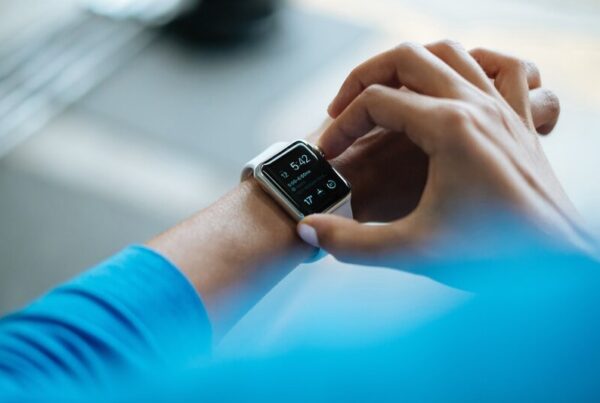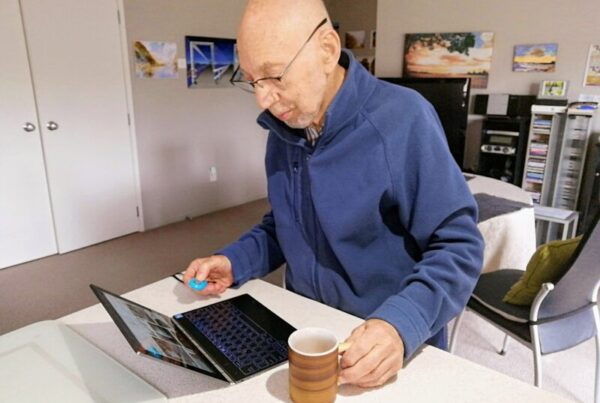
For most of the history of the Irish health service, your health information lived somewhere you could not see it: a paper chart in a hospital basement, a note on your GP’s computer, a letter that may or may not have reached the right consultant. If you wanted to know which vaccine you had, or when your appointment was, or whether that referral had actually gone anywhere, you rang somebody and waited.
That is slowly changing. The HSE Health App now puts a genuine, if incomplete, slice of your own health record on your phone. It passed 200,000 downloads in early 2026 and is still being downloaded close to a thousand times a day. Registrations, meaning people who have signed in properly and can see their own information, have passed 125,000.
The useful parts are genuinely useful, and the one thing that stops most people getting in has nothing to do with the app itself.
TL;DR
- The HSE Health App holds digital versions of your medical card, GP visit card, DPS card, Long-Term Illness card and EHIC, plus your flu and COVID-19 vaccination records.
- It now shows hospital appointments from 35 hospitals, your position on inpatient, day case and outpatient waiting lists, GP referral status, Chronic Disease Management care plans and a first tranche of lab results (HbA1c and cholesterol).
- You need a verified MyGovID to see any personal information. A basic MyGovID will not do it, and this is where most people get stuck.
- Since 5 August 2026, information you add yourself in the app is shared with healthcare staff involved in your care.
- If you do not want to use an app, you still have a legal right to your records: a free subject access request to the HSE must be answered within one month.
What is actually in the app
The app carries digital versions of the cards that usually live in a wallet and get left at home: the medical card, GP visit card, Drugs Payment Scheme card, Long-Term Illness card and the European Health Insurance Card. If you have ever stood at a pharmacy counter without your card, that alone justifies the download.
It holds a medicines list. Anything dispensed to you under the Medical Card or Drugs Payment Scheme appears automatically, refreshed roughly every three months, and you can add the rest yourself: over-the-counter medicines, supplements, anything a private prescription covers. For anyone taking several medicines, having that list to hand in an emergency department is worth more than most people expect.
Your flu and COVID-19 vaccination records are there. So are appointments: 35 hospitals so far, BreastCheck screening, and telephone and video appointments alongside in-person ones. Newer releases added the details people used to ring switchboards about, namely whether you are on an inpatient, day case or outpatient waiting list, and what has happened to a GP referral after it left the surgery.
If you are on the Chronic Disease Management Programme for something like diabetes, COPD or heart disease, your care plan and some of your results are visible too. The first phase of lab results covers HbA1c, the three-month blood sugar measure, and the lipid profile, which is your cholesterol panel. More results and scans are promised in later releases.
The hurdle: a verified MyGovID
Here is the part that catches people out. To see anything personal in the app you need a verified MyGovID. A basic one, the kind you set up with an email address in five minutes, will not open your health information. The reasoning is sound: the HSE has to be certain it is handing your medical record to you and not to somebody who guessed your email password. It is still a real barrier, and nobody warns you about it before you download.
A verified MyGovID requires a Public Services Card, plus a verified email address and mobile number. Two routes exist:
- In person. An appointment at your local Intreo Centre for SAFE registration, bringing photo identification and proof of address. Your photo and signature are captured on the day. It takes about fifteen minutes and costs nothing. Some centres take walk-ins, most prefer an appointment.
- Remotely. If you hold a current Irish passport and are aged 16 or over, you can now complete SAFE registration through the MyGovID app itself, without leaving the house.
A great many people over 66 already hold a Public Services Card through the State Pension or the Free Travel Pass, which means the hard part is done and only the digital sign-up remains. Worth checking the wallet before booking anything, and worth checking the expiry date while you are at it, since an in-date Free Travel PSC has been required since 1 March 2026.
You must be 16 or over to use the app at all. Without a verified MyGovID you can still use the general parts: finding a GP, injury unit or emergency department near you, and reading HSE information on conditions and treatments.
What changed on 5 August 2026
A quiet but significant change took effect this month. Information you add to the app yourself, such as the medicines you have entered manually, is now shared with healthcare staff involved in your care.
This is a good thing on balance. The medicines a hospital does not know about are precisely the ones that cause trouble. But it does mean the app is no longer a private notebook: anything you put in it may be read by clinical staff, which is exactly what makes it useful and exactly what you should know before you type.
What the app is not
It is not your full medical record. Your GP’s notes are not in it. Most hospital correspondence, discharge summaries, imaging reports and the majority of your blood results are not in it yet. Thirty-five hospitals is real progress and it is not all of them, so an appointment missing from the app does not mean the appointment does not exist. Ring the hospital.
It is also not a way to contact anybody. No messaging, no repeat prescriptions, no booking. If something worries you, that is still a phone call to your GP.
If you would rather not use an app
More than six in ten people aged 75 and over in Ireland (63%) used the internet in the three months before the CSO’s 2025 survey, up sharply from 54% the year before. That leaves roughly a third who have never used it at all. Digital-first should never mean digital-only, and it does not have to.
Your right to your own health records is not conditional on owning a smartphone. Under the Data Protection Act 2018 you can make a subject access request to any HSE service, hospital or GP practice holding your records. The HSE publishes a Subject Access Request Form on hse.ie, you send it to the hospital or service where the records are held, and they have one month to respond. It is free. You will need your date of birth, proof of identity such as a passport or driving licence, and a clear description of which records and which period you want.
If the barrier is confidence rather than principle, Age Action’s Getting Started programme offers free one-to-one training on smartphones, tablets and computers to people over 55, and has now worked with more than 46,000 people. Enquiries go to [email protected] or 0818 911109. Many public libraries host the sessions, with a tutor sitting beside you rather than a class you have to keep up with.
Where this is heading
The app is one visible piece of Digital for Care, the national digital health framework running to 2030, whose bigger project is the National Shared Care Record: one view of your information that follows you between GP, hospital and community services instead of restarting at every door.
For anyone managing more than one long-term condition, and for the family members who quietly coordinate all of it, that shift matters more than any single feature. In the meantime, the app is worth having for the cards, the medicines list and the appointments alone.
At Críonna Health we take the view that knowing what you are entitled to is half of ageing well in Ireland. The technology is only useful if somebody tells you it exists and how to get past the front door.
This article is for general information and is not a substitute for advice from your GP or healthcare team.
📷 Photo by Vitaly Gariev on Unsplash