A few years ago, the idea of wearing a tiny computer on your wrist that could track your heartbeat, count your steps, and even detect a fall might have felt like something from a science fiction film. Today, wearable health technology is not only widely available — it is increasingly being used by people over 50 to take a more active role in managing their own health and wellbeing.
Whether you are already curious about fitness trackers and smartwatches or feel a little overwhelmed by the options, this guide is here to help you make sense of what is available, what is genuinely useful, and how to get started — all with an Irish context in mind.
TL;DR
- Wearable health devices — smartwatches, fitness trackers, and dedicated health monitors — can help older adults track activity, heart health, sleep, and falls, supporting more informed conversations with your GP.
- You do not need the most expensive device: basic fitness trackers starting from €30–€50 can deliver meaningful health benefits through step counting and activity reminders.
- Features like ECG monitoring, blood oxygen tracking, and fall detection are now available on consumer devices and may be particularly valuable for people managing chronic conditions under the HSE’s Chronic Disease Management (CDM) Programme.
- Data privacy matters — always check what data your device collects, where it is stored, and review your privacy settings. Ireland’s Data Protection Commission provides guidance on your rights under GDPR.
- Free digital skills training through Age Action, ALONE, and local ETBs can help you get comfortable with wearable technology at your own pace.
What Counts as Wearable Health Technology?
Wearable health technology refers to any device you wear on your body that collects health-related data. The most common types include:
- Fitness trackers — lightweight wristbands that count steps, monitor sleep, and track basic activity levels. Brands like Fitbit and Xiaomi offer affordable options starting from around €30.
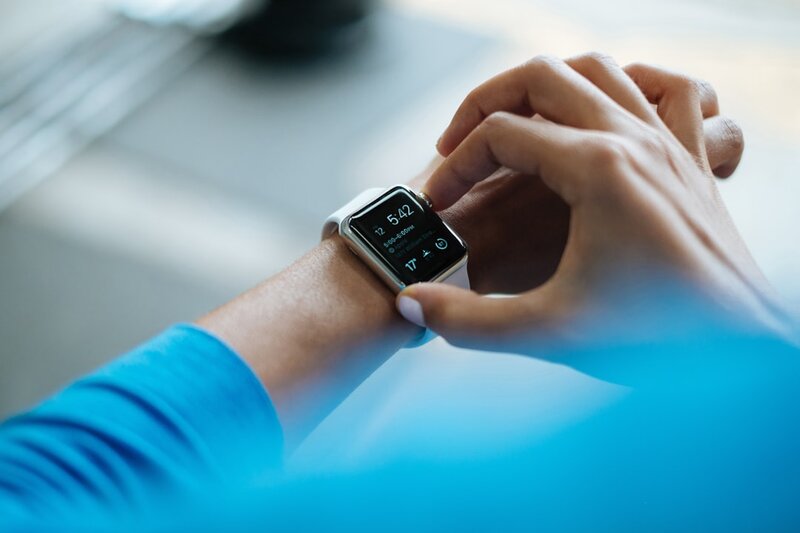
- Smartwatches — more advanced wrist-worn devices (such as Apple Watch, Samsung Galaxy Watch, or Garmin) that offer fitness tracking alongside features like heart rate monitoring, ECG readings, blood oxygen levels, and fall detection.
- Dedicated health monitors — devices designed for a specific purpose, such as continuous blood pressure monitors, continuous glucose monitors (CGMs) for people with diabetes, or personal emergency response devices with GPS tracking.
The key point is that these are consumer devices — you do not need a prescription to use them, though they should complement, never replace, professional medical advice.
Why Wearable Technology Can Be Particularly Useful After 50
As we age, keeping an eye on certain health indicators becomes more important. Wearable devices can help in several practical ways:
Staying Active
Research from the Irish Longitudinal Study on Ageing (TILDA) consistently shows that regular physical activity is one of the strongest predictors of healthy ageing. A simple step counter can be a surprisingly powerful motivator. Many people find that seeing their daily step count encourages them to take that extra walk or choose the stairs. The HSE recommends at least 150 minutes of moderate activity per week for adults over 50, and a wearable device makes it easy to track your progress towards that goal.
Monitoring Heart Health
Some smartwatches can now take a single-lead ECG reading and detect irregular heart rhythms, including atrial fibrillation (AF) — a condition that becomes more common after 50 and is a significant risk factor for stroke. While a smartwatch ECG is not a diagnostic tool, it can flag irregularities worth discussing with your GP. The Irish Heart Foundation recommends that anyone over 65 should have their pulse checked regularly for AF, and a wearable device can support this between appointments.
Tracking Sleep
Sleep patterns often change as we age, and poor sleep can affect everything from mood and cognitive function to immune health. Most fitness trackers and smartwatches now include sleep tracking, giving you a picture of how long you sleep and how restful that sleep actually is. This information can be useful when speaking with your GP about sleep concerns.
Fall Detection and Emergency Alerts
Falls are a leading cause of injury among older adults in Ireland. Several smartwatches now include automatic fall detection — if the device senses a hard fall and you do not respond, it can automatically alert an emergency contact or call emergency services. For people living alone, this feature can provide significant peace of mind. It complements existing personal alarm services available through organisations like ALONE and the HSE’s Older People Services.
Choosing the Right Device for You
With so many options on the market, it is worth thinking about what you actually need before you buy. Here are some practical considerations:
- Start simple. If you have never used a wearable device before, a basic fitness tracker with step counting and a heart rate monitor is a great place to begin. You do not need every feature on day one.
- Screen size and readability. Look for a device with a display that is large and bright enough to read comfortably. Many smartwatches allow you to adjust the text size and display brightness.
- Battery life. Some fitness trackers last a week or more on a single charge, while smartwatches with more features may need charging every day or two. Think about what suits your routine.
- Comfort and fit. You will be wearing this device for most of the day (and possibly overnight for sleep tracking), so comfort matters. Try it on if you can, and check that the strap is adjustable and does not irritate your skin.
- Compatibility. Make sure the device works with your smartphone (iPhone or Android). Most wearable devices use a companion app on your phone to display detailed data and manage settings.
- Budget. Basic fitness trackers start from around €30–€50. Mid-range smartwatches with health features typically cost €150–€300. Premium devices with advanced features like ECG and temperature sensing can cost €400 or more. More expensive does not always mean more useful for your needs.
Using Your Data Wisely
One of the real benefits of wearable technology is that it gives you data you can share with your healthcare team. If you are enrolled in the HSE’s Chronic Disease Management (CDM) Programme — which covers conditions like heart failure, diabetes, COPD, and asthma — your wearable data can support the structured reviews you have with your GP or practice nurse.
A few tips for getting the most from your data:
- Look for trends, not single readings. A one-off high heart rate reading is less meaningful than a pattern over days or weeks. Most companion apps show trends over time.
- Bring your data to appointments. Many apps allow you to export a summary or simply show your GP the trends on your phone screen. This can make consultations more productive.
- Do not self-diagnose. Wearable devices are screening tools, not diagnostic instruments. An irregular heart rhythm notification warrants a GP visit — it does not mean you have a confirmed condition.
- Set realistic goals. If your device allows you to set daily step or activity targets, start with something achievable and build from there. A target of 4,000–6,000 steps per day is a realistic starting point for many older adults, and recent research suggests even modest increases in daily steps are associated with significant health benefits.
Privacy and Your Health Data
Any device that collects health data raises important questions about privacy. Under the General Data Protection Regulation (GDPR), which applies in Ireland, health data is classified as a special category of personal data and is subject to stronger protections.
When setting up a new device, take a few minutes to:
- Review the privacy settings in the companion app and disable any data sharing you are not comfortable with.
- Check where your data is stored — some devices store data on the device itself, while others sync to cloud servers.
- Be cautious about sharing health data with third-party apps unless you understand how they will use it.
- If you have concerns, the Data Protection Commission (dataprotection.ie) provides clear guidance on your rights regarding personal data in Ireland.
Getting Help and Building Confidence
If the idea of setting up and using a wearable device feels daunting, you are not alone — and there is plenty of support available in Ireland:
- Age Action runs the Getting Started programme, offering free digital literacy training for older adults, including help with smartphones and connected devices.
- ALONE provides technology support through their Support & Befriending service, including help setting up devices.
- Local ETBs (Education and Training Boards) offer digital skills courses, often free of charge, in communities across Ireland.
- Public libraries frequently host digital skills workshops and can be a great place to get hands-on help.
- Many retailers — including pharmacy chains that stock health monitors — will help you set up your device at the point of purchase.
At Cr\u00edonna Health, we believe that technology should make healthy ageing easier, not harder. A wearable device will not replace a good relationship with your GP, regular check-ups, or the support of your community — but it can be a genuinely useful companion on your journey to staying well after 50.
The Bottom Line
Wearable health technology has moved well beyond novelty gadgets for fitness enthusiasts. For older adults in Ireland, a well-chosen device can support you in staying active, monitoring important health indicators, and having more informed conversations with your healthcare team. Start simple, protect your privacy, and make use of the free training and supports available to you. Your health is worth investing in — and sometimes, that investment starts with something as small as a device on your wrist.
\ud83d\udcf7 Photo by Luke Chesser on Unsplash