Most of us grew up with a simple idea of how acute illness works: you get sick, you go to hospital, you stay until you are better. For a chest infection, a cellulitis flare or a wound that has stopped healing, that meant a bed, a ward round and a week of hospital food. Increasingly in Ireland, it does not. A nurse arrives at your front door instead, sets up a drip at your kitchen table, and you sleep in your own bed that night.
This is not a pilot scheme. Community Intervention Teams (CITs) received close to 122,000 referrals across Ireland in 2025. If you are over 50, or you are helping a parent navigate the health service, this is one of the most useful things you can know about, and one of the least well advertised.
TL;DR
- Community Intervention Teams provide short-term acute nursing care in your own home, typically for IV antibiotics, wound care, catheter and line care.
- CITs received roughly 122,000 referrals in 2025, and 81% of patients treated in the community were discharged home rather than admitted.
- You cannot self-refer. Referrals come from a hospital team, your GP, an out-of-hours GP service or an emergency department.
- Under the OPAT programme, IV antibiotics can continue at home after two doses have been given in hospital, with your consultant still in charge.
- Coverage and operating hours vary by area, so the single most useful question you can ask is: “Is there a Community Intervention Team covering this address?”
What a Community Intervention Team actually is
A CIT is a specialist, mostly nurse-led team that responds quickly to an acute episode of illness, delivering treatment in the patient’s home for a defined short period. Think of it as borrowing a slice of hospital care and moving it into the sitting room, for days rather than months.
That short-term framing matters, because CIT is routinely confused with other services. It is not home help, not the Statutory Home Support Scheme (ongoing personal care such as washing and dressing), and not the public health nurse. A CIT does one job: it manages an acute problem that would otherwise have put you in a hospital bed, and then it steps back out of your life.
Typical work includes intravenous antibiotics, wound and leg ulcer management, catheter care, central line care, and supported early discharge. Most services operate seven days a week, commonly from around 8am to 8pm or 9pm, though some areas run later and provision varies by region.
IV antibiotics at the kitchen table: the OPAT programme
The most striking part of this is OPAT, Outpatient Parenteral Antimicrobial Therapy: intravenous antibiotics delivered outside hospital.
Infections that need IV rather than oral antibiotics, such as serious cellulitis, bone and joint infections, or complicated urinary infections, have traditionally meant an admission of two weeks or more. Under OPAT, you generally receive your first two IV doses in hospital so the team can confirm you are tolerating the drug, and then the CIT continues treatment at home. You stay under the care of your original consultant alongside an infectious diseases consultant, with regular review, often weekly, at an OPAT clinic.
The savings are not trivial: one HSE home IV antibiotics service alone was reported to free up more than 3,200 hospital bed days a year. For the person receiving treatment, the benefit is more personal: your own bed, your own food, no ward at 3am, and a lower risk of the things hospitals do to older bodies, namely deconditioning, delirium and hospital-acquired infection.
How you get referred
This is where most people fall through the gap. You cannot refer yourself to a CIT. Referrals come from a hospital ward or discharge team, an emergency department, your GP, or a GP out-of-hours service. The referring clinician telephones the local team, sends a written referral, and waits for confirmation of acceptance, which depends on clinical suitability, capacity and whether your address is covered.
In practice, that means you or a family member may have to raise it. Reasonable moments to ask:
- In the emergency department, when admission is being discussed: “Could this be managed at home with community support instead?”
- On the ward, when the plan is “staying in for IV antibiotics”: “Would I be suitable for OPAT at home?”
- At your GP, when a wound or infection is not settling: “Is there a Community Intervention Team covering this area?”
Nobody will think you are being difficult. Discharge planners are, if anything, delighted when families already know the vocabulary.
The wider shift: Enhanced Community Care
CITs are one strand of the Enhanced Community Care programme, a roughly €240 million investment and a central pillar of Sláintecare, the long-term plan to move Irish healthcare out of hospitals and closer to home.
The strand most relevant to older adults is ICPOP, the Integrated Care Programme for Older Persons, which funds Community Specialist Teams for Older People. These are properly multidisciplinary: nursing, physiotherapy, occupational therapy, speech and language therapy, social work and dietetics, all under the governance of a consultant geriatrician. They act as a single point of assessment for people living with frailty and complex needs, and reported figures suggest more than 7,000 frail adults avoided unnecessary hospital admission through them.
Making home care work well
Home treatment is only better if home is set up for it. A few practical things help enormously:
- Clear a working surface near a chair with good light and a plug socket.
- Keep one written record of medicines, allergies, consultant name and the CIT contact number, where any visitor can find it.
- Agree who is home when. Visits often come within a window rather than at a fixed time.
- Know your red flags. Ask directly: what symptoms mean I ring you, and what symptoms mean I ring 112?
- Say so if you live alone. It is not a disqualification, but the team needs to plan around it.
When hospital is still the right answer
Care at home is not automatically superior. If you are clinically unstable, if the diagnosis is unclear, if you need imaging or specialist input only a hospital can provide, or if home is not safe or warm enough, a bed is the right call. The point is not to keep people out of hospital at all costs. It is to make sure nobody stays in one purely because of where a drip happens to be hanging.
The honest caveat
Provision is uneven. Some regions have long-established, well-resourced teams; others have thinner cover, shorter hours or none at all, and rural addresses can fall outside a catchment boundary by a few kilometres. That is worth raising with your GP, your Older People’s Council or your local representative, because service expansion tends to follow demonstrated demand.
Still, the direction of travel favours you. The assumption that acute illness means an admission is quietly being dismantled, and knowing the right three words, “Community Intervention Team”, may be the difference between a fortnight on a ward and a fortnight in your own armchair.
At Críonna Health we believe that understanding how Irish services actually work is a genuine health intervention in itself. Ageing well is not only about what you eat and how you move; it is also about knowing what you are entitled to ask for.
This article is for general information and is not a substitute for individual medical advice. Talk to your GP or hospital team about what is available and appropriate in your area.
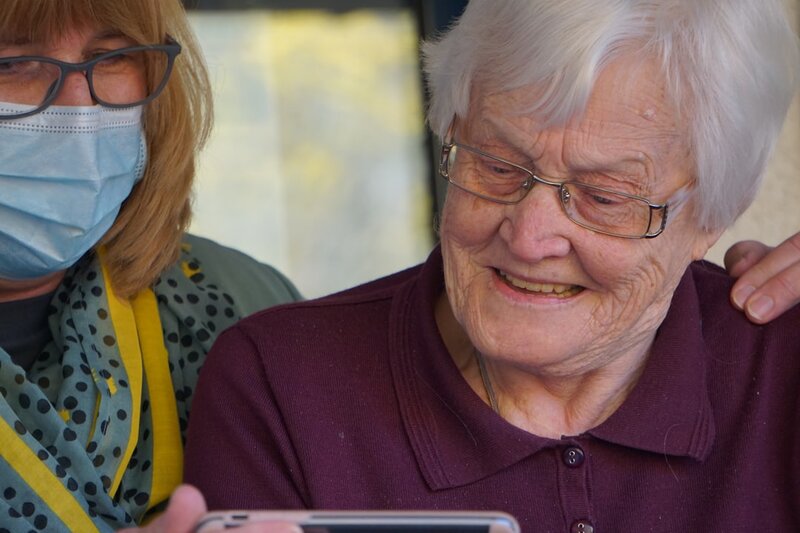
📷 Photo by Georg Pflueger on Unsplash