The end of September is a strange time to think about the sun. The hat is back on the hook, the garden is winding down, and whatever this summer did to your skin has already been done. Which is exactly why it is a good moment to look properly at yourself. Skin cancer is Ireland’s most common cancer by a wide margin, with more than 11,000 diagnoses a year. The National Cancer Registry’s 2025 report is largely encouraging: five-year survival is close to 100% for the non-melanoma types and 92% for melanoma. It turns on finding it early. And most people over 60 know the ABCDE rule for checking a mole, but far fewer know it was never designed to catch the melanoma most likely to kill an Irish man.
TL;DR
- Skin cancer is Ireland’s most common cancer: over 11,000 diagnoses a year, 9 in 10 of them non-melanoma, and roughly 270 deaths.
- The familiar ABCDE rule describes superficial spreading melanoma. Nodular melanoma, the fast and dangerous type, is often symmetrical, one colour and small, so it passes every letter of that test.
- Use EFG alongside it: Elevated, Firm, Growing over a few weeks. Any sore that has not healed in four weeks should also be looked at.
- Irish men are 1.6 times more likely than women to die of melanoma, and 2.3 times more likely of the non-melanoma type.
- Ask your GP about the NCCP National Pigmented Lesion referral form: Irish research in January 2026 found 83% of melanoma patients referred that way were seen within 12 weeks.
- Ireland’s UV index sits at 3 or above from April to September, cloud or no cloud.
The ABCDE rule only covers half the problem
ABCDE (Asymmetry, Border irregularity, Colour variation, Diameter over 6mm, Evolving) is a good rule that has saved many lives. It describes superficial spreading melanoma, which creeps outwards across the skin over months or years and gives plenty of visual warning: a flat, blotchy, uneven-edged patch with two or three colours in it.
Nodular melanoma behaves differently. It grows downwards rather than outwards, and quickly. It is often a neat, round, symmetrical bump of a single uniform colour, and in fair Irish skin it may be pink, red or skin-coloured rather than brown or black. It can be well under 6mm by the time it is dangerous. Held up against ABCDE it passes and reassures you, which is why it accounts for a disproportionate share of melanoma deaths despite being far less common. Dermatologists use a shorter second rule for this reason. EFG: Elevated, Firm, Growing. A lump that stands proud of the skin, feels solid rather than soft under the fingertip, and has visibly got bigger in the last few weeks needs to be seen, whatever its colour or size.
The two cancers that are not melanoma
Nine in ten Irish skin cancers are keratinocyte cancers, and they look nothing like the melanoma photographs in leaflets. Basal cell carcinoma is the commonest: a small pearly bump that scabs, bleeds a little, seems to heal and then returns in the same spot. It almost never spreads elsewhere, but left alone on a nose, an eyelid or an ear it quietly destroys the tissue around it. Squamous cell carcinoma is faster, usually a firm crusted lump that can be tender. Both cluster on the face, ears, scalp, neck, forearms and backs of the hands. The rule worth carrying is simpler than any acronym: any sore, scab or spot that has not fully healed after four weeks should be looked at. Skin is excellent at healing. When it refuses to, that is information.
Why this lands differently after 60
Around 270 people die of skin cancer in Ireland each year, and men account for a disproportionate share. That gap is not mainly about biology. It is about how long the thing sat there before anyone looked at it. Risk tracks cumulative ultraviolet exposure, and by 65 you have simply had more of it, most acquired long before sun protection at work was anybody’s responsibility. Anyone who spent a working life outdoors on a farm, a site or a boat carries a heavier account, which is why the HSE now runs SunSmart toolbox talks for outdoor workers and aims resources at the farming community. Anatomy compounds it: melanomas on the scalp, ears and neck are diagnosed thicker and later than those elsewhere, and those are exactly the sites thinning hair exposes and nobody examines on themselves. So does the plain fact that you cannot see your own back. And if you take immunosuppressant medication or have had a transplant, your risk of squamous cell carcinoma is substantially higher, so say so when you book.
How to check
Once a month, after a shower while the light is good, work through it in order: face, ears, scalp, neck, chest, arms, hands and nails, back and shoulders in a mirror or with help, then legs, feet and between the toes. Use a hand mirror for the scalp, or ask whoever cuts your hair to keep an eye out. Melanoma turns up on soles and under nails too, and those are found latest of all. You are looking for three things: something new, something changing, something not healing.
If you find one, photograph it in daylight beside a coin for scale and note the date. That turns “I think it might be bigger” into evidence your GP can act on.
What happens at the GP
Your GP will examine the lesion, often with a dermatoscope, and choose a route. For anything suspicious for melanoma there is a national pathway: the NCCP National Pigmented Lesion GP Referral Form, which feeds the pigmented lesion clinics rather than the general dermatology list. A Tallaght University Hospital study published in the Irish Medical Journal in January 2026 found 83% of melanoma patients referred that way were seen within 12 weeks, while those who landed on a general dermatology waiting list waited considerably longer. It is entirely reasonable to ask which route is being used, and to say if the lesion is elevated, firm and growing, because that changes how a referral is triaged.
That study reassures in a second way: of the pigmented lesions referred in, only about 3% were clinically suspicious for melanoma. Getting checked is normal, and being sent home is the usual outcome.
Protecting the skin you still have
Prevention is not wasted effort at 70, because new damage still accumulates. The HSE SunSmart advice is the 5 S’s: slip, slop, slap, seek shade and slide on sunglasses. The part most people here get wrong is timing. Ireland’s UV index sits at 3 or above from April right through to September, including on grey, cool days, because cloud does little to stop ultraviolet. If you are cutting back sun exposure, treat vitamin D as a supplement question rather than a reason to sit out in it.
The bottom line
Skin cancer in Ireland is common, largely preventable and, caught early, very treatable. The catch is that the most dangerous version does not look like the pictures. If something on your skin is raised, firm and getting bigger, or a sore has not healed in four weeks, that is a GP appointment, not an end-of-summer curiosity. Our broader Críonna Health guide to skin health after 50 sits alongside this one.
Useful contacts: Irish Cancer Society Support Line 1800 200 700; HSE Live 1800 700 700; SunSmart advice at hse.ie/sunsmart; daily UV index at met.ie.
This article is for general information and does not replace individual medical advice. If you are concerned about a mark on your skin, contact your GP.
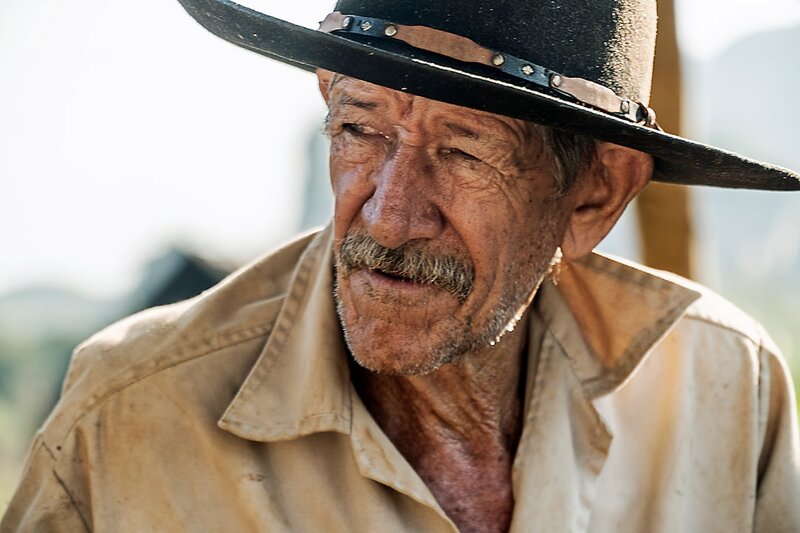
📷 Photo by Allan Wadsworth on Unsplash