Most of us know what a cardiologist does, or a dermatologist. Ask what a geriatrician does and the answers get vague. “A doctor for old people,” someone might say, which is roughly as useful as describing a paediatrician as “a doctor for small people”. It misses the point entirely.
Specialist medicine for older adults is one of the quietly transformative parts of Irish healthcare, and one of the least understood by the people it serves. If you or a family member has ever been referred to a medicine for the older person clinic, a day hospital, or a community specialist team and wondered what to expect, this guide is for you.
TL;DR
- A geriatrician is a consultant physician specialising in the complex, overlapping health needs of older adults, not simply a GP for people over 65.
- Their core tool is the Comprehensive Geriatric Assessment (CGA), a multidisciplinary review of medical, functional, cognitive, social and environmental factors that evidence links to better outcomes and greater independence.
- Ireland’s Integrated Care Programme for Older Persons (ICPOP) has built community specialist teams so this care no longer requires a hospital admission.
- Referrals usually come through your GP, a hospital team, or the emergency department, and access is free within the public system.
- Preparing well for the appointment, especially with an accurate medication list, makes a genuine difference to what you get out of it.
What a geriatrician actually does
A geriatrician is a consultant physician who has completed general internal medicine training and then specialised further in the health of older adults. They are experts in the problems that do not fit neatly into a single organ system: falls, frailty, confusion, incontinence, unexplained weight loss, dizziness, reduced mobility, and the tangle of interactions that arises when someone takes eight different medications prescribed by five different doctors.
In Ireland they are often called consultants in “medicine for the older person”. Some sub-specialise further in stroke medicine, memory and cognitive disorders, movement disorders such as Parkinson’s disease, bone health, or continence.
The crucial distinction is this: a single-organ specialist asks what is wrong with the heart, or the kidney, or the joint. A geriatrician asks what is stopping this person from living the life they want, and what can realistically be changed. Sometimes the answer involves a new medication. Very often it involves stopping one.
The Comprehensive Geriatric Assessment
The central tool of the specialty is the Comprehensive Geriatric Assessment, usually shortened to CGA. It is not a single test but a structured, multidisciplinary process that looks at a person across several domains at once:
- Medical: diagnoses, symptoms, nutrition, continence, and a thorough medication review looking for drugs doing more harm than good.
- Functional: what you can manage day to day, from washing and dressing to shopping, cooking, managing money and getting out of the house.
- Cognitive and psychological: memory, mood, anxiety, and whether low mood or delirium is being mistaken for dementia.
- Social: who is around, what supports exist, and how a family carer is coping.
- Environmental: stairs, bathroom access, trip hazards, heating, and whether the home still suits the person living in it.
The evidence base here is unusually strong. Cochrane reviews of CGA for older adults admitted to hospital have consistently found that people who receive it are more likely to be alive and living in their own homes afterwards, and less likely to be admitted to residential care. That is a rare thing in medicine: an intervention whose main measurable benefit is independence.
The assessment is delivered by a team rather than one person. Depending on the service, that team may include the consultant geriatrician, a clinical nurse specialist, an occupational therapist, a physiotherapist, a medical social worker, a dietitian, a speech and language therapist, and a pharmacist.
ICPOP: bringing specialist care into the community
Historically, seeing a geriatrician in Ireland usually meant being admitted to hospital first, which is a poor way to deliver care to someone whose main problem is that they are becoming unsteady on their feet.
The HSE’s Integrated Care Programme for Older Persons (ICPOP) was designed to change that. Under Sláintecare, ICPOP has rolled out Community Specialist Teams for Older People, based in community healthcare networks rather than acute hospitals. They provide CGA, falls assessment, frailty intervention, memory assessment and rehabilitation closer to home, often with home visits where getting to a clinic is difficult. Alongside them sit several other access points worth knowing about:
- Frailty Intervention Teams in many emergency departments, which assess older adults early to avoid unnecessary admissions and get people home safely.
- Day hospitals, where a full assessment, blood tests, scans and therapy input can happen across a single day without an overnight stay.
- Memory clinics for cognitive assessment and diagnosis.
- Falls and syncope clinics, an area where Irish research through TILDA, the Irish Longitudinal Study on Ageing, has made a genuinely international contribution.
- Orthogeriatric services, where geriatricians work alongside orthopaedic surgeons after fractures, a model tracked nationally through the Irish Hip Fracture Database.
How to get referred
The usual route is through your GP, who can refer directly to a community specialist team or a hospital outpatient clinic. Referrals also come from hospital consultants, the emergency department, and sometimes a public health nurse or therapist already involved in your care.
If you are not sure whether a referral is appropriate, the honest answer is that it often is. Recurrent falls, a noticeable decline in what someone can manage at home, unexplained confusion, repeated hospital admissions, or a medication list that has quietly grown to a dozen items are all good reasons to ask. Waiting times vary by area, and public assessment is free of charge.
Getting the most from the appointment
A few practical things make a real difference:
- Bring every medication, including supplements, eye drops, inhalers and anything bought over the counter. The physical boxes beat a list from memory every time.
- Bring someone with you if you can. A second set of ears is invaluable, and family often notice changes the person themselves has adjusted to.
- Write down your three main concerns in advance and lead with them. Appointments are finite.
- Be honest about function, not just symptoms. “I have stopped going upstairs” tells a geriatrician more than most blood tests will.
- Mention falls, even minor ones. People routinely under-report stumbles they consider embarrassing or trivial. Those are exactly the ones the team wants to hear about.
Before you leave, ask what the plan is, who is responsible for each part of it, and when you will be reviewed.
A different way of thinking about ageing
What makes this specialty distinctive is not the technology. It is the willingness to ask what matters to a person rather than only what is the matter with them. A geriatrician who deprescribes four medications, arranges a stair rail and refers someone to a strength and balance class may have done more for that person’s next five years than any procedure would have.
At Críonna Health we write about ageing as something to be supported and planned for, not managed as a decline. Knowing this kind of specialist care exists, and that it is available publicly without a hospital admission, is one of the more useful things an Irish family can have in their back pocket.
This article is for general information and is not a substitute for individual medical advice. Speak to your GP about referral options that suit your circumstances.
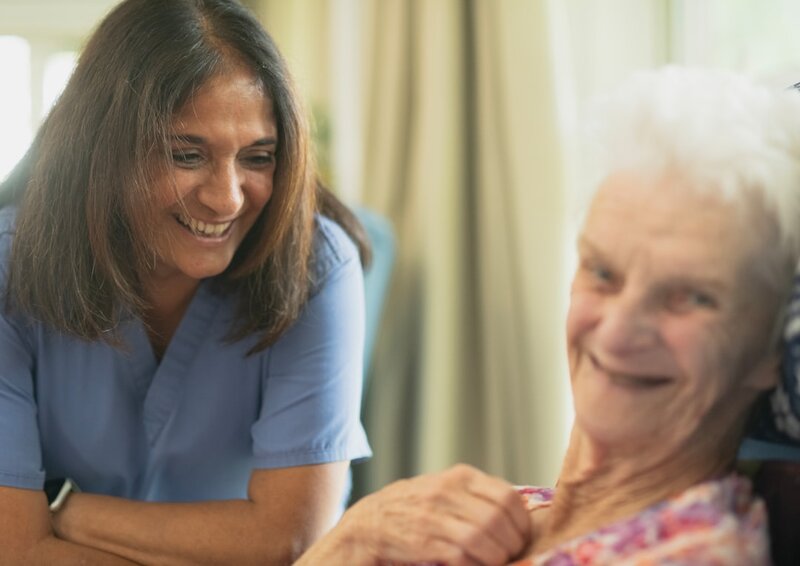
📷 Photo by Age Cymru on Unsplash