Most of the health advice you will ever be given rests on research that studied people younger than you. It is one of the quieter problems in modern medicine: adults over 65 take a large share of the medication prescribed for long-term conditions, yet they have historically been under-represented in the trials that test those medications. Protocols have often excluded people with multiple conditions, people taking several medicines, or people above an arbitrary age cut-off. The result is that clinicians sometimes prescribe to a 74-year-old on the basis of evidence gathered from 45-year-olds.
That gap closes faster when older adults take part. Health research in Ireland is better organised, better regulated and more open to public involvement than it has ever been. If you have ever wondered whether joining a study is worth your time, or whether it is safe, here is how it actually works.
TL;DR
- Adults over 65 are under-represented in clinical trials, which means prescribing decisions for older patients often rest on evidence from younger populations.
- Health research in Ireland spans observational studies (like TILDA, which has followed over 8,000 adults aged 50+ since 2009) through to clinical trials of new medicines.
- Clinical trials of medicines are authorised by the HPRA and reviewed by a National Research Ethics Committee under the National Research Ethics Committees Act 2020.
- Participation is voluntary, consent is informed and ongoing, and you can withdraw at any point without giving a reason and without any effect on your care.
- You can also shape research without being a participant, through Public and Patient Involvement (PPI) panels that help design studies.
- Be wary of any clinic charging you money for an “experimental treatment”. Legitimate trials do not bill participants.
Not all research means swallowing an unknown pill
“Research” covers a much wider range of activity than most people picture. At one end sit observational studies, where researchers simply gather information about your health over time and change nothing about your treatment. The Irish Longitudinal Study on Ageing (TILDA), based at Trinity College Dublin, is the best known example. Since 2009 it has followed a nationally representative group of more than 8,000 people aged 50 and over, measuring everything from grip strength and blood pressure to loneliness and financial security. Much of what we know about ageing in Ireland specifically, rather than ageing in general, comes from that single cohort.
Survey and interview studies sit in similar territory, as do studies that ask permission to look at your existing medical records. Those are governed in Ireland by the Health Research Regulations 2018, which set the consent standards for using personal health data in research.
At the other end are interventional studies, where something about your care is deliberately changed and measured. Clinical trials of medicines run in four broad phases: early safety testing in small groups, then dose-finding, then large comparisons against existing treatment or placebo, then long-term monitoring after a drug is licensed. Trials also test things that are not drugs at all: exercise programmes, physiotherapy protocols, dietary changes, surgical techniques, models of home care.
How trials are regulated in Ireland
Nobody can run a clinical trial of a medicine in Ireland on their own initiative. Two approvals are required. The Health Products Regulatory Authority (HPRA) assesses the scientific and safety case, and a National Research Ethics Committee, established under the National Research Ethics Committees Act 2020, reviews the ethics of the study: whether the risks are justified, whether the information given to participants is honest and comprehensible, and whether vulnerable participants are properly protected.
Since the EU Clinical Trials Regulation took full effect, trials across the European Union are registered on the Clinical Trials Information System, a public database. Studies that are not drug trials go through research ethics committees attached to hospitals and universities. By the time a study is offered to you, independent people whose job is scepticism have already gone through it line by line.
Where research actually happens
Ireland has a network of dedicated clinical research facilities, supported by the Health Research Board, attached to major hospitals and universities in Dublin, Cork and Galway. Cancer Trials Ireland coordinates cancer trials across a wide network of Irish hospitals, which is why oncology is often the area where patients are most likely to be offered a trial. Research into dementia, cardiovascular disease, diabetes and musculoskeletal conditions runs through university-linked centres and, increasingly, through general practice.
Your consultant or GP is the usual route in, so if you have a diagnosed condition and you are curious, ask directly whether anything is recruiting. Patient organisations are the other good route: the Irish Cancer Society, Diabetes Ireland, the Alzheimer Society of Ireland, Arthritis Ireland and the Irish Heart Foundation all publicise studies relevant to their communities.
Questions worth asking before you agree
A good research team will welcome every one of these. If any of them are brushed aside, treat that as information.
- What is this study trying to find out, and what happens to the results?
- What exactly would I have to do, how often, and for how long?
- How much travel is involved, and are expenses covered?
- What are the known risks and side effects, and who do I ring at 2am if something goes wrong?
- Is there a chance I receive a placebo or standard treatment rather than the new one?
- Will my own doctor be kept informed, and what happens to my data?
- If the treatment helps me, can I keep receiving it after the study ends?
Take the information sheet home. Read it with a family member. There is no legitimate study that needs your answer today.
Your rights are not negotiable
Consent in research is not a signature you give once and are then bound by. It is ongoing. You may withdraw at any point, for any reason or none, and your ordinary medical care continues exactly as before. Nobody may pressure you, and nobody may make you feel that leaving is a betrayal of the team. Being paid a modest amount for time and travel is normal in some studies; being charged is not. Any clinic asking you to pay for access to an unproven “breakthrough” is selling something, not researching it.
Shaping research without taking part in it
There is a second door into all of this. Public and Patient Involvement means people with lived experience helping to design studies rather than only participating in them: deciding which questions matter, reviewing whether the participant information makes sense to a real human, sitting on advisory panels. The PPI Ignite Network, funded by the Health Research Board and hosted across Irish universities, exists precisely to make this routine rather than exceptional. Older adults are badly needed in these rooms, because researchers who have never had to manage eight medications and a hospital appointment 60 kilometres away tend to design studies that assume otherwise.
Taking part in research is not an act of charity, and it is not a gamble either. It is a way of making sure the evidence that will guide your own care, and your children’s care, actually includes people like you. At Críonna Health we think that is one of the more quietly powerful things an older adult in Ireland can choose to do.
This article is general information, not medical advice. Always discuss participation in any study with your GP or consultant.
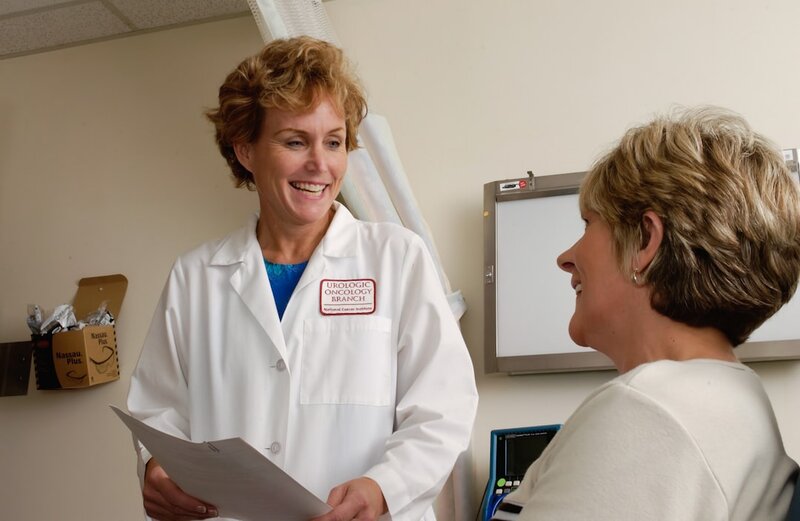
📷 Photo by National Cancer Institute on Unsplash