There is something uniquely restorative about lacing up a pair of boots, stepping onto a trail, and letting the rhythm of the walk take over. Ireland, with its green-shouldered mountains, coastal cliff paths, and ancient pilgrimage routes, offers some of the finest hill walking in Europe — and none of it requires you to be twenty-five or ultra-fit to enjoy.
If you are in your fifties, sixties, seventies, or beyond, hiking and hill walking can be one of the most rewarding ways to stay active, sharpen your mind, and connect with others. Here is a practical guide to getting started — or getting back on the trail — safely and confidently.
TL;DR
- Hiking and hill walking offer significant cardiovascular, bone-health, balance, and mental wellbeing benefits for older adults — backed by WHO and TILDA evidence.
- Ireland has hundreds of waymarked trails graded by difficulty, from gentle looped walks to long-distance routes like the Wicklow Way and Kerry Way.
- Mountaineering Ireland, Sport Ireland, and local walking groups provide guided outings, training, and social connection for walkers of all levels.
- Proper footwear, layered clothing, navigation awareness, and telling someone your route are essential safety steps, especially in Irish mountain weather.
- Start gradually, build distance over weeks, and consult your GP if you have any existing health conditions before tackling steeper terrain.
Why Hiking Is So Good for You After 50
The health case for hiking is strong at any age, but the benefits become especially valuable as we get older. Walking on uneven ground challenges your balance and proprioception — the body’s ability to sense its position in space — which is a key factor in preventing falls. Research from the Irish Longitudinal Study on Ageing (TILDA) consistently shows that regular physical activity is one of the strongest predictors of healthy ageing, independent living, and positive mental wellbeing.
Hill walking is a weight-bearing exercise, meaning it helps maintain bone density and reduce the risk of osteoporosis. The cardiovascular benefits are well established: the World Health Organisation (WHO) recommends at least 150 minutes of moderate-intensity aerobic activity per week for adults aged 65 and over, and a good hill walk ticks that box comfortably.
Beyond the physical, there is growing evidence that time spent in nature reduces cortisol levels, lowers blood pressure, and improves mood. A 2024 meta-analysis published in The Lancet Planetary Health found that regular exposure to green and blue spaces was associated with lower rates of depression and anxiety across all age groups. In Ireland, with its abundance of mountains, forests, and coastline, the prescription is right on your doorstep.
Where to Walk: Irish Trails for Every Level
Ireland has over 40 National Waymarked Trails, managed by Sport Ireland and local authorities, ranging from gentle riverside loops to multi-day mountain routes. Trails are graded to help you choose the right one:
- Easy/Moderate: The Barrow Way (County Carlow/Kilkenny), Lough Derg Way (County Tipperary), and many looped walks in Coillte forests are flat or gently undulating, well-signposted, and suitable for anyone with a reasonable level of fitness.
- Moderate: The Wicklow Way — Ireland’s oldest waymarked trail — offers sections that can be walked as day trips, particularly the gentler southern stretches around Tinahely and Shillelagh.
- More Challenging: The Kerry Way, Beara Way, and Dingle Way traverse spectacular mountain and coastal terrain but involve significant ascent. These are best approached once you have built up your fitness and confidence.
For something shorter, look into local looped walks. The Sport Ireland Trails website lists hundreds of options searchable by county, length, and difficulty. Many are wheelchair- and buggy-accessible, so do not assume a trail is beyond you until you have checked.
Getting Started Safely
If you have not walked regularly on hills before — or if it has been a while — the single most important step is to start gradually. Here are some practical tips:
Talk to your GP first
If you have heart disease, diabetes, arthritis, breathing difficulties, or balance problems, a quick conversation with your GP can help you understand any precautions. Many people with chronic conditions walk safely and enjoyably — it just helps to know your limits and plan accordingly. Under the CDM (Chronic Disease Management) Programme, your GP can assess your fitness and help set goals.
Build up gradually
Start with flat, well-surfaced trails of 3–5 kilometres. Over several weeks, increase your distance and introduce gentle inclines. The 10% rule is a useful guide: increase your weekly distance by no more than 10% to reduce the risk of overuse injuries.
Invest in proper footwear
This is the single most important piece of kit. A good pair of walking boots with ankle support, a waterproof upper, and a grippy sole makes all the difference on wet Irish terrain. Visit a specialist outdoor shop where staff can help you find the right fit. Wear your boots in on shorter walks before tackling anything ambitious.
Dress in layers
Irish mountain weather can change within minutes. A moisture-wicking base layer, an insulating mid-layer, and a waterproof jacket should be your standard kit, even on days that look sunny at the trailhead. Bring a hat and gloves in your pack — temperatures drop significantly with altitude.
Carry the essentials
Even on a short walk, bring water, a snack, a fully charged mobile phone, and a basic first-aid kit. A paper map of the area (or a downloaded offline map) is wise — mobile signal can be unreliable in mountain areas. Walking poles can help with balance and reduce strain on your knees on descents.
Mountain Safety: The Irish Context
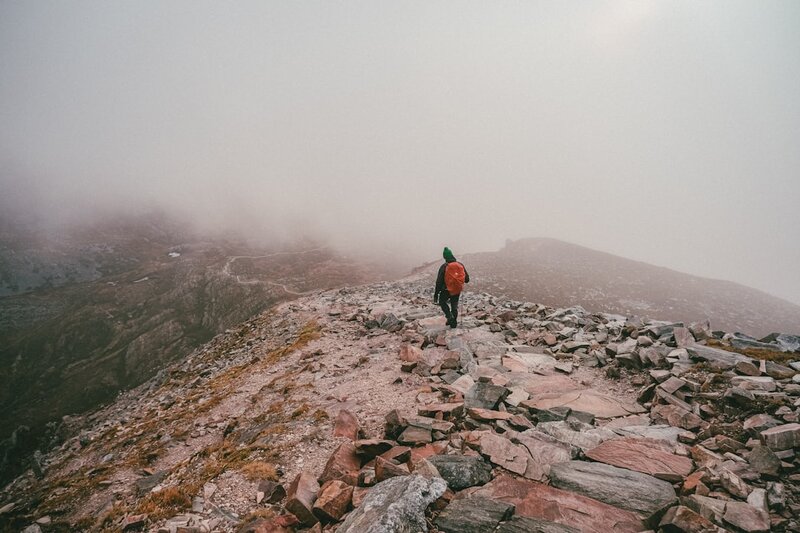
Ireland’s mountains may not be alpine, but they deserve respect. Cloud can descend quickly, paths can be boggy and indistinct, and hypothermia is a real risk even in summer.
Mountain Rescue Ireland, an all-volunteer organisation, responds to hundreds of call-outs each year. Many incidents involve walkers who underestimated the terrain, set out too late, or were inadequately equipped. Their advice is simple:
- Always tell someone where you are going and when you expect to be back.
- Check Met Éireann mountain forecasts before you go — not just the general weather.
- Know how to read a map and use a compass. GPS is helpful but batteries fail.
- Turn back if conditions deteriorate. There is no shame in it — it is good judgement.
Leave No Trace Ireland promotes responsible outdoor recreation. The seven principles — plan ahead, travel on durable surfaces, dispose of waste properly, leave what you find, minimise campfire impacts, respect wildlife, and be considerate of others — apply to every walk, no matter how short.
Finding Your People: Walking Groups and Clubs
One of the great pleasures of hill walking in Ireland is the social side. Walking with others is safer, more motivating, and often more enjoyable than going alone.
- Mountaineering Ireland is the national governing body for hillwalking and climbing. They maintain a directory of affiliated clubs across every county, many of which welcome beginners and run graded walks suited to different fitness levels. Membership also includes insurance cover.
- Get Ireland Walking — a Sport Ireland initiative — coordinates community walking groups nationwide. Many are specifically aimed at people returning to activity or those over 50.
- Active Retirement Ireland groups frequently organise walking outings, combining gentle hill walks with tea stops and social time.
- Men’s Sheds and ICA (Irish Countrywomen’s Association) groups in rural areas sometimes organise seasonal walks.
Walking with a group also gives you access to experienced leaders who know the terrain, carry safety equipment, and can pace the walk to suit the group.
Adapting as You Age
The beauty of hiking is that it scales. As your pace or stamina changes, you can adjust your ambitions without giving up the activity entirely:
- Shorten your routes — a two-hour walk in beautiful surroundings is every bit as valid as an eight-hour mountain traverse.
- Use walking poles — they improve stability, reduce knee strain by up to 25%, and help you maintain an upright posture.
- Choose lower-level routes — canal towpaths, forest trails, and coastal paths offer fresh air and scenery without steep climbs.
- Walk at your own pace — there is no clock. The person who stops to watch a heron on the river is having a better walk than the one racing to the summit.
If mobility is a concern, some national parks and Coillte forests have fully accessible boardwalk trails — check the Coillte website for details.
A Note on Hydration and Nutrition
Dehydration is a particular risk for older adults, as thirst sensation can diminish with age. Drink water before you feel thirsty — aim for small, regular sips throughout your walk rather than a large amount at the end. Bring an energy-dense snack such as nuts, dried fruit, or a banana for longer walks. If you take medication, check whether it affects your tolerance of heat or exertion.
How Críonna Health Can Help
At Críonna Health, we believe that staying active outdoors is one of the most powerful things you can do for your physical and mental health as you age. Whether you are planning your first hill walk or returning to the trails after a health setback, our resources can help you find the right supports, understand your health needs, and connect with local services across Ireland.
Getting Out There
You do not need to summit Carrauntoohil to benefit from hill walking. A gentle loop through a Coillte forest, a stretch of the Barrow Way, or a coastal path in Donegal — any of these will get your heart working, your muscles engaged, and your spirits lifted. The trails are there, the clubs are welcoming, and the Irish landscape is waiting.
Start small, stay safe, and enjoy every step.
📷 Photo by Elliot Voilmy on Unsplash