Technology has quietly become one of the most powerful allies for people who want to remain living independently in their own homes as they get older. From personal alarms to smart home devices, assistive technology — sometimes called “assisted living technology” or “telecare” — can offer peace of mind not only to the person at home but to their family and carers too.
In Ireland, several Government-backed schemes and community organisations make these technologies accessible, often at little or no cost. Whether you are exploring options for yourself or a loved one, understanding what is available is a practical first step toward safer, more confident independent living.
TL;DR
- Assistive technology includes personal alarms, telecare systems, smart home devices, and medication management tools that support independent living for older adults in Ireland
- The Seniors Alert Scheme provides free personal monitored alarms to older adults living alone — contact your local community group or Pobal to apply
- The Housing Adaptation Grant (up to €30,000) and Housing Aid for Older People scheme (up to €8,000) can fund home modifications including assistive tech installations
- ALONE, Age Action, and the HSE offer technology support services including device setup, digital skills training, and befriending check-in calls
- Simple, low-cost solutions like pill organisers, key safes, and motion-sensor lighting can make a significant difference alongside more advanced technology
What Is Assistive Technology?
Assistive technology is any device, system, or piece of equipment that helps a person carry out everyday tasks more safely or easily. In the context of ageing and independent living, this spans a wide range — from something as straightforward as a grab rail or a magnifying reading lamp, right through to GPS trackers, fall detectors, and voice-activated smart home systems.
The key idea is not to replace human care or connection, but to complement it. Assistive technology works best when it fills the gaps between visits from family, carers, or health professionals — quietly supporting someone’s routine so they can stay in their own home with confidence.
Personal Alarms and the Seniors Alert Scheme
Personal monitored alarms remain one of the most widely used — and most trusted — forms of assistive technology for older adults in Ireland. These pendant or wristband devices connect to a 24-hour monitoring centre at the press of a button. If the wearer falls, feels unwell, or simply needs help, a trained operator can respond, contact a nominated person, or dispatch emergency services.
The good news is that the Seniors Alert Scheme, funded by the Department of Rural and Community Development and administered by Pobal, provides these alarms free of charge to older adults who meet the criteria. Generally, you need to be aged 65 or over, living alone or spending significant periods of the day alone, and registered with a local community or voluntary group that participates in the scheme. There is no means test.
Organisations like ALONE can help you access the scheme and set up your alarm. Their national support line (0818 222 024) is a good starting point if you are unsure where to begin.
Telecare and Remote Monitoring
Telecare goes a step beyond the personal alarm. It uses sensors placed around the home — on doors, beds, chairs, or in hallways — to monitor daily patterns and flag anything unusual. For example, a bed sensor might alert a monitoring centre if someone has not got up by a certain time, or a door sensor could notify a carer if the front door is opened during the night.
Some telecare packages include fall detectors that activate automatically without the person needing to press a button — especially valuable for those with cognitive difficulties who might forget to wear or use a manual alarm. Smoke and carbon monoxide detectors can also be linked into the system.
In Ireland, the HSE’s Technology Enabled Care (TEC) programme has been expanding access to these services, particularly for people receiving home support packages. If you or a family member is already in contact with the HSE’s older persons’ services, it is worth asking your public health nurse or GP about what telecare options might be available in your area.
Smart Home Devices — Practical, Not Gimmicky
The phrase “smart home” can sound futuristic, but many of these technologies are surprisingly simple and affordable. Voice-activated assistants like Amazon Alexa or Google Nest can be set up to make phone calls hands-free, set medication reminders, read audiobooks, play music, or even control lighting and heating — all without needing to navigate a screen.
For someone with reduced mobility or dexterity, being able to say “turn on the hall light” or “call my daughter” removes small but meaningful barriers to daily life. Smart plugs can be programmed to turn off appliances automatically, reducing fire risk. Video doorbells let a person see and speak to a visitor without getting up to answer the door.
These devices typically cost between €30 and €150 and can be set up by a family member or volunteer in an afternoon. Age Action Ireland runs digital literacy programmes, including the Getting Started programme delivered in partnership with Vodafone, which can help older adults build confidence with these technologies.
Medication Management Tools
Managing multiple medications is a daily reality for many people over 50, and it is one of the areas where assistive technology can be genuinely life-changing. Automated pill dispensers — such as the Pivotell or TabTimer — release the correct dose at the right time and sound an alarm as a reminder. Some models lock between doses, reducing the risk of accidental double-dosing.
Smartphone apps like Medisafe can send reminders, track adherence, and even alert a family member if a dose is missed. For those who prefer something simpler, a traditional weekly pill organiser combined with a daily phone alarm works perfectly well.
If polypharmacy (taking five or more medications) is a concern, ask your GP or pharmacist about a medication review. The HSE’s Chronic Disease Management Programme includes structured medication reviews for eligible patients, and your community pharmacist can also offer this service.
GPS Trackers and Safety Devices
For people living with early-stage dementia or cognitive difficulties, GPS-enabled devices can provide reassurance and safety. Wearable trackers — often designed to look like a standard watch — allow a family member to check a person’s location through a phone app and set up alerts if they leave a defined area.
These devices are not about surveillance or control; they are about enabling a person to continue going for walks, visiting neighbours, and maintaining their independence for as long as possible, while ensuring that help can be found quickly if they become confused or disoriented.
The Alzheimer Society of Ireland (ASI) can provide guidance on appropriate devices and supports. Their national helpline (1800 341 341) offers confidential advice to both people living with dementia and their families.
Funding and Grants in Ireland
Cost should not be a barrier to accessing assistive technology. Several Irish schemes can help:
- Seniors Alert Scheme — free personal alarms (via Pobal and local community groups)
- Housing Adaptation Grant for People with a Disability — up to €30,000 for adaptations including assistive technology installations, means-tested, administered by your local authority
- Housing Aid for Older People — up to €8,000 for essential repairs and improvements to the homes of older adults, also means-tested
- Mobility Aids Grant — up to €6,000 for mobility-related adaptations
- ALONE — provides technology support, including setting up devices and ongoing phone check-ins
- HSE Community Occupational Therapists — can assess your home and recommend appropriate assistive devices, some of which may be provided through the HSE
Your local Citizens Information Centre can help you navigate which grants you may be eligible for and how to apply.
Starting Simple
You do not need to overhaul your entire home to benefit from assistive technology. Often, the most effective approach is to start with one or two changes that address a specific concern:
- Worried about falls at night? Motion-sensor plug-in lights for the hallway and bathroom cost under €15
- Struggling to hear the doorbell? A wireless doorbell with a flashing light receiver can be placed in any room
- Concerned about leaving the hob on? An automatic hob shut-off device offers peace of mind
- Finding it hard to manage keys? A key safe fitted outside the front door means a carer or family member can access the home in an emergency
These small, practical solutions can make a real difference — and they are often the ones people appreciate most.
Where Críonna Health Comes In
At Críonna Health, we believe that ageing well means having the right information at the right time. Assistive technology is not about admitting you need help — it is about choosing to live on your own terms, in your own home, with a safety net that works quietly in the background. If you are exploring your options, we are here to point you toward the resources and supports that can help.
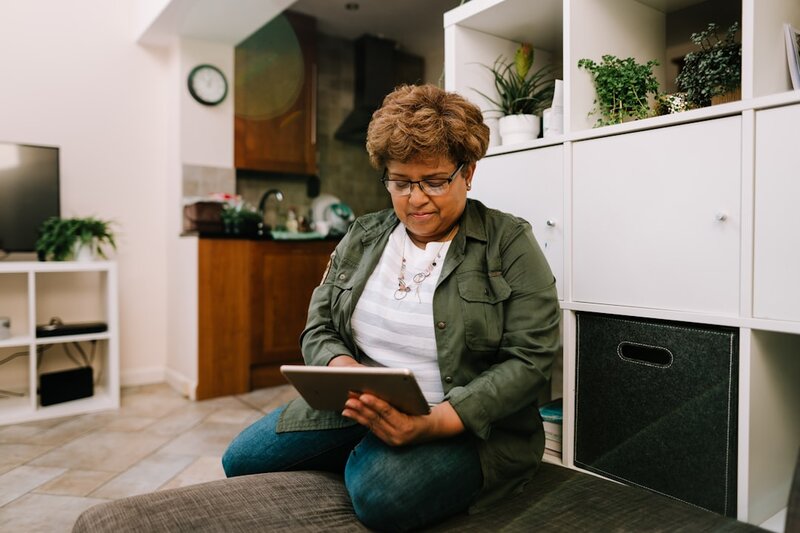
📷 Photo by Centre for Ageing Better (@ageing_better) on Unsplash