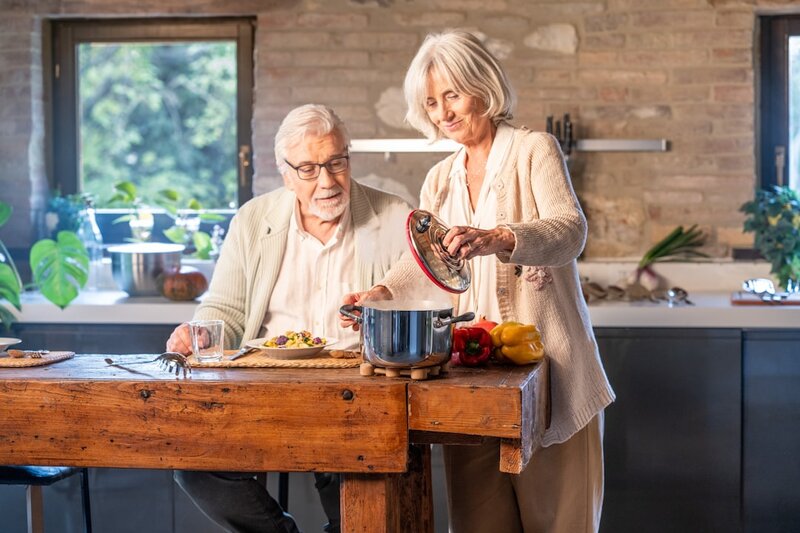
If you live alone — and more than 400,000 people over 50 in Ireland do — cooking can start to feel like a chore rather than a pleasure. When there’s nobody to share a meal with, it’s tempting to rely on toast, ready meals, or skipping meals altogether. But eating well when you live alone isn’t about complicated recipes or hours in the kitchen. It’s about simple habits, a little planning, and rediscovering the quiet satisfaction of feeding yourself well.
TL;DR
- Over 400,000 people aged 50+ in Ireland live alone — cooking for one requires different strategies than cooking for a family
- Batch cooking, freezing portions, and keeping a well-stocked store cupboard are the foundations of solo eating well
- Protein intake matters more as we age — aim for protein at every meal to maintain muscle and energy
- Community meals, Meals on Wheels, and cooking classes offer both nutrition and social connection
- Small kitchen upgrades and safety habits can make cooking easier and safer as mobility or vision changes
Why Cooking for One Can Be Tricky
TILDA (The Irish Longitudinal Study on Ageing) has consistently found that older adults living alone are at higher risk of poor nutrition. It’s not usually about lack of knowledge — most people know what a balanced meal looks like. The barriers are more practical and emotional.
Recipes are designed for four. Supermarket portions assume a family. Motivation dips when there’s no one across the table. Bereavement, retirement, or children moving away can all change our relationship with food. And physical changes — reduced appetite, altered taste, difficulty standing for long periods — add another layer.
None of this means you can’t eat brilliantly on your own. It just means the approach needs adjusting.
The Store Cupboard Strategy
A well-stocked cupboard is the single best defence against the “I can’t be bothered” evenings. Keep these staples on hand and you’re never more than 15 minutes from a proper meal:
- Tinned fish — salmon, sardines, mackerel. Rich in omega-3, protein, and vitamin D. Perfect on toast with a squeeze of lemon.
- Tinned beans and lentils — fibre, protein, and iron. Add to soups, stews, or have on toast.
- Eggs — possibly the most versatile single-portion food. Scrambled, poached, or in a quick omelette with whatever vegetables you have.
- Frozen vegetables — just as nutritious as fresh, no waste, and ready in minutes. Peas, spinach, and mixed vegetables are brilliant standbys.
- Porridge oats — a warm, filling breakfast that supports heart health. Top with a banana or frozen berries.
- Long-life milk or fortified plant milk — calcium and vitamin D without worrying about use-by dates.
Batch Cooking: Your Best Friend
Cooking a full meal for one person every day is inefficient and, frankly, exhausting. Batch cooking solves this beautifully. The idea is simple: when you do cook, make four portions instead of one. Eat one, refrigerate one for tomorrow, freeze the other two.
Soups, stews, curries, and pasta sauces all freeze well. Label containers with the date and contents (a permanent marker on masking tape works perfectly). Most home-cooked meals will keep in the freezer for up to three months.
This means on tired evenings, you have a home-cooked meal ready in the time it takes to reheat — far better than any ready meal, and far cheaper too.
Protein: The Nutrient That Matters More With Age
As we get older, our bodies become less efficient at using protein to maintain muscle. Research from TILDA and international studies suggests that adults over 50 need more protein than younger people — roughly 1 to 1.2 grams per kilogram of body weight daily, compared with 0.8g for younger adults.
In practical terms, this means including a source of protein at every meal:
- Breakfast: eggs, yoghurt, or porridge made with milk rather than water
- Lunch: tinned fish, cheese, beans on toast, or soup with lentils
- Dinner: chicken, fish, meat, tofu, or a bean-based dish
- Snacks: nuts, cheese and crackers, or a glass of milk
This is particularly important for preventing sarcopenia — the age-related loss of muscle mass that affects strength, balance, and independence.
Making Mealtimes Matter
Eating alone doesn’t have to mean eating joylessly. Small changes can transform a solitary meal into something you look forward to:
- Set the table properly — even for one. A placemat, a proper plate, and sitting down (not eating standing at the counter) signals to your brain that this is a meal, not just fuel.
- Listen to something — RTÉ Radio 1, a podcast, or music can provide companionship during meals.
- Try one new recipe a week — it doesn’t have to be elaborate. Even a new way of preparing eggs keeps things interesting.
- Eat with others when you can — even once or twice a week makes a difference. Community dining, lunch clubs, and shared meals are available across Ireland.
Community Supports in Ireland
You don’t have to do this entirely on your own. Ireland has a network of supports specifically designed to help:
- Meals on Wheels — operated by local community groups across Ireland, delivering hot, nutritious meals. Contact your local HSE Community Care team or local Family Resource Centre for details in your area.
- ALONE — provides a range of supports including befriending and practical assistance. Their national support line (0818 222 024) can connect you with local services.
- Active Retirement Ireland — many local groups organise communal meals, cooking demonstrations, and social dining events.
- Age Action — runs programmes and can signpost you to nutrition and cooking supports in your community.
- Men’s Sheds — increasingly hosting cooking classes and communal meals, recognising that men living alone are at particular risk of poor nutrition.
Some Local Sports Partnerships and Family Resource Centres also run “Cooking for One” classes — these combine practical skills with social connection, and they’re often free or very low cost.
Kitchen Safety as Things Change
If you’re finding cooking physically more challenging — whether due to arthritis, reduced vision, or balance issues — a few practical adjustments can help enormously:
- A perching stool allows you to sit while preparing food, reducing fatigue and fall risk.
- Good lighting over the hob and worktop is essential — if your kitchen is dim, a simple under-cabinet LED strip can transform things.
- Easy-grip utensils are available from occupational therapy suppliers and make a real difference if arthritis affects your hands.
- A timer — whether on your phone or a standalone kitchen timer — helps if memory is occasionally unreliable.
- Never leave cooking unattended — kitchen fires are a significant risk in Ireland, and older adults are disproportionately affected.
If you need more substantial kitchen adaptations, your local HSE Occupational Therapist can assess your needs and may be able to provide equipment or recommend grants through your local authority’s Housing Adaptation Grant scheme.
A Final Thought
Cooking for one isn’t a lesser version of cooking for a family — it’s a different skill, and one worth developing. When you eat well, you sleep better, think more clearly, have more energy, and maintain the strength and independence that matter so much.
At Críonna Health, we believe that good nutrition is one of the most powerful tools for healthy ageing — and it starts with something as simple as a well-stocked cupboard and a willingness to cook for the most important person in the room: yourself.
📷 Photo by Md Ishak Raman on Unsplash