If there’s one thing many of us take for granted in our younger years, it’s the ability to bend down, reach overhead, or twist around without a second thought. As we move through our 50s, 60s, and beyond, those effortless movements can begin to feel a little stiffer, a little tighter. The good news? Regular stretching is one of the simplest, most accessible things you can do to stay supple, reduce pain, and maintain your independence — and you don’t need a gym membership or special equipment to get started.
TL;DR
- Regular stretching after 50 helps maintain flexibility, reduce joint stiffness, prevent falls, and support daily independence
- Just 10–15 minutes of gentle stretching most days can deliver measurable improvements in range of motion and pain reduction
- Static stretching (holding a position for 20–30 seconds) is safest and most effective for older adults
- Ireland’s Local Sports Partnerships (LSPs), Age & Opportunity, and Active Retirement groups offer free or low-cost stretching and flexibility classes nationwide
- Always warm up before stretching, never bounce, and consult your GP or physiotherapist if you have joint conditions, recent surgery, or osteoporosis
Why Flexibility Matters More as We Age
From around the age of 30, our muscles gradually lose elasticity and our connective tissues — tendons, ligaments, and fascia — become less pliable. Research from the Irish Longitudinal Study on Ageing (TILDA) consistently highlights that reduced mobility is one of the strongest predictors of loss of independence in later life. Tight muscles and stiff joints don’t just cause discomfort; they affect balance, posture, and the ability to carry out everyday tasks like reaching a high shelf, getting in and out of a car, or bending to tie your shoes.
The World Health Organisation’s guidelines on physical activity for older adults recommend flexibility and balance exercises on at least three days per week, alongside aerobic and strength training. Yet stretching is often the forgotten element of a fitness routine — overshadowed by walking, swimming, or strength work. It deserves its own spotlight.
The Evidence-Based Benefits of Regular Stretching
The benefits of consistent stretching extend well beyond simply touching your toes:
- Improved range of motion: Regular stretching helps maintain and even restore the movement available at your joints. A 2019 review in the Journal of Aging Research found that older adults who stretched regularly showed significant improvements in joint flexibility within 8–12 weeks.
- Reduced pain and stiffness: Gentle stretching increases blood flow to muscles and joints, easing morning stiffness — a common complaint for those with osteoarthritis. Arthritis Ireland recommends daily stretching as a core part of self-management for joint conditions.
- Better balance and fall prevention: Tight calf muscles, hamstrings, and hip flexors can alter your gait and centre of gravity. Improving flexibility in these areas supports better balance, which is critical given that falls are the leading cause of injury-related hospital admissions for older adults in Ireland, according to the HSE.
- Stress relief and better sleep: Stretching activates the parasympathetic nervous system — the body’s ‘rest and digest’ mode. An evening stretching routine can help calm the mind, reduce muscle tension, and promote more restful sleep.
- Improved posture: Hours spent sitting — whether at a desk, in a car, or watching television — tighten the chest and hip flexors while weakening the back muscles. Targeted stretches can counteract this, helping you stand taller and breathe more easily.
What Type of Stretching Is Best After 50?
Not all stretching is created equal. Here’s what works best for older adults:
Static stretching is the gold standard for improving flexibility safely. This involves holding a stretch in a comfortable position for 20–30 seconds, breathing steadily throughout. It’s gentle, controlled, and suitable for all fitness levels.
Dynamic stretching — slow, controlled movements through your full range of motion (such as arm circles or leg swings) — is excellent as a warm-up before walking or other exercise. It gets the blood flowing without the risk of overstretching cold muscles.
Ballistic stretching (bouncing into a stretch) is best avoided after 50. It can cause microtears in muscles and tendons that are less resilient than they once were.
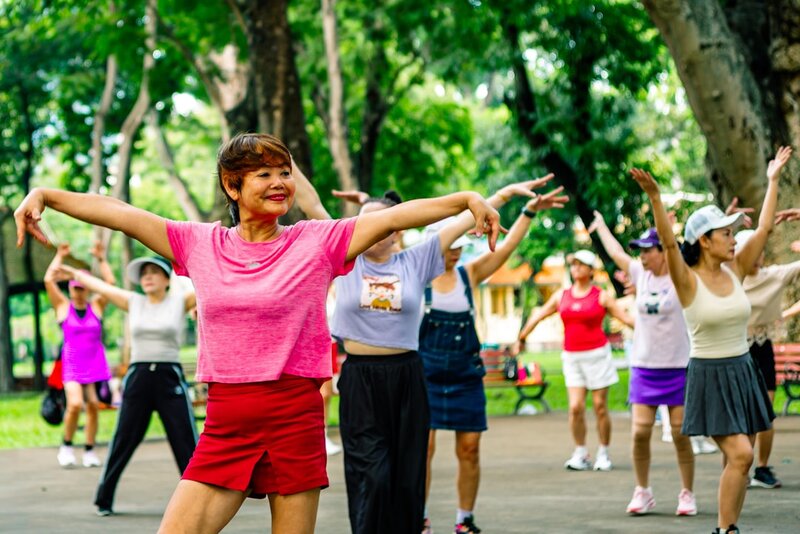
If you enjoy yoga or tai chi, both incorporate stretching within a broader practice that also builds balance and mindfulness. Many community centres and Active Retirement groups across Ireland offer classes specifically designed for older adults.
A Simple Daily Stretching Routine
You don’t need to set aside an hour. Ten to fifteen minutes, most days, can make a real difference. Here’s a gentle routine you can do at home — standing or seated:
1. Neck stretches: Slowly tilt your head to one side, bringing your ear towards your shoulder. Hold for 20 seconds. Repeat on the other side. Then gently turn your head to look over each shoulder.
2. Shoulder rolls and chest opener: Roll your shoulders backwards five times. Then clasp your hands behind your back (or hold a tea towel between them) and gently lift your arms to open the chest. Hold for 20 seconds.
3. Seated hamstring stretch: Sit on the edge of a sturdy chair. Extend one leg straight ahead with your heel on the floor. Keeping your back straight, lean gently forward from the hips until you feel a stretch along the back of your thigh. Hold for 20–30 seconds. Switch legs.
4. Calf stretch: Stand facing a wall with one foot forward and one back, both heels on the floor. Lean into the wall until you feel a stretch in the back calf. Hold for 20–30 seconds. Switch legs.
5. Hip flexor stretch: Stand tall and take a step back with one foot. Gently bend your front knee while keeping your back leg straight, tucking your pelvis slightly under. You should feel a stretch at the front of your back hip. Hold for 20–30 seconds.
6. Seated spinal twist: Sit upright in a chair. Place your right hand on the outside of your left knee and gently twist your upper body to the left, looking over your left shoulder. Hold for 20 seconds. Repeat on the other side.
Always warm up first — even a minute or two of marching on the spot will do. Never force a stretch beyond mild discomfort, and keep breathing steadily throughout.
Stretching Safely: Important Precautions
Stretching is generally very safe, but a few precautions are worth noting:
- If you have osteoporosis: Avoid deep forward bends and twisting under load. Your GP or physiotherapist can advise on bone-safe stretches.
- After joint replacement surgery: Follow your surgeon’s guidance on which movements to avoid during recovery. Your physiotherapist will tailor a stretching programme to your specific situation.
- If you have arthritis: Stretch gently, especially during flare-ups. Warmth (a warm shower or heat pack) before stretching can ease stiff joints.
- If you feel sharp pain: Stop immediately. A mild pulling sensation is normal; sharp or shooting pain is not.
If you’re unsure where to start, ask your GP for a referral to a HSE community physiotherapist, or contact your local chartered physiotherapist through the Irish Society of Chartered Physiotherapists (ISCP).
Finding Classes and Support in Ireland
One of the best things about stretching is that it’s free and can be done anywhere. But if you prefer company or guidance, Ireland has plenty of options:
- Local Sports Partnerships (LSPs): Every county has one, and most run programmes specifically for older adults, including flexibility and balance classes. Many are free or very low cost.
- Age & Opportunity — Go for Life: This national programme supports physical activity for older adults, including grant-funded local group activities.
- Active Retirement Ireland: With branches across the country, Active Retirement groups frequently offer gentle exercise classes that include stretching and mobility work.
- HSE Chronic Disease Management (CDM) Programme: If you’re managing a chronic condition like arthritis, COPD, or diabetes, your GP can refer you for structured exercise support, which often includes flexibility training.
- Men’s Sheds: Some Men’s Sheds now incorporate health and fitness sessions, including stretching, as part of their programme.
For those who prefer to stretch at home, the HSE and Arthritis Ireland both offer free downloadable exercise guides that include illustrated stretching routines suitable for older adults.
Making It a Habit
The biggest challenge with stretching isn’t the stretching itself — it’s remembering to do it. Here are a few tips to build it into your day:
- Anchor it to an existing habit: Stretch while the kettle boils, after your morning walk, or before bed.
- Start small: Even five minutes is better than none. You can build up gradually.
- Keep it enjoyable: Put on music or the radio. Stretch in the garden on a fine day. Join a class for the social element.
- Track your progress: You’ll likely notice improvements within a few weeks — reaching a little further, bending a little more easily, moving with less stiffness in the morning.
At Críonna Health, we believe that healthy ageing is about the small, consistent choices that add up over time. Stretching is one of those choices — quiet, unflashy, but remarkably effective. Your body will thank you for it.