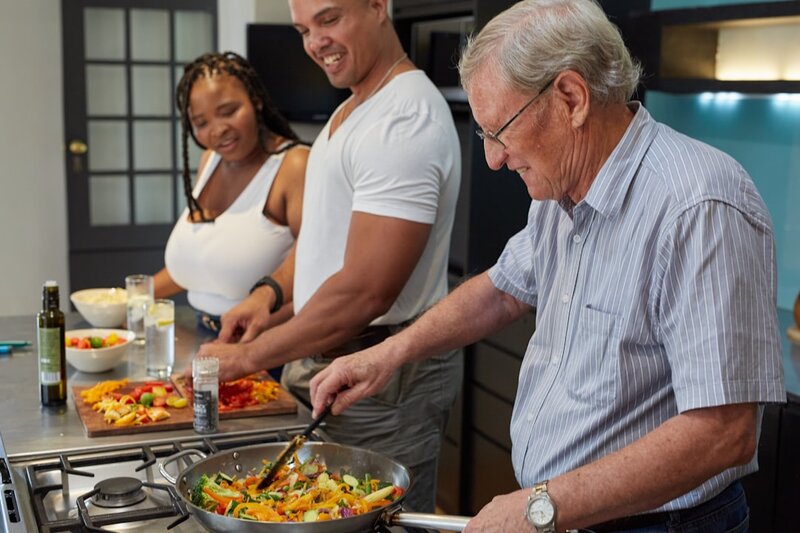
If you’re over 50 and trying to eat well, you’ve probably heard the advice to get enough protein. But how much is enough? And are you getting it from the right sources? The truth is, protein needs genuinely increase as we age — and many older adults in Ireland aren’t getting enough to protect their muscles, bones, and overall health.
Whether you’re recovering from an illness, trying to stay active, or simply want to feel stronger in your daily life, understanding your protein needs is one of the most practical things you can do for healthy ageing.
TL;DR
- Adults over 50 need more protein than younger adults — around 1.0–1.2g per kilogram of body weight daily, rising to 1.2–1.5g if you’re recovering from illness or very active
- Many older adults in Ireland fall short of their protein needs, particularly those living alone or on a fixed income
- Spreading protein across three meals (25–30g each) is more effective than loading it all into dinner
- Good Irish sources include eggs, dairy, fish, chicken, beans, lentils, and fortified foods — affordable options exist for every budget
- Combining protein with resistance exercise is the most effective strategy for preventing age-related muscle loss (sarcopenia)
Why Protein Matters More After 50
From around the age of 50, our bodies become less efficient at using the protein we eat — a phenomenon researchers call anabolic resistance. This means that even if you eat the same amount of protein you always have, your muscles may not respond as well. At the same time, age-related muscle loss (sarcopenia) begins to accelerate, with adults losing roughly 1–2% of their muscle mass each year after 50 if they don’t take active steps to prevent it.
The consequences are real: reduced strength, greater risk of falls, slower recovery from illness or surgery, and a gradual loss of independence. Research from the Irish Longitudinal Study on Ageing (TILDA) has shown that sarcopenia affects a significant proportion of older adults in Ireland, with those who are physically inactive and nutritionally deficient at greatest risk.
The good news? Adequate protein intake, combined with regular physical activity, can significantly slow or even reverse muscle loss at any age.
How Much Protein Do You Actually Need?
The current general recommendation for adults is 0.8g of protein per kilogram of body weight per day. However, leading nutrition bodies — including the European Society for Clinical Nutrition and Metabolism (ESPEN) — now recommend that healthy older adults aim for 1.0–1.2g per kilogram daily. If you’re recovering from illness, managing a chronic condition, or exercising regularly, that figure rises to 1.2–1.5g per kilogram.
In practical terms, for someone weighing 70kg, that’s roughly 70–84g of protein per day — and up to 105g if you’re very active or recovering.
To put that in context:
- A chicken breast (150g) provides about 45g of protein
- Two eggs provide about 12g
- A tin of baked beans provides about 10g
- A glass of milk (200ml) provides about 7g
- A portion of Greek yoghurt (150g) provides about 15g
- A portion of salmon (130g) provides about 26g
The Timing Trick: Spread It Out
One of the most useful insights from recent research is that when you eat protein matters almost as much as how much you eat. Many people in Ireland follow a pattern of a light breakfast (tea and toast), a modest lunch, and a large dinner — meaning most of their protein arrives in one meal.
The problem? Your body can only use a certain amount of protein for muscle building at any one time — roughly 25–30g per meal. Any excess beyond that is used for energy or excreted, not stored for later muscle repair.
The solution is straightforward: aim for 25–30g of protein at each of your three main meals. This gives your muscles three opportunities during the day to repair and rebuild, rather than just one.
What does 25–30g of protein look like at each meal?
Breakfast: Two scrambled eggs on wholemeal toast with a glass of milk (approx. 25g). Or porridge made with milk, topped with nuts and a pot of Greek yoghurt (approx. 22g).
Lunch: A tin of tuna or salmon with a mixed salad and two slices of wholemeal bread (approx. 28g). Or a bowl of lentil soup with cheese and crackers (approx. 20g).
Dinner: A palm-sized portion of chicken, fish, or lean meat with vegetables and potatoes (approx. 30–40g). Or a bean and vegetable stew with rice (approx. 18–22g).
Protein on a Budget: Affordable Irish Options
One concern many older adults raise is cost. Protein-rich foods like fresh fish and lean meat can be expensive, particularly on a fixed income. But getting enough protein doesn’t require expensive cuts of meat or specialist supplements.
Some of the most affordable protein sources available in Ireland include:
- Eggs — still one of the best-value protein foods in any supermarket. At roughly €3 for a dozen, two eggs provide 12g of high-quality protein.
- Tinned fish — sardines, mackerel, and tuna are affordable, long-lasting, and packed with protein and omega-3 fatty acids.
- Beans and lentils — dried or tinned, these are among the cheapest protein sources available. A tin of chickpeas costs under €1 and provides around 14g of protein.
- Milk and yoghurt — dairy remains one of the most accessible protein sources in Ireland. Full-fat or low-fat, both are excellent.
- Peanut butter — two tablespoons provide about 7g of protein and can be added to porridge, toast, or smoothies.
- Frozen chicken or turkey — often significantly cheaper than fresh and just as nutritious.
Community meals programmes, such as those run by Active Retirement Ireland and local Men’s Sheds, can also help ensure you’re eating well and getting enough protein, particularly if you’re cooking for one.
Plant Protein: A Growing Option
You don’t need to eat meat at every meal to meet your protein needs. Plant-based proteins — including beans, lentils, chickpeas, tofu, nuts, and seeds — are excellent sources, and many older adults in Ireland are incorporating more of these into their diets.
The key with plant protein is variety. Unlike animal proteins, most plant foods don’t contain all nine essential amino acids in sufficient quantities on their own. But by eating a variety of plant proteins throughout the day — for example, beans with rice, or hummus with wholemeal bread — you’ll get the full range your body needs.
If you’re following a vegetarian or vegan diet, consider speaking with a registered dietitian (look for CORU-registered professionals via the Irish Nutrition and Dietetic Institute) to ensure your protein intake is meeting your needs, particularly the amino acid leucine, which is especially important for muscle synthesis.
Protein and Exercise: The Winning Combination
Protein alone won’t prevent muscle loss. The evidence is clear: combining adequate protein with regular resistance exercise is the most effective strategy for maintaining muscle mass, strength, and function after 50.
Resistance exercise doesn’t mean you need to join a gym or lift heavy weights. It includes:
- Bodyweight exercises like squats, wall press-ups, and sit-to-stands
- Using resistance bands
- Carrying shopping bags
- Gardening tasks like digging and lifting
- Chair-based exercises for those with limited mobility
Ireland’s Local Sports Partnerships (LSPs) run strength and balance programmes specifically designed for older adults in communities across the country. Age & Opportunity’s Go for Life programme also supports active ageing through local grants and training. Your GP can refer you to community-based programmes through the HSE’s Chronic Disease Management (CDM) Programme if you have a qualifying condition.
When to Consider a Supplement
For most people, a well-planned diet provides all the protein you need. However, there are situations where a protein supplement may be helpful:
- If you’re recovering from surgery, a fall, or a hospital stay and your appetite is poor
- If you have a condition that increases protein needs, such as cancer, kidney disease (under medical guidance), or chronic wounds
- If you’re struggling to eat enough due to swallowing difficulties, nausea, or dental problems
Oral nutritional supplements (ONS) are available on prescription from your GP in Ireland and are covered under the medical card and GP visit card schemes. Products like Ensure, Fortisip, and Fresubin provide concentrated protein and calories in a convenient format. Always consult your GP or dietitian before starting supplements — particularly if you have kidney disease, as excessive protein can place additional strain on the kidneys.
Practical Tips to Boost Your Protein Today
- Add milk to your porridge instead of water — an easy extra 7g of protein
- Keep tinned fish, beans, and eggs in stock — quick, affordable protein you can add to any meal
- Snack on nuts, cheese, or yoghurt between meals if your appetite is small
- Sprinkle seeds or nuts onto soups and salads for an extra protein boost
- Choose wholemeal bread over white — it contains slightly more protein per slice
- Don’t skip breakfast — a protein-rich start sets you up for the day
Where to Get Support
If you’re unsure whether you’re getting enough protein, or if you have a health condition that affects your diet, support is available:
- Your GP can assess your nutritional status, refer you to a dietitian, and arrange blood tests if needed
- HSE Community Dietitians offer free nutritional guidance through the CDM Programme for those with qualifying chronic conditions
- The Irish Nutrition and Dietetic Institute (INDI) maintains a directory of private registered dietitians at indi.ie
- Meals on Wheels and community dining services can help ensure balanced nutrition if cooking has become difficult
- Críonna Health provides evidence-based resources and guidance on nutrition and healthy ageing in Ireland
Getting enough protein after 50 isn’t about expensive supplements or drastic dietary changes. It’s about making small, practical adjustments to what you already eat — and pairing those changes with regular movement. Your muscles will thank you for it.
📷 Photo by Sweet Life on Unsplash