Not everyone can lace up a pair of trainers and head out for a brisk walk — and that is perfectly all right. Whether you are recovering from surgery, managing arthritis, living with a neurological condition, or simply finding that your balance is not what it used to be, there are plenty of ways to stay active without ever leaving your chair. Chair-based exercise is one of the most accessible, evidence-backed forms of movement available to older adults, and it is finally getting the recognition it deserves.
TL;DR
- Chair-based exercise is a safe, effective way for older adults with limited mobility to maintain strength, flexibility, and cardiovascular fitness.
- Research shows seated exercise can reduce falls risk, ease joint pain, improve mood, and support independence — even in people with chronic conditions.
- Ireland offers free and low-cost chair-based programmes through HSE day care centres, Active Retirement groups, Arthritis Ireland, and local sports partnerships.
- You need minimal equipment to get started — a sturdy chair, comfortable clothing, and a little motivation.
- Always check with your GP or physiotherapist before starting a new exercise programme, especially if you have a heart condition or recent surgery.
Why Movement Matters — Even When Mobility Is Limited
The benefits of physical activity do not disappear just because you cannot do a 5K. The World Health Organisation’s guidelines on physical activity for older adults explicitly state that some movement is always better than none. Even modest increases in activity can improve cardiovascular health, reduce the risk of falls, maintain joint mobility, and support mental wellbeing.
TILDA (The Irish Longitudinal Study on Ageing) has consistently shown that physical inactivity is one of the strongest predictors of disability and loss of independence in later life. Their research also highlights that many older adults in Ireland fall well below recommended activity levels — particularly those with mobility difficulties. Chair-based exercise offers a realistic, dignified way to close that gap.
What Exactly Is Chair-Based Exercise?
Chair-based exercise is exactly what it sounds like: structured physical activity performed while seated in a sturdy chair, or using a chair for support while standing. It typically includes:
- Seated marching — lifting alternate knees to get the heart rate up gently
- Arm raises and circles — maintaining shoulder range of motion and upper body strength
- Seated leg extensions — strengthening the quadriceps, which are crucial for standing and walking
- Ankle circles and toe raises — supporting circulation and reducing swelling
- Seated twists and side bends — keeping the core engaged and the spine mobile
- Resistance band work — adding gentle resistance to build muscle without heavy weights
Sessions can be as short as ten minutes and built up gradually. The key is consistency rather than intensity.
The Evidence: What the Research Says
A growing body of research supports the effectiveness of seated exercise programmes for older adults. A systematic review published in the British Journal of Sports Medicine found that chair-based interventions improved lower limb strength, flexibility, and balance confidence in older adults with mobility limitations. Other studies have demonstrated benefits for cardiovascular fitness, pain management in osteoarthritis, and reduction in depressive symptoms.
For people living with conditions such as Parkinson’s disease, multiple sclerosis, or recovering from a stroke, adapted seated exercise has been shown to support motor function, coordination, and quality of life. In residential care settings, regular chair-based programmes have been associated with fewer falls and greater social engagement among participants.
Getting Started: Practical Tips
You do not need a gym membership or expensive equipment. Here is how to begin:
- Choose the right chair. Use a stable, armless chair with a firm seat — dining chairs work well. Avoid wheeled office chairs or anything that could tip.
- Wear comfortable clothing. Loose-fitting clothes and supportive, flat-soled shoes. Avoid slippery socks.
- Start slowly. Begin with five to ten minutes and gradually build up. Aim for at least 150 minutes of moderate activity per week, as recommended by the HSE, but any amount counts.
- Warm up and cool down. Gentle neck rolls, shoulder shrugs, and ankle rotations prepare the body. Slow stretches at the end help with recovery.
- Stay hydrated. Keep a glass of water nearby, especially if you are on medications that affect fluid balance.
- Listen to your body. Mild discomfort is normal; pain is not. Stop if something does not feel right and speak to your GP or physiotherapist.
Where to Find Chair-Based Classes in Ireland
Ireland has a growing network of accessible exercise options for older adults with limited mobility:
- HSE day care centres — Many HSE-funded day care centres offer seated exercise as part of their activity programmes. Ask your public health nurse or GP for a referral.
- Active Retirement Ireland — Local Active Retirement groups across the country run gentle exercise classes, including chair-based sessions. Visit activeretirementireland.com to find your nearest group.
- Arthritis Ireland — Offers specific seated exercise programmes designed for people living with arthritis and related joint conditions.
- Local Sports Partnerships (LSPs) — Each county has an LSP that runs community exercise programmes, many of which include chair-based options. These are often free or very low cost.
- Age & Opportunity — Their Go for Life programme promotes physical activity for older adults and provides grants to community groups for equipment and training.
- HSE Community Physiotherapy — If you have specific mobility issues, your GP can refer you to a community physiotherapist who can design a personalised seated exercise plan.
Making It Social
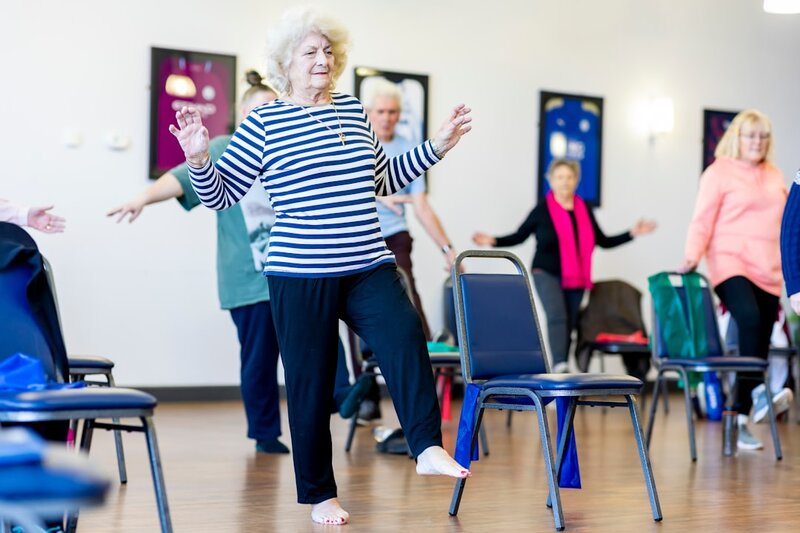
One of the greatest benefits of group chair-based exercise is the social connection it brings. Loneliness and isolation are significant health risks for older adults — ALONE Ireland has highlighted that social isolation can be as harmful to health as smoking fifteen cigarettes a day. Attending a weekly seated exercise class gives you a reason to get out, a chance to chat, and a sense of belonging.
If you cannot attend a group class, online options have expanded significantly since the pandemic. RTÉ and the HSE both produced free chair-based exercise videos that remain available online. Some physiotherapy practices also offer virtual group sessions.
A Word on Safety
Chair-based exercise is one of the safest forms of physical activity, but it is still wise to check with your GP before starting — particularly if you have a heart condition, uncontrolled blood pressure, or have recently had surgery. If you are on blood-thinning medication or have osteoporosis, your physiotherapist can advise on any movements to modify or avoid.
Under the HSE’s Chronic Disease Management (CDM) Programme, your GP can provide structured exercise advice as part of your care plan at no additional cost if you have a medical card or GP visit card and a qualifying condition.
Every Movement Counts
At Críonna Health, we believe that staying active is not about running marathons — it is about moving in ways that work for your body, your circumstances, and your life. Chair-based exercise is a powerful, dignified, and enjoyable way to maintain strength, flexibility, and independence as you age. Whether you start with five minutes of seated marching at home or join a group class at your local community centre, every movement counts.
The best exercise is the one you actually do. Pull up a chair and get started.
📷 Photo by Centre for Ageing Better on Unsplash