There is a particular kind of magic in hearing a tune come together under your own fingers for the first time. Whether it is a few halting notes on a tin whistle or the opening bars of a favourite song on a second-hand keyboard, learning to play a musical instrument after 50 is one of the most rewarding things you can do for your brain, your body, and your sense of self.
Yet many people dismiss the idea before they even begin. “I’m too old.” “My fingers are too stiff.” “You can’t teach an old dog new tricks.” None of that is true — and the science backs it up.
TL;DR
- Learning a musical instrument after 50 strengthens memory, coordination, and cognitive reserve — research shows measurable brain benefits within months.
- Playing music engages both hemispheres of the brain simultaneously, building new neural connections at any age thanks to neuroplasticity.
- It is never too late to start: beginners in their 60s and 70s show significant improvements in processing speed, attention, and fine motor skills.
- Ireland offers excellent community music options through Comhaltas Ceoltóirí Éireann, ETBs, Men’s Sheds, Active Retirement groups, and local music schools.
- Choose an instrument that suits your physical abilities — piano, ukulele, tin whistle, and bodhrán are all excellent beginner-friendly options for older adults.
Your Brain on Music: What the Research Says
Playing a musical instrument is sometimes called a “full-brain workout,” and for good reason. Unlike listening to music — which is beneficial in its own right — actually playing demands simultaneous engagement of motor control, auditory processing, visual reading, memory recall, and emotional expression. Few activities light up as many brain regions at once.
A landmark 2014 study published in the Journal of Neuroscience found that musical training in older adults led to measurable improvements in auditory processing and cognitive function. More recently, researchers at the University of Edinburgh demonstrated that adults who took up piano lessons in later life showed improvements in working memory, processing speed, and attention after just four months of weekly practice.
This matters because of a concept called cognitive reserve — the brain’s ability to cope with age-related changes by drawing on alternative neural pathways. The more complex and sustained the mental activity, the greater the reserve. Learning an instrument is one of the most cognitively demanding leisure activities there is, which is precisely what makes it so powerful.
The Irish Longitudinal Study on Ageing (TILDA) has consistently highlighted the link between engaging in novel, mentally stimulating activities and better cognitive outcomes in later life. Playing music ticks every box.
It Is Never Too Late to Start
One of the most persistent myths about musical learning is that you need to start young. While early training does offer advantages, the adult brain retains a remarkable capacity for learning new skills — a quality neuroscientists call neuroplasticity. Your brain continues to form new connections throughout life, and challenging it with something like learning an instrument actually encourages this process.
Older beginners often bring advantages that children lack: patience, life experience, motivation, and a genuine desire to learn for the sheer pleasure of it. Music teachers who work with adult learners frequently report that their older students progress quickly once they let go of perfectionism and embrace the process.
If arthritis or reduced grip strength is a concern, the right instrument choice makes a world of difference. More on that below.
Physical Benefits You Might Not Expect
The benefits of playing an instrument extend well beyond the brain. Regular practice improves fine motor skills and hand-eye coordination, which can help maintain dexterity as you age. For instruments that involve breath control — such as the tin whistle, flute, or harmonica — there are measurable benefits for lung capacity and respiratory health.
Playing music also activates the parasympathetic nervous system, lowering cortisol levels and reducing stress. A 2020 study in Psychoneuroendocrinology found that adults who played instruments regularly had significantly lower markers of chronic stress compared to non-musicians — a finding with real implications for heart health, immune function, and sleep quality.
For those dealing with chronic pain or stiffness in the hands and wrists, gentle practice on a suitable instrument can actually support mobility, provided you pace yourself and take breaks. Many physiotherapists and occupational therapists recommend musical activities as part of rehabilitation programmes.
The Social Side: Why Playing With Others Matters
One of the most underrated benefits of taking up an instrument is the social connection it brings. Joining a community music group, a session in the local pub, or an adult beginner class creates a sense of belonging that is every bit as important for health as the music itself.
Ireland has an extraordinarily rich tradition of community music-making. Comhaltas Ceoltóirí Éireann, with over 400 branches across Ireland, welcomes adult learners and runs workshops, slow sessions, and classes in traditional instruments including fiddle, concertina, bodhrán, and tin whistle. You do not need to be an expert — many branches specifically cater to beginners and improvers.
Education and Training Boards (ETBs) across Ireland offer affordable evening and daytime music courses for adults, from guitar to piano to traditional instruments. These are often subsidised and available in most counties. Active Retirement Ireland groups frequently include music circles, and Men’s Sheds have increasingly incorporated music and instrument-building into their activities.
TILDA research has consistently shown that social participation protects against loneliness and cognitive decline in later life. Combining social connection with the cognitive challenge of making music together is a potent combination.
Choosing the Right Instrument
If you are starting from scratch, the best instrument is the one you are most drawn to — but practical considerations matter too. Here are some beginner-friendly options well suited to older adults:
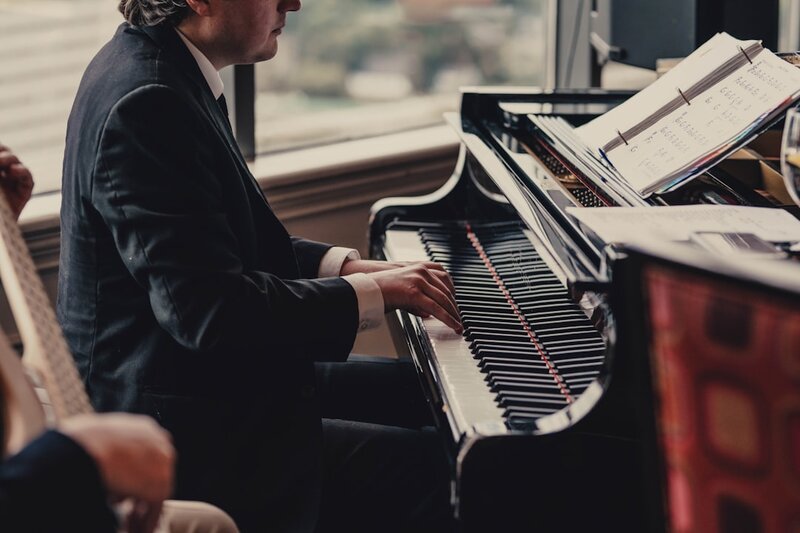
- Piano or keyboard: Excellent for beginners. No breath control needed, easy to produce a pleasant sound from day one, and gentle on the hands. Digital keyboards are affordable and can be played with headphones — ideal if you want to practise without disturbing anyone.
- Ukulele: Light, portable, and much easier on the fingers than guitar. Four strings (rather than six) and soft nylon strings make it gentler for hands with arthritis or reduced grip strength.
- Tin whistle: Inexpensive (a quality starter whistle costs under €15), easy to learn, and deeply rooted in Irish tradition. Good for breath control and respiratory health.
- Bodhrán: If rhythm is more your thing, the traditional Irish frame drum is satisfying to learn and does not require reading music. It also connects you to a vibrant tradition of sessions and festivals.
- Harmonica: Pocket-sized, no finger dexterity required, and excellent for lung health. Blues, folk, and traditional music all welcome it.
If you already played as a young person and set it aside decades ago, returning to a former instrument can be deeply rewarding. Muscle memory is remarkably persistent — you may be surprised how quickly it comes back.
Getting Started: Practical Tips
Start small. Ten to fifteen minutes of daily practice is more effective than an hour once a week. Consistency matters more than intensity, and short sessions prevent frustration and physical strain.
Find a teacher who understands adult learners. A good teacher will focus on pieces you enjoy, adapt to your pace, and make the experience enjoyable rather than pressured. Many music teachers offer online lessons via Zoom, which can be particularly convenient if mobility or transport is a factor.
Be patient with yourself. Progress will not be linear. There will be frustrating days — and that is entirely normal. The joy is in the process, not in achieving perfection.
Use technology. Free apps like Simply Piano, Yousician, and YouTube tutorials can supplement formal lessons. Many public libraries in Ireland offer free access to online learning platforms that include music courses.
Join others as soon as you feel ready. You do not need to be “good enough” — most community music groups welcome anyone who can hold a beat or play a few chords. The shared experience is what matters.
Music and Mental Health
Beyond the cognitive benefits, learning an instrument has a profound impact on emotional wellbeing. The sense of achievement in mastering a new piece — however simple — builds confidence and self-efficacy. For people navigating transitions like retirement, bereavement, or health challenges, music offers a form of expression that words sometimes cannot.
Research published in The Lancet Psychiatry has shown that active music-making is associated with lower rates of depression and anxiety, and the World Health Organisation’s comprehensive review of arts and health confirmed that musical activities have a measurable positive effect on mental health outcomes across the lifespan.
At Críonna Health, we believe that activities which nourish both mind and body are at the heart of ageing well. Learning to play music is a perfect example — it challenges you, connects you, and brings genuine joy.
Where to Find Music Classes and Groups in Ireland
- Comhaltas Ceoltóirí Éireann — branches nationwide, adult classes, slow sessions, traditional instrument workshops (comhaltas.ie)
- Your local ETB — affordable adult education courses including music (etbi.ie)
- Active Retirement Ireland — music circles and social groups (activeretirementireland.com)
- Music Generation — while primarily for young people, many areas now offer intergenerational and community programmes (musicgeneration.ie)
- Local music schools and private teachers — search your area for adult-friendly tuition
- Public libraries — free access to online music learning platforms, instrument lending schemes in some counties
A Final Note
You do not need talent. You do not need to read music (at least not at first). You do not need to have played as a child. All you need is curiosity and a willingness to try something new. The instrument will do the rest — and your brain, your body, and your social life will thank you for it.
Whether it is a tin whistle by the fire, a keyboard in the spare room, or a ukulele on a summer afternoon, there has never been a better time to start.
📷 Photo by Corey Young (@corey_untitled) on Unsplash