There is something deeply satisfying about uncovering the stories of those who came before you. For many people in Ireland, the urge to explore family history grows stronger after 50 — perhaps sparked by the loss of a parent, the arrival of grandchildren, or simply having more time to wonder about the names and places that shaped your family. Whatever draws you to it, genealogy is one of the most rewarding pursuits you can take up in later life — and Ireland, with its rich archives and growing digital resources, is one of the best places in the world to do it.
TL;DR
- Genealogy is one of the most cognitively stimulating hobbies you can take up after 50, combining research, problem-solving, and storytelling
- Ireland offers exceptional free online resources including IrishGenealogy.ie (civil records from 1864), the National Archives, and the Catholic Parish Registers on NLI.ie
- Local heritage centres, county libraries, and genealogy societies across Ireland provide expert guidance and community for beginners
- Starting with what you already know — names, dates, family stories — and working backwards is the most effective approach
- Recording and sharing your findings preserves family memory for future generations and strengthens intergenerational bonds
Why Genealogy Is Good for You
Tracing your family history is far more than a pleasant pastime. Research consistently shows that genealogy engages multiple cognitive skills simultaneously — reading, analysing, cross-referencing, and synthesising information — making it an excellent form of mental exercise. A 2019 study published in The Gerontologist found that intellectually stimulating leisure activities, particularly those involving learning new skills and complex problem-solving, are associated with maintaining cognitive function in later life.
The TILDA (The Irish Longitudinal Study on Ageing) research has repeatedly highlighted that older adults who remain intellectually engaged and socially connected report higher levels of wellbeing and lower rates of depression. Genealogy ticks both boxes: it challenges your mind and often connects you with cousins, local history groups, and online communities you never knew existed.
There is also a profound emotional dimension. Understanding where you come from — the townlands your grandparents farmed, the ships they sailed on, the trades they practised — can deepen your sense of identity and belonging. For many people, it brings a sense of continuity that becomes increasingly meaningful with age.
Getting Started: What You Already Know
The best place to begin is your own kitchen table. Before you open a single website or visit an archive, sit down and write out everything you already know about your family: names, dates of birth and death, places, occupations, and the stories passed down over generations. Talk to older relatives while you still can — their memories are a primary source that no archive can replace.
Key details to gather include:
- Full names (including maiden names and middle names)
- Approximate dates of birth, marriage, and death
- Parishes and townlands, not just counties
- Occupations and places of work
- Any family stories about emigration, military service, or notable events
Do not worry if you have gaps — that is the whole point of the research. Even one confirmed name and approximate date can unlock an entire branch of your family tree.
Ireland’s Free Online Resources
Ireland has made extraordinary progress in digitising its historical records, and many of the most important resources are completely free to access.
IrishGenealogy.ie — Run by the Department of Tourism, Culture, Arts, Gaeltacht, Sport and Media, this site provides free access to civil records of births, marriages, and deaths from 1864 onwards. Church records for many parishes are also available. This should be one of your first stops.
National Library of Ireland (NLI) — Catholic Parish Registers — The NLI has digitised Catholic parish registers from across Ireland, many dating back to the 1740s. These are available free at registers.nli.ie and are invaluable for tracing families before civil registration began.
Census Records — While most 19th-century Irish census records were destroyed (in the 1922 Four Courts fire and earlier government decisions), the 1901 and 1911 censuses survive in full and are freely searchable at the National Archives website. These provide a remarkable snapshot of Irish life, listing every member of a household along with their age, occupation, religion, and literacy.
Griffith’s Valuation (1847–1864) — This property survey is often used as a census substitute for the mid-19th century, showing who occupied land across Ireland. It is freely available online through AskAboutIreland.ie.
IrishTimes.com/ancestor — The Irish Times offers a searchable database of Griffith’s Valuation records, which can be a useful complement to the original documents.
Visiting Archives and Heritage Centres
While online resources are remarkable, there is no substitute for visiting local archives and heritage centres. Many records — estate papers, workhouse registers, local newspaper archives, and gravestone inscriptions — have not been digitised and can only be consulted in person.
The National Archives of Ireland in Dublin is open to the public and offers free access to a vast collection of historical records. Staff are experienced in helping beginners navigate the holdings. The General Register Office (GRO) in Roscommon holds the official civil records and can issue certified copies of certificates.
Your local county library is often an underappreciated gem for family history research. Many county libraries hold local studies collections including newspapers, photographs, estate records, and compiled family histories. Librarians in the local studies section are often deeply knowledgeable about the area’s history and can point you towards sources you would never find on your own.
County heritage centres affiliated with the Irish Family History Foundation hold indexed church records for many parishes and can conduct professional searches on your behalf for a modest fee. These are particularly useful for areas where records are difficult to read or interpret.
DNA Testing: A Modern Tool
DNA testing has transformed genealogy in recent years, and it can be particularly useful for breaking through brick walls in your research. Services such as AncestryDNA and FamilyTreeDNA can identify genetic matches — people who share segments of DNA with you, suggesting a common ancestor.
A few practical points to consider:
- DNA results are most useful when combined with traditional documentary research — they confirm or challenge what the records suggest
- Be prepared for surprises. DNA testing occasionally reveals unexpected family connections, including non-paternity events or previously unknown siblings. Approach this with sensitivity
- Privacy is important. Read the terms of service carefully and understand how your data will be stored and shared
- Results are most informative when other family members also test, particularly older generations
Connecting with Others
One of the great joys of genealogy is the community that surrounds it. Ireland has a thriving network of genealogy societies and local history groups, many of which welcome beginners warmly.
The Genealogical Society of Ireland (GSI) runs regular meetings, lectures, and workshops and publishes a journal covering Irish family history topics. Local historical societies in nearly every county hold talks and field trips that can bring your research to life.
Active Retirement Ireland groups often include genealogy as one of their activities, and Men’s Sheds in some areas have developed family history projects. Your local ETB (Education and Training Board) may offer genealogy courses as part of their community education programme — these are often free or very low cost for older adults.
Online forums and social media groups dedicated to Irish genealogy — on Facebook, Reddit, and specialist sites — are also excellent places to ask questions, share findings, and connect with distant relatives.
Recording and Sharing Your Story
As you uncover your family’s history, think about how you want to preserve and share it. A written family history, even a simple document with names, dates, and stories, is a gift to future generations. Consider:
- Creating a family tree using free software such as Gramps or online platforms like FamilySearch
- Recording oral histories with older relatives — a smartphone voice memo is perfectly adequate
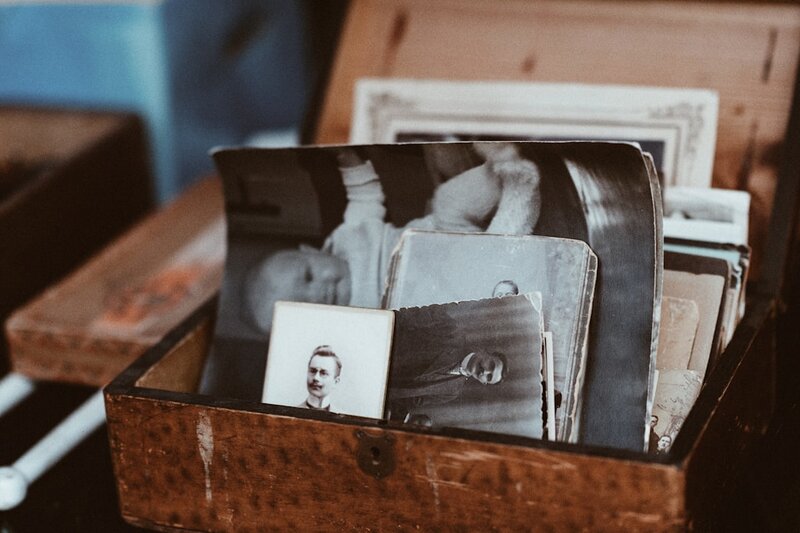
- Scanning and digitising old photographs before they deteriorate
- Sharing your findings at family gatherings or in a simple printed booklet
- Donating copies of your research to your local county library, where it can help future researchers
This kind of intergenerational storytelling has real benefits. Research from the Emory University Family Narratives Lab found that children and young people who know their family’s stories — the struggles, migrations, and achievements — show higher levels of emotional resilience and self-esteem. Recording your family history is not just about the past; it is an investment in the wellbeing of those who come after you.
A Word from Críonna Health
At Críonna Health, we believe that healthy ageing is about far more than physical fitness. It is about staying curious, feeling connected, and finding meaning in the things you do. Genealogy brings all of these together in a way that few other activities can. Whether you are just starting out or have been researching for years, the journey of discovering your family’s story is one that enriches your life at every step.
If you are looking for more ways to stay mentally active and socially connected, explore our guides on Críonna Health — from lifelong learning to community supports across Ireland.
📷 Photo by Roman Kraft on Unsplash