There is something quietly restorative about standing still in a woodland, listening for the call of a robin or watching a heron lift from a riverbank. Birdwatching — or birding, as many now call it — is one of those rare activities that asks very little of you physically while giving back enormously in terms of health, wellbeing, and social connection. And in Ireland, with our remarkable diversity of habitats and species, the opportunities are on your doorstep.
TL;DR
- Birdwatching combines gentle physical activity, cognitive stimulation, and mindfulness — all linked to healthier ageing
- Research shows regular time in nature reduces stress hormones, lowers blood pressure, and improves mood
- Ireland is home to over 450 recorded bird species and a network of nature reserves ideal for birding
- BirdWatch Ireland runs local branches, outings, and citizen science projects nationwide — great for social connection
- You can start with nothing more than curiosity and a garden window, scaling up at your own pace
Why Birdwatching Is Good for Your Health
At first glance, birdwatching might seem like a passive pastime. But the evidence tells a different story. A landmark 2022 study published in Scientific Reports found that people who could see or hear birds reported better mental health, even after accounting for other factors like income and green space access. The effect was measurable among both those with and without a diagnosed mental health condition.
What makes birding particularly valuable after 50 is the way it engages multiple dimensions of health simultaneously:
- Physical activity: Walking to and through birding sites keeps you moving at a comfortable pace. Even a gentle amble along a boardwalk counts towards the HSE recommendation of 150 minutes of moderate activity per week.
- Cognitive stimulation: Learning to identify species by song, plumage, and behaviour exercises working memory, attention, and pattern recognition — precisely the skills that benefit from regular challenge as we age.
- Stress reduction: Nature exposure lowers cortisol levels. A 2019 study in Frontiers in Psychology found that just 20 minutes in a natural setting significantly reduced stress hormone levels, regardless of whether you were walking or sitting.
- Mindfulness without the label: Birdwatching naturally demands the kind of present-moment awareness that formal mindfulness programmes teach. You cannot spot a goldcrest while thinking about your shopping list.
A Social Activity That Suits Every Temperament
One of the beautiful things about birdwatching is its flexibility. You can do it entirely alone — from your kitchen window, your garden, or a quiet walk — and still reap the health benefits. But it also offers rich opportunities for social connection, which we know from TILDA (The Irish Longitudinal Study on Ageing) research is one of the strongest predictors of healthy ageing.
BirdWatch Ireland, the country’s largest conservation charity, has over 30 local branches running regular outings, talks, and surveys. These events are welcoming, informal, and pitched at all levels — you do not need to know your stonechat from your wheatear to turn up. Many members describe their branch as a ready-made social circle built around a shared love of the outdoors.
For those in rural Ireland, where social isolation can be a real concern, a local birding group offers structured, regular reasons to get out and meet people. Several branches also run midweek outings, which suit people in retirement who prefer quieter, less crowded excursions.
Getting Started: You Do Not Need Much
One of the barriers to new hobbies after 50 is the perceived cost or complexity of getting started. Birdwatching is refreshingly low-barrier:
- Start at home: Hang a bird feeder in your garden or on your balcony. Even in urban Dublin, Cork, or Galway you will attract blue tits, robins, finches, and possibly a visiting sparrowhawk. BirdWatch Ireland runs the annual Irish Garden Bird Survey each winter — a citizen science project anyone can join from their sitting room window.
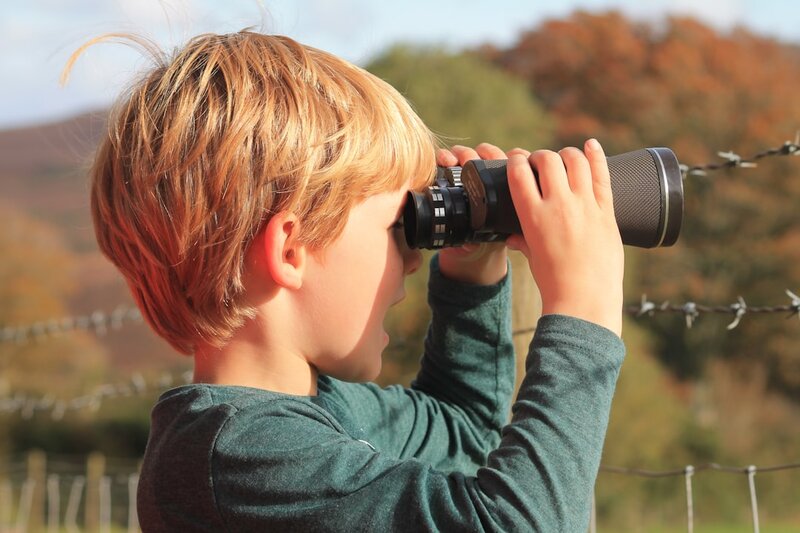
- Binoculars: A decent pair of 8×42 binoculars is the only real investment. You can find perfectly good options from €80–€150. Lightweight models are worth considering if you have arthritis or shoulder issues.
- Field guides and apps: The Collins Bird Guide remains the gold standard for identification. For a digital option, the free Merlin Bird ID app (from Cornell Lab of Ornithology) can identify birds by their song — remarkably useful and endlessly entertaining.
- Accessibility: Many of Ireland’s best birding sites have accessible hides and boardwalks. The Wexford Wildfowl Reserve, Bull Island in Dublin, and Lough Boora in Offaly all offer wheelchair-accessible viewing areas.
Ireland’s Birding Riches
Ireland punches well above its weight for birdwatching. Our position on the Atlantic flyway means we receive spectacular seasonal visitors — from the Arctic terns that arrive each summer having flown from Antarctica, to the thousands of Greenland white-fronted geese that winter on the Wexford Slobs.
Some of the finest birding locations are free to visit:
- Wexford Wildfowl Reserve — internationally important for wintering geese and waders
- Bull Island, Dublin — a UNESCO Biosphere Reserve in the heart of the capital
- Loop Head, Clare — seabird colonies including puffins, guillemots, and razorbills
- Lough Neagh and the Shannon Callows — vast wetlands attracting whooper swans and curlews
- Skellig Michael, Kerry — home to one of the largest gannet colonies in the world
The National Parks and Wildlife Service (NPWS) manages many of these sites, and access is generally free. Local authorities and the Irish Wildlife Trust (IWT) also maintain nature reserves with walking trails suited to all fitness levels.
Citizen Science: Contributing While You Watch
If you enjoy a sense of purpose in your activities — and research consistently shows that purpose is protective for cognitive health — citizen science projects offer a meaningful way to contribute. BirdWatch Ireland coordinates several surveys that rely entirely on volunteer observers:
- Irish Garden Bird Survey (December–February) — record species visiting your garden
- Countryside Bird Survey — monitor breeding birds along a local route
- Irish Wetland Bird Survey (I-WeBS) — count waterbirds at wetland sites
These projects provide genuinely valuable data that informs conservation policy. Knowing that your Saturday morning walk is contributing to something larger can add a layer of satisfaction that purely recreational outings sometimes lack.
Birdwatching and Cognitive Health
The cognitive demands of birdwatching deserve special mention. Learning a new skill after 50 is one of the most evidence-supported ways to maintain cognitive reserve — the brain’s ability to cope with age-related changes. Birdwatching involves:
- Sustained attention and visual scanning
- Auditory discrimination (distinguishing similar songs)
- Memory encoding and retrieval (recalling species features)
- Spatial awareness and navigation
A 2023 study in the Journal of Environmental Psychology found that birdwatchers reported higher levels of cognitive engagement during nature visits compared to general walkers — and this engagement was associated with greater reductions in anxiety and rumination.
Practical Tips for Older Adults
- Dress for the weather: Irish birding often means rain. Invest in a good waterproof jacket and sturdy, comfortable shoes with grip.
- Pace yourself: There is no rush. Some of the best birdwatching happens when you sit quietly in one spot and let the birds come to you.
- Protect your hearing: If you wear hearing aids, some modern models have outdoor settings that enhance natural sounds — worth discussing with your audiologist.
- Bring a flask: A warm drink and a biscuit can make a chilly morning infinitely more enjoyable.
- Keep a journal: Recording what you see, where, and when creates a personal nature diary that becomes genuinely precious over time.
How Críonna Health Can Help
At Críonna Health, we believe that healthy ageing is about finding activities that nourish your body, mind, and sense of connection — all at once. Birdwatching is a perfect example: gentle on the joints, rich in cognitive stimulation, and as social (or as solitary) as you want it to be. We regularly share practical guides to staying active and engaged in Ireland after 50.
Where to Start This Week
You do not need a plan. You need a window, a cup of tea, and five minutes of curiosity. Watch what lands in your garden. Notice the colours, the behaviour, the sounds. If something sparks your interest, look it up. If you want company, find your nearest BirdWatch Ireland branch and join their next outing.
The birds have always been there. You just have to start looking.
📷 Photo by David Carpenter on Unsplash