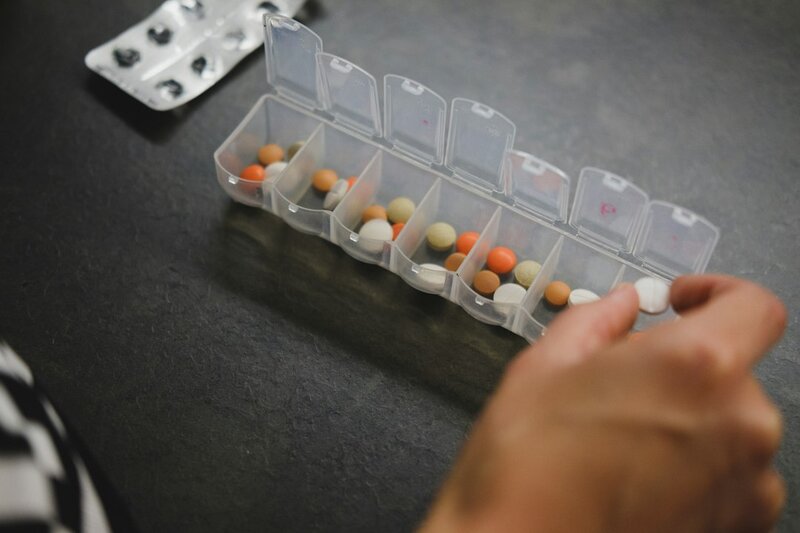
There is a generation of people in Ireland who were handed a diagnosis in their twenties and told, in so many words, to put their affairs in order. They are now in their sixties and seventies. They did not die. They went to work, minded parents, buried friends, and quietly became the oldest and steadiest patients in the Irish HIV clinics. Nobody planned for them, because nobody expected them.
TL;DR
- Of the 6,652 people who attended HIV care in Ireland in 2022, 2,122 (31.9%) were aged 50 or over, according to the HSE’s national HIV Treatment Audit published in November 2024.
- Among people in HIV care who were born in Ireland, 48% are aged 50 or over. This is a long-term-survivor cohort, and it is overwhelmingly Irish.
- The over-50s are the best virally suppressed age group in the country at 98.0%. The virus is not the problem. Bones, blood pressure, memory and medicine lists are.
- Only two of seven Irish HIV services have an agreed referral pathway to geriatric medicine for patients over 65, and 86% of HIV clinicians surveyed said they see gaps in meeting those patients’ needs.
- Ireland has one dedicated clinic for older adults living with HIV: the Platinum Clinic at St James’s Hospital. When it reviewed its first 24 patients, 92% left with a planned intervention, half of them relating to bone health.
- People diagnosed after 50 are diagnosed late: 52.6% of first-time diagnoses in the 50-plus group in 2024 were late-stage, the highest proportion of any age band.
Almost a third of people in HIV care here are over 50
In 2023 the HSE’s Sexual Health Programme ran a national HIV treatment audit covering the 2022 calendar year, collecting disaggregated data from every clinic for the first time. That is why we can now see the shape of the population and not just its size.
Just over 7,000 people attended for HIV care in Ireland in 2022. Detailed data was available for 6,652 of them, with roughly 500 more attending privately and outside the audit. Of those 6,652 people, 2,122 were aged 50 or over. That is 31.9%: 1,504 men and 614 women. The median age was 44, and the age range ran from 1 to 87.
The audit’s own discussion section does not hedge about what this means. It describes people attending for HIV care in Ireland as “an ageing cohort with almost a third aged over 50 years”, and says the findings point to “a need for services to be appropriate for older age”.
That was written about 2022 data. Nobody aged backwards in the four years since.
Among Irish-born patients, it is closer to half
The most striking number in the audit is buried in the section on region of birth. People attending HIV care in Ireland come from more than 130 countries, and the age profile varies enormously by where someone was born.
Among people born in Latin America and the Caribbean, 3% are aged 50 or over. Among people born in Ireland, 48% are.
Those two figures describe different clinical populations sitting in the same waiting room. One is young, recently arrived, often recently diagnosed. The other is Irish, was diagnosed decades ago, and is dealing with blood pressure, bone density, hearing, joints and a medicine list that has been growing since the mid-2000s.
One further detail matters for anyone thinking about who gets missed. The oldest groups by mode of transmission are heterosexual men and people who inject drugs, both with a median age of 48, against 40 among gay and bisexual men. Eighty per cent of people who inject drugs in HIV care here were born in Ireland. The ageing Irish HIV population is not the one public messaging tends to picture.
The virus is the best-managed thing about them
This next part deserves saying plainly, because it is good news and it rarely gets reported. Of the 2,122 people aged 50 and over in HIV care in 2022, antiretroviral therapy was dispensed to 2,112, or 99.5%. Of those on treatment, 2,070 were virally suppressed: 98.0%, the highest of any age group in the audit, ahead of the 97.4% in the 25 to 49 band and the 97.6% national average.
Nationally, modelling put the number of people living with HIV in Ireland at approximately 8,000, with 88% of them virally suppressed, up from an estimated 76% at the previous audit in 2018 and comfortably clear of the UNAIDS target of 86%.
Viral suppression means the virus cannot be passed on sexually and the immune system is doing its job. For the over-50s in Irish HIV care, that box is ticked about as thoroughly as any box in Irish healthcare gets ticked. Which raises the obvious question: if the virus is handled, what is not?
What one Irish clinic found when it looked past the virus
In July 2021 the GUIDe Clinic at St James’s Hospital in Dublin joined with the hospital’s Mercer’s Institute for Successful Ageing to open the Platinum Clinic, for people aged 65 and over living with HIV. It is run jointly by Dr Emma Devitt, a consultant in HIV medicine, and Dr David Robinson, a consultant in geriatric medicine. It remains, as far as we can establish, the only clinic of its kind in the country.
A service evaluation of its first cohort was published in Age and Ageing in 2023. Twenty-four charts, mean age 72, three quarters of them men.
On paper these were well people. The average Rockwood Clinical Frailty Score was 2, which corresponds to “fit”, and the average score on a standard cognitive screen was 26 out of 30. Nothing there would set off an alarm in a routine appointment.
And yet: 92% of patients had a planned intervention as a result of the assessment, with an average of two interventions each. Half of all patients had an intervention relating to bone health. A quarter needed blood pressure monitoring put in place. Seventeen per cent were referred to a memory clinic. Another 17% had opportunities identified to optimise their medicines. The average number of non-HIV medications per person was 5.9, which crosses the threshold European guidelines use to define polypharmacy.
Read that back. Virally suppressed, non-frail, cognitively intact older adults, all already under specialist hospital care, and nine in ten walked out of one assessment with something that needed doing. That is not a criticism of HIV clinicians. It is what happens when a 20-minute infectious diseases appointment is asked to carry a full geriatric assessment. Those are different jobs.
Two services in seven have a route to geriatric medicine
In August 2024 the Fast-Track Cities initiative published a scoping study of HIV data, services and support across Ireland’s four Fast-Track Cities, drawing on 193 participants. It asked HIV healthcare professionals whether they saw challenges and gaps in meeting the medical and social care needs of patients aged 65 and over. Thirty of them, 86%, said yes. One said no. Four were unsure.
It also asked the services themselves two very concrete questions. Do you have an agreed pathway for referring patients over 65 to geriatric medicine? Two of seven said yes. Do you routinely refer patients over 65 to geriatric medicine? Two of seven said yes.
When clinicians were invited to suggest fixes, the most common answer by a distance was a joint HIV and geriatric clinic, proposed by eight of the nineteen who responded. Four wanted better links with GPs and other specialties managing comorbidities. Three asked for better long-term care options and links with community care and nursing homes. One noted, simply, that growing older with HIV needs to be better researched and documented.
The profession knows what it needs. It has a working Irish model. It has not been given seven of them.
The other half of the problem: diagnosed after 50
Everything above concerns people who have known their status for years. There is a second, smaller and more urgent group: those who find out after 50.
The HPSC report HIV in Ireland, 2024, published in November 2025, recorded 239 first-time HIV diagnoses, a rate of 4.6 per 100,000. Sixteen per cent were in people aged 50 and over, roughly 38 people.
The number that matters is what state they were in when they were found. Across all first-time diagnoses in 2024, 41% were late-stage, meaning an AIDS-defining illness at diagnosis or a CD4 count below 350 with no evidence of recent infection. But broken down by age, the 50-plus group had the highest proportion of late diagnoses at 52.6%. HPSC is careful to note the absolute numbers in that band are small, and that further statistical analysis is planned. Still, the direction is consistent with what clinicians everywhere report: HIV is not considered in older patients, because older patients are not imagined as people who have sex.
There is an encouraging trend underneath it. The median CD4 count at diagnosis has risen four years running, from 310.5 in 2021 to 362 in 2024. People are being found slightly earlier than they were. Not early enough.
A late diagnosis at 65 is a different event from a late diagnosis at 30. It arrives on top of whatever else is already going on, and usually after years of symptoms that were put down to ageing. Emergency departments are where older people turn up: the 2014 to 2015 opt-out blood-borne virus screening pilot at St James’s analysed 8,839 patient samples with a median age of 45 and an age range running to 102. Routine opt-out testing in emergency departments is one of the central recommendations HIV Ireland is pressing for.
What the European guidelines now ask for
In October 2025 the European AIDS Clinical Society released version 13.0 of its guidelines at the European AIDS Conference in Paris, shifting emphasis away from antiretroviral choice, which is largely settled, and towards comorbidities and ageing. It merged the previously separate documents on falls, frailty and drug classes to avoid into a single document on managing older persons with HIV. The guidance includes:
- An annual polypharmacy review for older people with HIV. Polypharmacy is defined as more than five non-HIV medications taken alongside antiretrovirals.
- An annual frailty screen, using gait walking speed, the Short Physical Performance Battery, the FRAIL Scale or the Clinical Frailty Scale.
- An annual falls assessment.
- DXA bone density scanning for men with HIV over 50 and for all postmenopausal women.
- A list of drug classes to avoid or deprescribe: first-generation antihistamines, tricyclic antidepressants, benzodiazepines and Z-drugs, urological antispasmodics such as oxybutynin, long-term NSAIDs, and the over-the-counter cold remedies that quietly contain several of the above.
None of that requires a new drug or a new building. It requires somebody whose job it is to do it.
Practical steps, if this is you or someone you love
Ask your HIV clinic about a comprehensive geriatric assessment. Two services in seven have a pathway, which means asking is worth your while. If you attend St James’s, ask about the Platinum Clinic by name.
Bring one complete medicine list to every appointment. Hospital prescriptions, GP prescriptions, pharmacy purchases, supplements and herbal remedies. The HSE flags St John’s wort, some inhalers and some nasal sprays as genuine interaction risks with antiretrovirals, and those are exactly the things people forget to mention because they do not feel like medicines. Our guide to managing multiple medications after 50 covers how to build that list.
Ask about bone health before anyone else raises it. Half of the Platinum Clinic’s first patients needed a bone health intervention, and European guidance recommends DXA scanning for men with HIV over 50 and for postmenopausal women. If no one has mentioned a scan, mention it yourself. Our guide to bone health and osteoporosis after 50 sets out what to ask for.
Treat falls as a medical issue, not an embarrassment. Annual falls assessment is now explicitly recommended for this group, and falls prevention is one of the highest-return conversations available in later life.
Make sure you have a GP as well as a clinic. HIV care in Ireland is hospital-based. Blood pressure, cholesterol, diabetes, vaccination and mood are general practice work, and they are precisely the things that fall between two stools when someone’s only regular medical contact is an infectious diseases appointment. The HSE states plainly that HIV medicine and care are free here under the public health system, and that legal status makes no difference, including for refugees and people seeking international protection.
Take the loneliness seriously. Many in this cohort lost most of their peer group in the 1980s and 1990s, told very few people at the time, and have carried it privately for forty years. Isolation of that kind does not resolve itself. Loneliness in later life and social prescribing were both built into the Platinum Clinic model from the start.
What the national plan still does not say
In July 2026 HIV Ireland published Towards a National Action Plan for HIV in Ireland, arguing that the target of ending new HIV transmissions by 2030 is slipping, with roughly 800 people waiting to access PrEP and a Sexual Health Programme that asked for 28 additional staff in 2025 and was funded for seven.
The report runs to about 16,000 words. “Ageing with HIV” appears in it twice, both times as one item in a list of things a future Model of Care should cover. The words “care home”, “nursing home”, “polypharmacy”, “frailty” and “geriatric” do not appear at all.
That is not an accusation of neglect. Recommendation 7 calls for exactly the thing that is missing: a funded, comprehensive Model of Care covering the full pathway including ageing and comorbidities. The point is narrower and more awkward. In the national conversation about HIV in this country, ageing is currently a clause inside a document that has not been written yet.
There is movement. In January 2026 the Health Research Board funded a project under its Applied Partnership Awards, led by Dr Louise Brennan of Trinity College Dublin with Professor David Robinson of St James’s, on mental health, loneliness and quality of life in older people living with HIV in Ireland, and on building a social prescribing pathway for them. It exists because the Fast-Track Cities report found we do not understand this group’s experience. That is an honest starting point.
Where to get help
- Your HIV clinic. Specialist HIV care in Ireland is provided at Cork University Hospital, Beaumont, the Mater, St James’s, St Vincent’s and Galway University Hospital.
- HIV Ireland runs free, confidential HIV and STI testing, free counselling, and a National Peer Support Programme connecting people living with HIV to one another.
- HSE sexual health services offer free testing with no GP referral, for people of every age. If you have had a new partner since your last test, that applies at 70 as much as at 27.
- Your GP, for everything that is not the virus. Which, as the Platinum Clinic data shows, is most of it.
The quiet victory, and the unfinished part
It is worth sitting with how remarkable the Irish numbers are. Ninety-eight per cent of people over 50 in HIV care here have an undetectable viral load. A condition that was a death sentence inside a decade is now, clinically, the most stable thing on many of these patients’ charts. The unfinished part is that we built a system brilliant at keeping people alive and never got round to building the one that helps them grow old. One clinic, in one hospital, in one city, for a population of more than two thousand.
Ageing with HIV in Ireland is, increasingly, just ageing. Bones, balance, blood pressure, memory, medicines and company. We know how to do all of that, and at Críonna Health we write about it constantly. The task is connecting the part of the health service that saved these lives to the part that knows what to do with a long one.
If you are in this cohort, you have already outlived a prognosis. You are entitled to ask for the same comprehensive care as anyone else your age, and you are entitled to ask for it this year.
This article is for general information and is not a substitute for individual medical advice. If you have concerns about your health or your medicines, speak to your GP or HIV care team. Free and confidential HIV testing is available through HSE sexual health services and through HIV Ireland, with no referral required.
📷 Photo by Laurynas Me on Unsplash




