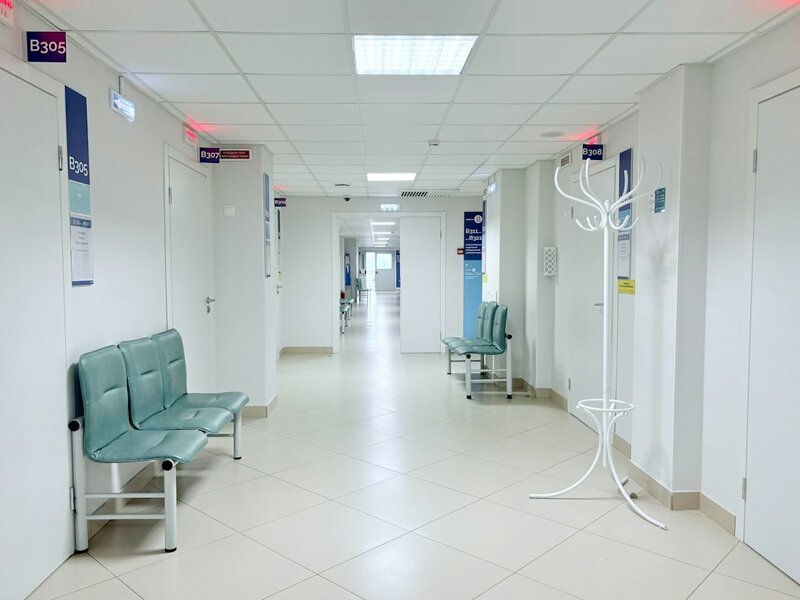
A person born in Ireland in 1978 with an open spinal lesion was not, by the standards of the time, expected to be reading an article about turning fifty. They were shunted in the first fortnight of life, measured and X-rayed and catheterised through a childhood of hospital corridors, and handed a plan that ran as far as the end of secondary school. Then they turned eighteen, the paediatric file closed, and the plan ran out.
That person is now forty-eight. There are many like them in Ireland, and for most of them the structured, multidisciplinary care that protected their kidneys and their spinal cords as children has no adult equivalent. Nothing went wrong in their medical history. The surveillance simply stopped, quietly, on a birthday, and nobody said so out loud.
This is not a story about decline. It is a story about a generation reaching middle age in numbers for the first time, carrying risks that are almost entirely manageable if somebody is watching for them.
TL;DR
- An estimated 85% of people born with spina bifida now survive into adulthood, and there are more adults than children alive with the condition.
- Ireland has a national paediatric spina bifida clinic and no adult equivalent. A 2026 study of adults in Munster found most respondents attending at least 12 separate specialities across multiple hospitals, with 22 of 35 respondents reporting an emergency department visit in five years.
- Kidney damage is the quiet risk. International guidelines recommend a renal and bladder ultrasound and a kidney blood test every year for life, and creatinine alone can read falsely normal where muscle mass is low.
- Shunts do not expire but they do fail, sometimes slowly. Recurring low-grade headache, neck pain, or a drift in memory, mood or bladder control can all be chronic shunt failure rather than ageing.
- Spina bifida and hydrocephalus are both named conditions on Ireland’s Long-Term Illness Scheme: free medicines and appliances for that condition, with no means test.
There are now more adults with spina bifida than children
Spina bifida affects roughly one in every thousand births in Ireland, and Ireland’s rate has long been among the highest in the developed world. Between 2012 and 2015, across 274,732 live and still births recorded in the Republic, there were 136 cases of spina bifida, 121 of anencephaly and 31 of encephalocoele. Around half of all neural tube defects identified in that period were spina bifida.
What has changed is not the number of babies but the number of adults. Neurosurgical shunting, early closure, bladder management and antibiotics have shifted survival so far that the clinical papers accompanying the 2018 international guidelines for the care of people with spina bifida record two facts that should reshape how services are planned: an estimated 85% of people with spina bifida survive into adulthood, and with that increased survival there are now more adults than children alive with the condition.
Irish services were not built on that assumption. They were built, understandably, around a child who needed everything at once.
What happened when somebody finally asked Irish adults
In 2026, a team from the urology department at Cork University Hospital published a rare look at how adults with spina bifida in Ireland actually use the health service. They surveyed adults living in Munster, through Spina Bifida Hydrocephalus Ireland, and got 35 usable responses. It is a small study. It is also, as far as the published literature goes, what we have.
The findings are blunt. Most respondents had attended at least twelve distinct medical and surgical specialities over five years. Twenty-two of the thirty-five had been to an emergency department in that period. Respondents under twenty-five were attending more specialities, across a wider spread of hospitals, than those over twenty-five, which is a polite way of saying that care fragments immediately after transition and then thins out. Several named inadequate wheelchair access as a barrier to getting care at all. Almost all of them wanted one coordinated clinic instead of twelve diaries.
The paper’s own framing is the part worth quoting to a GP or a consultant: paediatric patients can access the national paediatric spina bifida clinic, which provides structured multidisciplinary care from diagnosis to adulthood, and there is no equivalent service for adult patients. Until that changes, the coordination has to be done by the person themselves, or by a family member, or by a GP who is willing to hold the whole picture.
The kidneys go quietly
If there is one thing to take from this article, it is this. In spina bifida, the bladder does not empty the way it should, pressure builds backwards, and kidneys are damaged without producing a single symptom until the damage is substantial. Historically, where this went unmanaged, half of affected children sustained upper urinary tract damage within five years. Modern childhood care is built around preventing exactly that, which is precisely why stopping the surveillance at eighteen is such a strange thing to do.
The international urological guidelines for adults from 18 onwards are not elaborate. A renal and bladder ultrasound every year. A serum creatinine every year. Repeat imaging sooner if there are recurring symptomatic urinary infections or if urodynamic testing shows a high-pressure bladder. For anyone who has had bladder reconstruction or augmentation, yearly bloods including vitamin B12, and a cystoscopy with upper tract imaging if there is visible blood in the urine, pelvic pain, worsening incontinence, recurrent infection or any change in urinary status.
There is one trap worth naming. Creatinine is produced by muscle. In an adult with reduced muscle mass, particularly someone who does not walk, a creatinine result can sit comfortably inside the normal range while kidney function is genuinely impaired. The guidelines say so explicitly: creatinine may provide a false sense of normality, and cystatin C or a nuclear medicine GFR gives a truer picture. If you have ever been told your kidney bloods are fine and nobody has ever scanned you, that is a reasonable thing to raise.
A 2026 Japanese cohort put numbers on the risk. Among adults with spina bifida followed in a urology service, median survival free of chronic kidney disease was 48 years, against 65 years in a comparison group who had childhood encephalitis or spinal cord injury. Chronic kidney disease was associated with a history of febrile urinary infections in childhood and with vesico-ureteral reflux, and on fuller analysis the one factor that stood independently was current high blood pressure. Blood pressure, in other words, is not a general wellness metric here. It is a kidney warning light. Our guide to kidney failure and the treatment choices that follow covers what happens further down that road.
A shunt does not expire, but it does fail
Most adults with myelomeningocele have a ventriculoperitoneal shunt placed in infancy, and a great many have never thought about it since. Shunts have no service interval and no expiry date. They do, however, block, disconnect, fracture and infect, and the presentation in an adult is not always the dramatic one.
Acute shunt failure looks like headache, neck pain, vomiting and increasing drowsiness, and it is a hospital problem that day. Chronic shunt failure is the one that gets missed, because it looks like life. The guidelines describe recurring low-grade headache and neck pain, cognitive, behavioural or neurological decline, and orthopaedic or urological regression. In practice that can mean a person in their forties who has become forgetful, lower in mood, slower at work, or who has started leaking between catheterisations, and who is told they are stressed, or depressed, or simply getting older. Any of those changes in someone with a shunt deserves a neurosurgical opinion before it is attributed to anything else. This is a different condition from the normal pressure hydrocephalus that develops in later life, though the two share an unhelpful habit of being mistaken for ageing.
Two other things to know the shape of. A tethered spinal cord announces itself with back pain, declining power or sensation in the legs, a change in bladder or bowel control, or worsening scoliosis. Syringomyelia, a fluid cavity in the cord, tends to show up as neck or back pain with new sensory or motor changes in the arms and hands. Both are treatable. Both are missed when the person reporting them has no neurosurgeon to report them to, which is why the adult guidelines bother to say, in writing, that someone should help the person identify an adult neurosurgical provider.
Skin, shoulders and the mobility you can lose without a new diagnosis
Data from clinics in the American national spina bifida registry found 26% of people had a history of pressure injuries, with 19% having had one in the previous year. Insensate skin does not report heat, friction or pressure, so the warning system that protects everybody else is absent. The preventive advice is unglamorous and works: a pressure-relieving cushion checked daily, pressure relief every fifteen minutes for anyone sitting in a wheelchair, skin inspection as a daily habit, well-fitting orthoses, a bath thermometer, and awareness that a car seat left in sun can burn a leg that will never complain. Any pressure injury needs treatment, and anything at stage three or beyond needs a wound clinic.
Mobility in adulthood is the other slow loss. The guidelines ask clinicians to track gait, sensation, bowel and bladder function and musculoskeletal change at every visit, to watch for torque forces at the knee and excessive loading through the upper body, and to teach adults that mobility is preserved by technique, strength and weight rather than by luck. Shoulders doing the work of legs for forty years wear out, and shoulder pain in a wheelchair user is not a minor complaint; it is a threat to independence. Getting the chair, the cushion and the transfer technique reviewed is cheaper than losing the transfer.
The allergy that travels with you
Latex allergy is strongly associated with spina bifida, a legacy of repeated early exposure to latex gloves, catheters and surgical equipment. Avoidance remains the primary intervention, and it needs to be flagged at every hospital attendance, every dental visit and in every workplace, not just on the childhood chart. It is also worth knowing about latex-fruit syndrome: proteins in natural rubber latex cross-react with those in banana, avocado, kiwi and chestnut, and at least two dozen other fruits have been implicated. For anyone with a confirmed allergy, a medical alert bracelet or an up-to-date medical ID on a phone does real work in an emergency department that has never met you.
The card that is not means tested
Here is the Irish entitlement that an unsettling number of adults have never been told about. The Long-Term Illness Scheme lists sixteen qualifying conditions, and both spina bifida and hydrocephalus are on it. If you qualify, you receive a Long-Term Illness card, and drugs, medicines and medical and surgical appliances for the treatment of that condition are supplied free, including prescription charges. There is no means test and it does not depend on income. Appliances prescribed by a doctor or occupational therapist are supplied through your local primary care centre.
For someone catheterising several times a day for life, that is not a small administrative detail. It is also entirely separate from a medical card, and you can hold both. Medicines unrelated to the condition are still paid for in the usual way. If you have been buying continence supplies out of pocket, this is the first phone call to make.
What SBHI actually does
Spina Bifida Hydrocephalus Ireland began in 1968, when a group of parents founded the Irish Association for Spina Bifida and Hydrocephalus because nobody else was going to. It became SBHI in 2008 and now has more than a thousand members nationwide.
The practical offering matters more than the history. There is a Family Liaison Officer team covering the country by region, so there is a named person for each part of the country. There is a counselling service, an education and training team, a Learning Hub with online modules, health development support that includes bowel and bladder management, respite and recreation, and a resource centre in Castleknock in Dublin 15. The What Works For Me programme supports members into employment, which is a genuinely underrated piece of adult health infrastructure. SBHI can be reached on 01 457 2329 or at info@sbhi.ie, Monday to Friday.
The prevention argument Ireland is still having
None of the above removes the question of why Ireland keeps producing these numbers. The advice itself is settled: 400 micrograms of folic acid daily, started before conception, substantially reduces the risk of a neural tube defect. The delivery of that advice has failed repeatedly. The Department of Health’s Folic Acid Policy Committee reported that fewer than half of women begin supplements before pregnancy and fewer than a quarter begin twelve weeks before conception, that only 2.6% of women presenting for antenatal care achieve adequate dietary folate, and that no significant progress had been made in reducing neural tube defect rates in Ireland in the preceding decade.
A national committee recommended mandatory fortification of most breads in 2006. An implementation group recommended deferring it in 2008, citing falling incidence and uncertainty about safety. The incidence then stopped falling. Voluntary fortification, which is what Ireland relied on instead, has since become volatile, varying by brand, by product and by retailer, and declining overall.
The argument reopened this year. On 13 July 2026 the Department of Health launched a public consultation on mandatory fortification of non-wholemeal flour with folic acid, and submissions closed at 5pm on 5 October 2026. Whatever comes of it, it is worth noticing who is not usually in that conversation: the adults already living with the outcome, who are the best available evidence of what a prevention decision costs when it is deferred for eighteen years.
What to ask for at the next appointment
If you are an adult with spina bifida, or you support one, a short list is more useful than a long one.
- Ask your GP to confirm when you last had a renal and bladder ultrasound. If the answer is childhood, ask for one.
- Ask whether your kidney function has been assessed by something other than creatinine alone, given reduced muscle mass.
- Have your blood pressure checked properly and treated if raised. It is the strongest modifiable signal for kidney risk in this group.
- Ask who your adult neurosurgical contact is, and write the signs of chronic shunt failure somewhere you will find them.
- Check whether you hold a Long-Term Illness card, and apply if not.
- Get the wheelchair, cushion and orthoses reviewed before a problem starts, not after.
- Ask for a named point of coordination, whether that is a GP, a practice nurse or a specialist nurse, and tell every other clinic who it is.
Ireland produced a generation of adults it did not plan for, which is, in its own awkward way, a success. The medicine worked. What is missing is not knowledge or willingness but a clinic door with an adult’s name on it, and until that exists, the people who need it will keep doing the coordinating themselves. They should at least have the list.
At Críonna Health we write about ageing with the conditions people actually carry, including the ones that arrived long before middle age. If this is your situation, or your family’s, the next clinic appointment is a good place to start asking.
This article is for general information and is not a substitute for individual medical advice. If you have spina bifida or hydrocephalus and you are concerned about a change in your symptoms, contact your GP, or attend an emergency department if you have a shunt and develop headache, vomiting or drowsiness.
📷 Photo by Tasha Kostyuk on Unsplash




