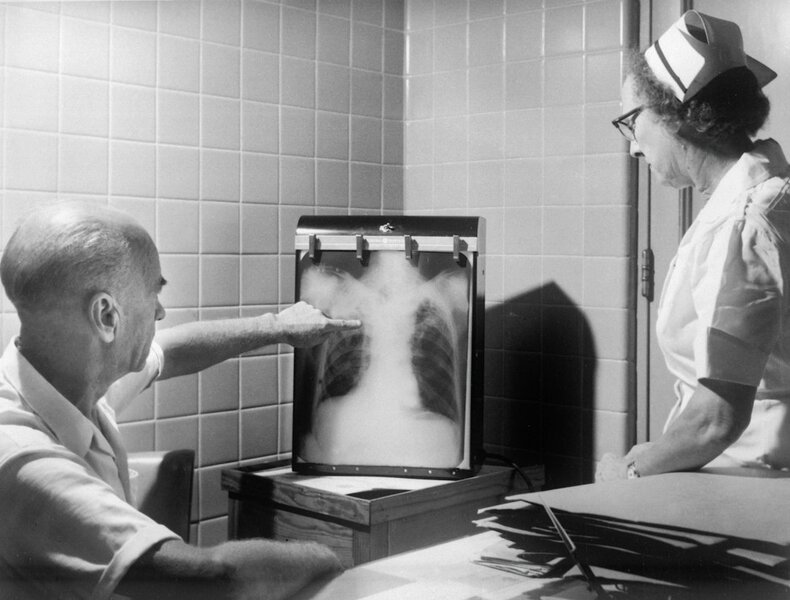
A man of 78 in a GP surgery in the west of Ireland has lost about five kilos since the spring. He has a cough he describes as “a bit of a chest”, and it has been there since before the summer. He has had two courses of antibiotics. He feels tired, but he is 78, and everyone tells him that is to be expected. Nobody has asked him where he grew up, or what was going around when he was a child.
In Ireland, among people born here, tuberculosis is a disease of adults over 65. That is not a historical statement. It is what the Health Protection Surveillance Centre reported in March 2026 on the 2025 figures, and it is the single most overlooked fact about an infection most of us file under “something my grandmother had”.
TL;DR
- Ireland notified 285 cases of TB in 2025, a rate of 5.5 per 100,000. Among people born in Ireland, the highest rate by far is in those aged 65 and over, at 4.0 per 100,000 against an Irish-born average of 1.8.
- Most TB in a low-incidence country like Ireland comes from reactivation of an infection acquired decades earlier. Ireland’s own national strategy says so.
- Around 10 to 15 per cent of people with TB infection develop disease at some point, and only about half of those do so within five years of being infected. The rest surface much later.
- In older adults it does not look like textbook TB. In a prospective study, night sweats and coughing blood did not distinguish TB at all. Unexplained weight loss and symptoms lasting two weeks or more did.
- Ireland’s TB strategy and clinical guidelines name new arrivals, prisons and under-served populations as screening priorities. Neither document mentions older adults once.
What the Irish numbers actually say
There were 285 TB notifications in Ireland in 2025, giving a crude incidence rate of 5.5 per 100,000. That is stable on 2024 and comparable with where things stood before the pandemic. It also leaves Ireland well above the trajectory needed for the World Health Organization End TB target of an 80 per cent reduction between 2015 and 2030.
The headline age figure is that rates are highest in 25 to 34 year olds, at 11.0 per 100,000. That number does something unhelpful: it averages two completely different epidemics into one line. Split by place of birth and the picture separates cleanly. Among people born outside Ireland, the rate is 18.1 per 100,000 and peaks between 25 and 44. Among people born in Ireland, the rate is 1.8 per 100,000 overall, and it peaks in those aged 65 and over at 4.0 per 100,000. More than twice the Irish-born average, in the group nobody is looking at.
Roughly two-thirds of all cases in Ireland are in people born elsewhere, which is why most TB awareness work is aimed there, and reasonably so. But it means the smaller, older, Irish-born group gets treated as a rounding error rather than as what it is: a cohort with a shared history that explains exactly why they are getting sick now.
Why this generation carries it
Ireland had a tuberculosis epidemic that modern memory has largely flattened into a few lines about sanatoria and Noël Browne. The scale of it is worth restating. Research drawing on Department of Health returns records roughly 11,700 TB deaths in the period 1938 to 1941, 12,528 between 1942 and 1945, and 10,116 between 1946 and 1949. In the 1942 to 1945 period alone, 5,532 of those deaths happened not in sanatoria or hospitals but “elsewhere, mainly in patients’ own homes”.
That last detail is the one that matters clinically. People were coughing and dying in small houses, in shared bedrooms, among children. The collapse that followed was genuinely remarkable: 889 TB deaths in 1955, 468 by 1960, 334 by 1965, 221 by 1970. Mass radiography, new drugs, better housing and a national BCG programme did what a generation of campaigners had demanded.
But bringing deaths down is not the same as clearing infection out of a population. BCG vaccination was only introduced in Ireland in the 1950s, so anyone born here in the 1930s or 1940s was a child in a high-transmission country with no vaccine. Many of them met the bacterium. Most of them contained it. Containment is not elimination, and the immune system that did the containing is now 80 years old.
Tuberculosis infection is not tuberculosis
The distinction is everything, and the language has recently changed. What used to be called latent TB is now simply TB infection, or TBI: a persistent immune response to the bacterium with no sign of active disease. You are not ill. You are not infectious. You cannot pass it to your grandchildren. There is no gold-standard test, so either a tuberculin skin test or an interferon gamma release assay (IGRA, a blood test) is used.
According to Ireland’s National Immunisation Advisory Committee, approximately 10 to 15 per cent of people with TB infection go on to develop active disease at some point in their lives, and around half of those who do develop it within five years of being infected. Read that second half carefully. It means the other half develop disease more than five years after infection, with no upper limit on how much more. Fifty or sixty years later is entirely within the natural history of this organism.
Ireland’s national TB strategy puts it plainly: in low-incidence countries, the majority of cases arise from the reactivation of TB infection. We are not, for the most part, watching new transmission in Irish-born older adults. We are watching 1947 come back.
What tips a dormant infection into disease
The HSE’s national TB guidelines list the groups at increased risk of progressing from infection to disease. The list includes people living with HIV, those recently infected, people being treated with anti-tumour necrosis factor-alpha or other biologic agents, children under five, those with excessive alcohol intake, people who inject drugs, solid organ transplant recipients, people with haematological malignancy, people having chemotherapy, those who have had a jejunoileal bypass or a gastrectomy, people with diabetes, people with chronic kidney disease or on haemodialysis, and people with silicosis.
Read that list again with a 72 year old in mind. Biologics for rheumatoid arthritis or psoriasis. Type 2 diabetes. Chronic kidney disease. Chemotherapy. A gastrectomy decades ago. These are not exotic. They are the ordinary medical furniture of later life, and several of them cluster in the same person.
Age itself does not appear on that list, and the guideline chapter on TB infection contains the word “older” exactly zero times. The immune ageing that makes shingles and pneumonia more common after 70 does not switch off for mycobacteria. It is simply not written down anywhere a clinician would trip over it.
There is a second, subtler gap. The guideline asks clinicians assessing an immunocompromised adult to weigh “risk factors for TB infection, such as country of birth”. For a woman born in Dublin in 1944, country of birth is a risk factor. The question is framed around where TB is common now, not where it was common when the person was seven.
It does not look like the TB in the textbook
This is where diagnoses get missed. A prospective multicentre study published in early 2026 compared older adults with pulmonary TB against older adults with non-TB community-acquired pneumonia across ten Japanese hospitals. On multivariable analysis, four things independently pointed to TB: weight loss (adjusted odds ratio 8.17), symptoms lasting two weeks or more (5.79), the absence of general fatigue (0.19) and the absence of breathlessness (0.19).
Night sweats and coughing up blood, the two symptoms everyone has heard of, did not differ meaningfully between the TB group and the pneumonia group. Fatigue and breathlessness, if anything, pointed away from TB. The median weight loss in the TB group was 5kg over six months.
A separate retrospective series of 92 people aged 75 and over found cough in only 51 per cent and fever in 43 per cent. Just over half had pulmonary TB; a third had extrapulmonary disease and 15 per cent had disseminated TB. Diagnosis was delayed by up to three months in almost a third, and nearly a quarter died during treatment. That was a single centre outside Ireland and the numbers are small, so treat the percentages as a shape rather than a prediction. The shape is consistent: slower, vaguer, more often somewhere other than the lungs, and more often fatal.
In Ireland, about 65 per cent of TB involves the lungs, which means roughly a third does not. It can present in lymph nodes, bone and joints, the gut, the urinary tract or the nervous system. A swollen gland that will not settle, a back that hurts for months, a confusion no one can account for.
What to actually do
If you are over 65, grew up in Ireland, and have had a cough for more than three weeks, or have lost weight you did not set out to lose, ask for a chest X-ray. Ireland’s guideline is unambiguous that a chest X-ray is the first step where pulmonary TB is suspected, and the whole problem is that it is not being suspected.
Say the history out loud. “I grew up in Ireland in the forties” is clinical information, not small talk. Mention if a parent or sibling had TB, if anyone in the house went to a sanatorium, if you were ever told you had a shadow on your lung. People in their eighties often know this and assume it is irrelevant.
If you are about to start a biologic, long-term steroids, chemotherapy or dialysis, ask directly whether you have been screened for TB infection. The guideline says this assessment should happen; a direct question makes it much more likely that it does. And know that a BCG scar is not a guarantee of anything. BCG is only modestly protective against pulmonary TB in adults, and an old vaccination can produce a positive skin test that reflects the jab rather than the infection, which is one reason the IGRA blood test exists.
For families and carers, the thing to watch is the trajectory, not the dramatic symptom. Clothes getting looser over months. A chest infection that clears and returns. The three-week threshold is the one to hold onto. Our wider writing at Críonna Health on chronic cough after 50, bronchiectasis and pneumonia covers the other things a stubborn cough can turn out to be.
What Ireland’s TB strategy does not say
“Striving to End Tuberculosis: A Strategy for Ireland 2024-2030” is a serious, well-argued document. It contains no mention of older adults, no mention of ageing, and no mention of the number 65. Its programmes for finding and treating TB infection before it becomes disease are aimed at new-entrant immigrants, people in prison, and under-served populations. The clinical guideline chapter on TB disease has a “special populations” section covering pregnancy, HIV, liver disease and renal disease. Older adults are not among them. The chapter on screening in special situations still carries a 2014 date.
The Year 2 implementation report, published in April 2026, is candid about the pace. It records no progress on the new-entrant TB infection management programme, none on the test-and-treat programme for under-served populations, and none on pre-employment screening for high-risk occupations. The National TB Lead post is vacant. The selective BCG programme is moving, with a first phase for higher-risk infants expected during 2026.
None of this is an argument for screening every Irish-born person over 65. Treating TB infection in later life carries a real risk of liver injury, and the guideline is explicit that preventive drugs should only be offered where hepatotoxicity is not a concern. The argument is narrower and cheaper: that “born in Ireland before 1955” belongs in the clinical risk assessment alongside the other entries, and that a persistent cough in an older Irish-born adult deserves a chest X-ray before a third course of antibiotics.
Treatment, and what it costs in Ireland
TB is curable. Standard treatment for drug-sensitive disease is two months of rifampicin, isoniazid with pyridoxine, pyrazinamide and ethambutol, followed by four more months of rifampicin and isoniazid. Six months in total, longer where there is cavitation on the initial X-ray, nervous system involvement or persistently positive cultures. Preventive treatment for TB infection is shorter: four months of daily rifampicin, or three months of isoniazid and rifampicin. The once-weekly rifapentine regimen used in other countries is not currently available here.
On cost, TB is a prescribed infectious disease, so the €100 emergency department charge does not apply to someone being treated for it, and public in-patient charges were abolished for everyone in April 2023. One support is gone, though. Ireland used to pay a maintenance allowance to people off work being treated for certain infectious diseases, tuberculosis among them. Section 44 of the Health Act 1947, the provision it rested on, was repealed in July 2010 and nothing equivalent replaced it.
Start with your GP. TB is notifiable, so a confirmed diagnosis brings in your regional Department of Public Health, who handle contact tracing and co-ordinate care with a hospital TB service. HSE Live is on 1800 700 700 if you are not sure where to begin.
Ireland did something extraordinary with tuberculosis in the space of fifteen years, and the people who lived through it are now in their seventies, eighties and nineties. They are also the group in whom the infection they survived is most likely to come back. The least we owe them is a chest X-ray and a question about where they grew up.
This article is for general information and is not a substitute for individual medical advice. If you have a persistent cough, unexplained weight loss or night sweats, speak to your GP.
📷 Photo by CDC on Unsplash




