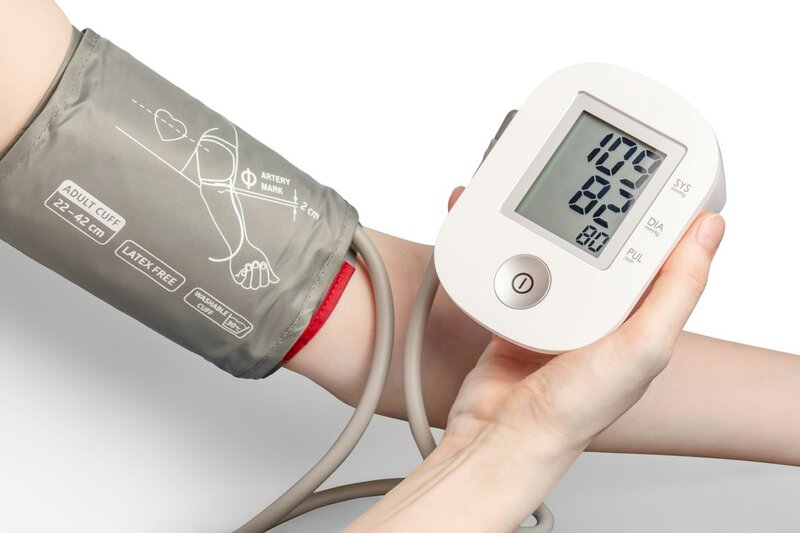
Read the HSE’s own page on high blood pressure and you will find a tidy list of things that raise your risk. Age, family history, salt, too little exercise, extra weight, alcohol, smoking, poor sleep. And, sitting there in black and white, eating a lot of liquorice.
Then comes the sentence that matters: “In about 1 in 20 cases, high blood pressure happens as the result of an underlying health condition or taking a certain medicine.”
One in twenty. That is the HSE telling you, correctly, that a meaningful slice of high blood pressure has a specific, findable cause. What the page never does is name the commonest one. The words aldosterone, adrenal and potassium do not appear anywhere on it. Liquorice gets a mention. The gland sitting on top of your kidney does not.
TL;DR
- Primary aldosteronism is the most common identifiable cause of high blood pressure. It is estimated to affect 5% to 14% of people with hypertension seen in general practice, and up to 30% of those seen in specialist referral centres.
- It is not just high blood pressure under another name. Compared with people whose blood pressure is equally high for ordinary reasons, people with primary aldosteronism have roughly 3.5 times the odds of atrial fibrillation, 2.6 times the odds of stroke and 2 times the odds of heart failure.
- Most people with it have perfectly normal potassium, and you do not need to be on three tablets before it is worth looking for. Those two beliefs are the main reason it stays hidden.
- In July 2025 the Endocrine Society changed its guidance to recommend screening everyone with hypertension, with a simple aldosterone and renin blood test, and without coming off your tablets first.
- In Ireland the test itself is the obstacle: most hospital laboratories do not run it in-house. It is sent away, frozen, with turnaround times of up to 15 working days.
What primary aldosteronism actually is
You have two adrenal glands, each about the size of a walnut, perched on top of your kidneys. Among other things, they make a hormone called aldosterone, whose job is to tell your kidneys to hold on to salt and water and to get rid of potassium.
In primary aldosteronism, one or both glands make too much aldosterone, and they do it on their own schedule rather than in response to what the body needs. The kidneys dutifully retain salt and water, blood volume rises, and blood pressure goes up and stays up. Sometimes the cause is a single small benign lump on one gland, called an adenoma. More often both glands are simply overactive, which is known as bilateral adrenal hyperplasia.
The distinction matters enormously, because one of them can be cured with surgery and the other is managed with a tablet. But neither can be addressed at all until somebody thinks to measure the hormone.
Why it is worse than ordinary high blood pressure
The instinctive response is: so what? High blood pressure is high blood pressure, and it gets treated the same way regardless of cause. That turns out to be wrong. A systematic review and meta-analysis published in The Lancet Diabetes & Endocrinology in 2018 pooled 31 studies covering 3,838 people with primary aldosteronism and 9,284 people with ordinary essential hypertension. After a median of 8.8 years from the point of diagnosis, and compared with people whose blood pressure was just as high, those with primary aldosteronism had:
- 2.58 times the odds of stroke
- 3.52 times the odds of atrial fibrillation
- 2.05 times the odds of heart failure
- 2.29 times the odds of left ventricular hypertrophy, the thickening of the heart muscle that precedes a lot of that damage
The excess risk held for both the single-adenoma form and the two-gland form. The working explanation is that aldosterone does direct harm to the heart, the blood vessels and the kidneys over and above whatever it does to the numbers on the cuff. Treating the blood pressure without treating the aldosterone leaves that part of the problem running.
How common is it, really
The best primary care figure comes from a study published in the Journal of the American College of Cardiology in 2017. Researchers in Turin took 1,672 consecutive patients with hypertension referred by 19 general practitioners, screened every one of them properly, and confirmed the diagnosis with the full workup. Ninety-nine of them, 5.9%, had primary aldosteronism.
Crucially, the rate climbed with severity: 3.9% of those with stage 1 hypertension, rising to 11.8% of those with stage 3. These were not hand-picked difficult cases sent to a specialist clinic. They were the people in an ordinary GP’s waiting room.
Ireland has no equivalent national measurement, so the next part is arithmetic rather than fact, and should be read that way. The Irish Longitudinal Study on Ageing (TILDA) published an analysis in Open Heart in 2025, led by Dr Caoimhe McGarvey, tracking the same adults over 12 years. At the most recent wave, hypertension prevalence in adults aged 50 and over had reached 71.3%, up from 63% at the study’s start: more than 700,000 people in this country.
Apply even the conservative end of the international prevalence range to that figure and you are looking at somewhere in the region of 35,000 people, and plausibly far more. The number of them who have had an aldosterone and renin test is not recorded anywhere, which is itself part of the story.
Three beliefs that keep it hidden
“Your potassium is normal, so it can’t be that.” This is the single most persistent myth. The textbook picture of primary aldosteronism includes low potassium, because that is what excess aldosterone does. But in practice, most people with the condition have potassium in the normal range. Even in the Beaumont series described below, where you would expect the most clear-cut cases, only 53.8% had any history of low potassium. Waiting for a low potassium result means missing roughly half of them, and the half you miss have exactly the same cardiovascular risk.
“You’re not on enough tablets yet.” The old guidance restricted screening to people with blood pressure that resisted three or more drugs, or who had low potassium. That restriction is what the Turin data undermines: nearly 4% of people with the mildest grade of hypertension had it. And it creates a cruel logic, because the longer the condition runs untreated, the more damage the aldosterone does, which means the people who finally qualify for testing are the ones for whom it is latest.
“You’d have to come off your medication first.” For years this was a genuine barrier. Several common blood pressure drugs distort the aldosterone to renin ratio, and the traditional advice was to wash them out before testing, which is impractical and sometimes unsafe. The 2025 guidance drops the requirement: screen on the medication the person is already taking, and interpret the result in the light of it. This matters particularly in Ireland, because the TILDA analysis found that 25.2% of adults over 50 with hypertension are on a beta blocker, one of the classes that shifts the ratio.
What changed in July 2025
On 14 July 2025 the Endocrine Society published a new clinical practice guideline on primary aldosteronism in the Journal of Clinical Endocrinology & Metabolism. Its central recommendation is a short sentence with large consequences: that all individuals with hypertension be screened, by measuring aldosterone and renin and calculating the ratio between them, with potassium checked alongside to help interpret the result.
Under the previous 2016 guidance, only high-risk groups were to be screened, and even within those narrow groups it mostly did not happen. The sharpest illustration comes from a study of 269,010 US veterans with treatment-resistant hypertension published in the Annals of Internal Medicine in 2021: just 4,277 of them, 1.6%, were ever tested. Being tested made someone four times more likely to end up on the right medication, and was associated with better blood pressure control in the years that followed. The test was not failing people. The absence of it was.
The 2025 guideline also simplifies what happens next. Where the result points strongly in one direction, the old mandatory confirmatory testing step can be skipped. For treatment, it recommends a mineralocorticoid receptor antagonist, and specifically names spironolactone as the first choice on grounds of cost and availability. It adds a practical refinement that is easy to miss: on treatment, renin should be monitored, and if blood pressure remains uncontrolled while renin is still suppressed, the dose should be increased until renin rises. That is a different target from simply chasing the blood pressure number down.
The Irish friction: a test that leaves the building
Here is where theory meets a Tuesday morning in a GP surgery in Athlone.
Aldosterone and renin are not routine bloods in Ireland. In most Irish laboratories they are what is called a referred test, meaning the sample is packaged up and sent elsewhere. The Rotunda Hospital’s laboratory documentation lists both aldosterone and renin as referred to Biochemistry at St James’s Hospital. Mercy University Hospital in Cork refers both out to Eurofins Biomnis. The Bon Secours Hospital Cork laboratory manual flags both as referred to an external laboratory with a turnaround time of 15 working days.
And the handling is fussy. The Bon Secours manual specifies EDTA plasma frozen within four hours of collection, and asks the requester to state whether the patient was standing or lying down, after eight hours of rest. Aldosterone varies with posture, so that detail is not bureaucracy, it is the difference between a usable result and a meaningless one. But it is a real obstacle for a practice without a centrifuge and a freezer to hand.
Layered on top is a problem the TILDA researchers named directly in their paper: there is currently no formal consensus in Ireland on which hypertension guideline to follow, in either general practice or hospital care. Some clinicians work to the European Society of Cardiology guidance, others to NICE. When there is no agreement on the target, there is unlikely to be agreement on which tests to send.
None of this is anyone’s individual failing. It is a system that has not yet been asked to do this routinely.
What happens if the test is positive
A positive screen is a beginning, not a diagnosis. The next question is whether the excess aldosterone is coming from one gland or both, because only the one-gland version can be cured by removing it.
Imaging alone is not reliable enough to answer that, which is the striking lesson from the only published Irish series on this. Beaumont Hospital in Dublin set up a dedicated adrenal vein sampling protocol in 2021. Reviewing every case between November 2021 and December 2022, the team reported 13 patients referred for the procedure.
Two findings from that small series deserve attention. First, those patients had been living with high blood pressure for a median of 15 years before reaching this point, and their median age was only 46. Fifteen years of treatment before anyone measured the hormone. Second, CT imaging reported a single-sided adenoma in 61.5% of cases, but sampling the adrenal veins directly confirmed genuinely one-sided disease in only 3 of 9 conclusive cases. Two patients who looked on a scan like candidates for surgery turned out to have both glands involved, and were spared an operation that would not have worked.
For the majority with two-gland disease, the treatment is spironolactone, a long-established and inexpensive tablet. It is not without issues: it can push potassium too high, particularly alongside an ACE inhibitor or an angiotensin receptor blocker or where kidney function is reduced, so it requires blood monitoring. In men it can cause breast tenderness or enlargement, which is the usual reason people stop taking it, and there are alternatives in that situation. Both are manageable, and both are a different order of problem from an untreated hormone left to work on a heart for years.
What you can do this month
- If you have high blood pressure, ask your GP one specific question at your next review: has my aldosterone and renin ever been checked? Use those words. “Have we looked for a cause” is too easy to answer vaguely.
- Ask it even if your potassium is normal, and even if your blood pressure is reasonably controlled on one or two tablets. Those are not reasons to rule it out.
- If you are on three or more blood pressure medicines and still above target, ask directly about referral to endocrinology. Testing is substantially more likely to happen once a specialist is involved.
- Bring a fortnight of home readings. The case for investigating is far stronger with recorded numbers than with one reading in a surgery.
- Do not stop or change any blood pressure medication to get tested. Under the 2025 guidance you do not need to, and stopping treatment unsupervised is genuinely dangerous.
- If you have not had your blood pressure checked in the last year, start there. TILDA found that only 56.3% of people over 50 with hypertension were even aware they had it.
A last word
The HSE page is not wrong. One in twenty is roughly right, and liquorice really does raise blood pressure. But a condition that affects somewhere between 5% and 14% of people with hypertension, carries triple the odds of atrial fibrillation, is found with an ordinary blood test and is treated with a cheap tablet or a curative operation, should not be absent from the conversation.
Fifteen years was the median wait for the Beaumont patients. The question that shortens it is one sentence long, and it is yours to ask.
At Críonna Health we write about the things that get filed under getting older, or under bad luck, when they are neither. If you have been on blood pressure tablets for years without anyone asking why, that is worth raising.
This article is for general information and is not a substitute for individual medical advice. Never stop or change prescribed medication without speaking to your GP.
📷 Photo by Mockup Graphics on Unsplash




