A knee swells overnight. It is hot, tight and so sore that the weight of the duvet is unbearable. Someone in the family says the word everyone says: gout. The GP takes bloods, the uric acid comes back normal or only slightly raised, and the advice that follows is about red meat, shellfish and beer. None of it helps, because none of it was ever going to. The crystals in that joint are not uric acid at all.
Calcium pyrophosphate deposition disease is one of the commonest causes of a suddenly inflamed joint in people over 65, and it is almost invisible in Irish health information. The HSE’s Health A to Z has a page on gout. Search the same site for “pseudogout” or “chondrocalcinosis” and you get no results at all. Search “calcium pyrophosphate” and you are offered calcium supplements and kidney stones. Arthritis Ireland’s Types of Arthritis page lists seven conditions, and this is not one of them. Meanwhile an Irish rheumatologist helped write the international criteria that define it.
TL;DR
- Calcium pyrophosphate deposition (CPPD) disease is a crystal arthritis that mimics gout but is caused by a different crystal. Uric acid blood tests do not diagnose or exclude it.
- It favours the knee and wrist, not the big toe. In one trial of people aged 65 and over, flares affected the knee in 48%, the wrist in 20% and the ankle in 13%.
- Cartilage calcification shows on X-ray in about 10% of adults and 50% of people over 80, though most of those people have no symptoms at all.
- A chronic form is routinely mistaken for seronegative rheumatoid arthritis. In one clinic audit, just under one in five people carrying that label met the CPPD criteria instead.
- Colchicine and prednisone relieve a flare equally well at 24 hours, with different side effects. Anyone diagnosed under 60 should have six specific blood tests for an underlying cause.
- Neck pain with fever and feeling very unwell can be a rare form of this condition that mimics meningitis. It needs same-day assessment.
What the condition actually is
Your cartilage can accumulate crystals of calcium pyrophosphate. Deposited quietly, they do nothing and you never know they are there. Shed into the joint space, they trigger an inflammatory response that is fast, fierce and genuinely painful.
Radiographic surveys summarised in the Canadian Medical Association Journal in February 2026 put visible cartilage calcification at roughly 10% of adults and 50% of people over 80. That figure is worth sitting with, because it cuts both ways. The deposits are extremely common with age, so finding them on an X-ray does not prove they are causing your symptoms. Equally, a GP who has never been prompted to think about them will not go looking.
Crystals in a joint are not new territory for this blog. Our guide to gout after 50 covers the uric acid version. This is the other one, and the differences matter far more than the similarities.
The joints give it away
Gout has a signature joint: the base of the big toe. CPPD has a different one.
The clearest Irish-relevant evidence comes from COLCHICORT, a randomised trial run across six hospitals in Paris and northern France and published in 2023. It enrolled 111 hospital patients aged 65 or over with an acute calcium pyrophosphate flare. Their median age was 88 and 73% were women. The affected joint was the knee in 48% of cases, the wrist in 20% and the ankle in 13%.
Knees and wrists, then, in people in their eighties, more often women than men. That is close to the opposite of the classic gout picture, and it is the single most useful thing to carry into a GP appointment. A hot swollen wrist in a woman of 80 is not a typical gout presentation, whatever the first instinct in the room.
There is a second clue, quieter but useful. Osteoarthritis in joints where osteoarthritis does not usually turn up, meaning the knuckles, wrists, ankles, shoulders and elbows, should raise the question of underlying crystal deposition. Ordinary wear-and-tear arthritis prefers the hips, knees and the small joints at the ends of the fingers. When it appears somewhere unexpected, something else may be driving it. Our hand and wrist guide covers the more familiar causes.
Why the name is part of the problem
For decades this was called pseudogout. European rheumatology bodies dropped the “pseudo” prefix in 2011 precisely because it was causing confusion, framing a distinct disease as a counterfeit of another one. It has not worked. A systematic review by the Gout, Hyperuricaemia and Crystal-Associated Disease Network found that across 783 uses in the published literature, “pseudogout” was still the most common label at 46.6%, ahead of “chondrocalcinosis” at 26.4% and the correct umbrella term at 23.1%.
If specialists writing the papers have not settled on a name, it is unsurprising that patient-facing information in Ireland has very little to say. The practical consequence falls on the person with the swollen knee, who has no word to search for and no page to land on.
Three different presentations
A study of 618 people, published in Arthritis & Rheumatology in 2024 and drawn from the international cohort used to build the diagnostic criteria, mapped how the condition actually shows up. Mean age was 74. Nearly all, 97.4%, had experienced an acute flare. Just over half, 53.7%, had recurrent flares. A quarter, 25.6%, had a persistent inflammatory arthritis rather than discrete attacks. Around 29% had features of more than one pattern.
The acute flare is the recognisable one: rapid onset, one hot swollen joint, typically settling within four weeks even without treatment, though four weeks is a long time to wait.
The chronic form is the one that gets misfiled. It produces a symmetrical arthritis of the hands and wrists that looks very like rheumatoid arthritis, in someone whose rheumatoid blood tests are negative. A Barcelona rheumatology clinic reviewed its own patients carrying a seronegative rheumatoid arthritis diagnosis and applied the CPPD criteria: of 96 such patients, 18 met them. Just under one in five. Notably, not one of those 18 had ever had fluid taken from a joint and examined. Our rheumatoid arthritis guide explains why the seronegative label exists and why it is not an endpoint.
Crowned dens syndrome accounts for roughly 5% of presentations and is the one to know about for safety reasons. Crystals deposit around the top of the spine, just below the skull, producing sudden severe neck pain with fever and raised inflammatory markers. It can look convincingly like bacterial meningitis. It is diagnosed on a CT scan of the neck. If you or someone you care for develops acute neck pain with a temperature and feels unwell, that is an emergency department presentation today, not a wait-and-see.
What actually confirms it
The HSE’s gout page states that a GP “will take a blood test to confirm it’s gout”, checking for high uric acid levels. For gout, that is reasonable first-line practice. For this condition, it is a dead end: uric acid tells you nothing about calcium pyrophosphate, and plenty of older adults have a mildly raised uric acid alongside an entirely different problem.
Two findings settle the diagnosis. The first is calcium pyrophosphate crystals identified in fluid drawn from the joint and examined under polarised light. The second is crowned dens syndrome on CT. Short of those, X-ray and ultrasound showing calcification in the right places, combined with the clinical picture, carry most of the weight.
In 2023 the American College of Rheumatology and EULAR published the first validated classification criteria for the disease, which performed at 99.2% sensitivity and 92.5% specificity when tested on an independent group. They were written for research, but they give clinicians a framework where previously there was none. Among the authors is Professor Geraldine M. McCarthy of the UCD School of Medicine and the Mater Misericordiae University Hospital in Dublin. Ireland was at the table when this disease was finally defined, which makes the silence in Irish patient information all the more striking.
Treatment, and a genuine choice
Three options relieve a flare: non-steroidal anti-inflammatories, colchicine, and corticosteroids either as tablets or injected into the joint.
COLCHICORT compared the second and third head to head in older patients. At 24 hours, pain scores had fallen by 36mm on a 100mm scale with colchicine and 38mm with prednisone, a difference of 1mm. They work equally well. The side effects differ, and that is where the decision sits. Colchicine caused diarrhoea in 22% of participants against 6% on prednisone. Prednisone caused raised blood pressure in 11% against 2%, and raised blood sugar in 6% against none.
For someone with poorly controlled blood pressure or diabetes, that comparison points one way. For someone frail, dehydrated or prone to gut upset, it points the other. It is a conversation worth having rather than a default.
Two cautions deserve naming. Colchicine interacts significantly with statins, with a real risk of muscle injury, and many people in this age group are on both. Anti-inflammatories such as ibuprofen are frequently unsuitable after 70 because of kidney function, stomach bleeding, heart failure or anticoagulants. Neither rules anything out, but both mean the prescribing decision belongs to someone who can see your full medication list.
If flares keep coming, more than twice a year, or the arthritis persists beyond three months, that is the point for a rheumatology referral and consideration of longer-term suppression.
Diagnosed under 60? Ask for six tests
Crystal deposition in someone under 60 is unusual enough to suggest a cause, and the recommended workup is specific: calcium, parathyroid hormone, ferritin, transferrin saturation, magnesium and alkaline phosphatase. Those six results between them screen for hyperparathyroidism, iron overload, low magnesium and hypophosphatasia.
Two of those have strong Irish resonance. Raised calcium is covered in our post on primary hyperparathyroidism after 60. The other is haemochromatosis, where Ireland has the highest reported rate in the world: roughly 1 in 83 people carry the at-risk genotype.
That link became considerably more concrete this year. EULAR published the first classification criteria for haemochromatosis arthropathy, derived by comparing 154 people who had it against 120 with conditions that resemble it, one of which was CPPD. The joints that distinguish it are the second and third knuckles, with restricted movement there found in 62% of cases in the supporting review. In other words: stiff, enlarged index and middle knuckles in an Irish adult are a reason to check iron studies, not a reason to accept “a bit of arthritis”.
Getting seen in Ireland
Most flares can be handled in general practice, which is fortunate. National Treatment Purchase Fund figures for 27 August 2026 put 17,017 adults on the rheumatology outpatient waiting list, up from 14,213 in late February. Of those, 1,395 had been waiting 18 months or more.
That makes the GP consultation the one that counts. Three things are worth raising directly: that gout and calcium pyrophosphate disease are different conditions with different crystals; that a normal uric acid result does not close the question; and whether fluid can be taken from the joint, or an X-ray or ultrasound arranged, before a diagnosis is settled on. If you have been carrying a seronegative rheumatoid arthritis label for years without ever having had a joint aspirated, that is a fair thing to ask about too.
Arthritis Ireland runs a helpline on 0818 252 846, Monday to Friday from 10am to 4pm, and will talk through symptoms and appointments even for conditions not listed on their site. Prescription costs are capped at €80 a month under the Drugs Payment Scheme, and medical card holders pay the standard prescription charge.
Seek urgent help if
- A joint is hot, swollen and painful and you have a fever or feel generally unwell. Infection in a joint cannot be told apart from a crystal flare without testing the fluid, and it is a medical emergency.
- You develop sudden severe neck pain with fever. Crowned dens syndrome and meningitis both present this way.
- Pain is rapidly worsening despite treatment that was prescribed for it.
The takeaway
An inflamed joint after 65 deserves a name, and “probably gout” is not always the right one. The knee and the wrist, a normal uric acid, dietary advice that changes nothing: that combination is worth a second look. The disease has been defined, with Irish input, and it responds well to treatment once correctly identified. What is missing here is not the medicine. It is the page in the A to Z.
At Críonna Health we write about the conditions that fall between the gaps in Irish health information, particularly those that arrive after 60 and get mistaken for something more familiar. If this one sounds like a joint you or someone close to you has been living with, bring it to your GP rather than to a search engine.
This article is for information only and is not a substitute for individual medical advice. Discuss any symptoms or medication changes with your GP or pharmacist.
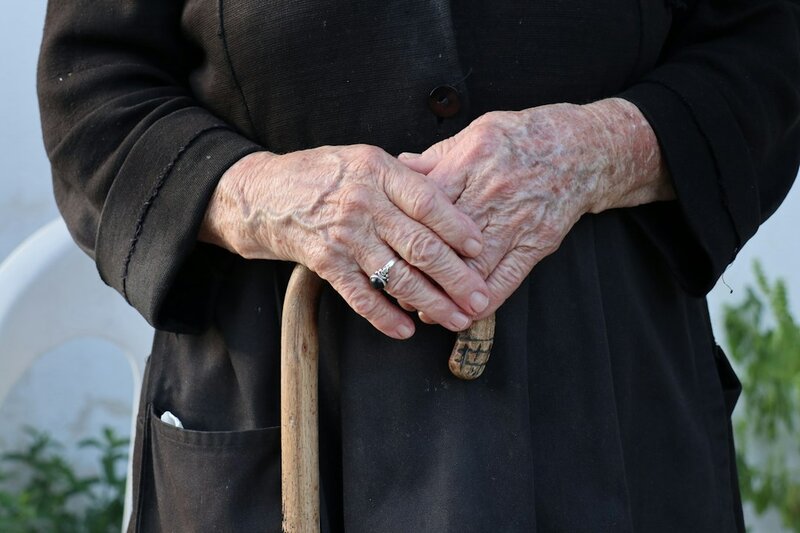
📷 Photo by Aggeliki Koutelekou on Unsplash




