Every respiratory clinic in Ireland hears the same sentence, usually delivered with a small shrug: “Ah sure, I gave that up years ago.” It is meant as reassurance, and it is offered in good faith. Stopping smoking is the single best thing anyone can do for their lungs.
But it is worth being precise about what quitting does. It slows the climb in your risk. It does not take you back to the start. And in a country with no lung cancer screening programme, that distinction decides who gets diagnosed early enough to be cured.
TL;DR
- Lung cancer is Ireland’s third most common cancer at around 2,670 cases a year, but it causes one in five of all cancer deaths, more than any other.
- Roughly six in ten Irish cases are found at a late stage. Five-year survival has doubled since the mid-2000s, to 24 per cent, and is still the worst of the major cancers.
- Quitting lowers your risk compared with continuing, but it does not reset it. Age keeps pushing absolute risk up, which is why the American Cancer Society dropped “years since quitting” from its screening criteria entirely.
- About three in ten people diagnosed in Ireland never smoked. Radon is the second leading cause after tobacco and accounts for roughly 350 Irish cases a year.
- There is no BreastCheck equivalent for lungs. A Beaumont and RCSI pilot funded by the Irish Cancer Society, scanning from mobile units at GAA clubs, had led to fourteen curative operations done or scheduled by early 2026.
- Until a national programme exists, diagnosis depends on you presenting: a new cough lasting more than three weeks warrants a GP appointment, whatever your smoking history.
Ireland’s third most common cancer, and its deadliest
The National Cancer Registry Ireland records about 2,670 new lung cancer diagnoses a year, split roughly 1,460 in men and 1,210 in women. That puts it third for frequency, behind skin and breast or prostate cancer. On deaths it is first by a distance: around 1,970 people a year, one in every five cancer deaths in the country. Seven in ten of those diagnosed are aged 65 or over, so this is very much a later-life condition.
Outcomes have improved. Five-year net survival rose from 12 per cent for those diagnosed in 2004 to 2008 to 24 per cent for 2014 to 2018. But the figure is still poor next to breast or bowel cancer, and the reason is not a mystery: according to the Irish Cancer Society, roughly six in ten Irish lung cancers are picked up at a late stage, when cure is off the table.
Why the clock does not reset when you stop
Here is the piece that gets lost. When you stop smoking, your risk relative to someone who keeps smoking falls steadily, and that fall is genuine and substantial. But your absolute risk does not drop to that of a lifelong non-smoker, and it does not stay flat either. Age is itself one of the strongest drivers of lung cancer, so as the years since quitting accumulate, so do the birthdays. For many people who quit in their forties, absolute risk is higher at 68 than it was at 50, despite two decades of clean lungs.
This is not a fringe view. In 2023 the American Cancer Society removed “years since quitting” from its screening guideline altogether, on exactly that reasoning: someone with a twenty pack-year history should be offered annual scanning whether they quit last year or twenty years ago.
Pack-years is the unit clinicians use, and it is worth knowing your own number. One pack-year is twenty cigarettes a day for a year, so ten a day for thirty years is fifteen pack-years. It takes two minutes to work out, and it is the most useful thing you can bring to a GP appointment about your chest.
The three in ten who never smoked at all
The HSE’s own figure is that seven in ten people who develop lung cancer smoke or used to smoke, which means close to three in ten never did. That group is often diagnosed later, partly because neither they nor their doctors think of it first.
Radon is the second leading cause after tobacco, and Ireland has some of the highest domestic levels in Europe. The Environmental Protection Agency attributes roughly 350 lung cancer cases a year here to radon in homes and workplaces, and a three-month test kit costs €40 to €60.
Ireland does not screen for this. Yet.
If you are over 50 in Ireland, letters arrive: BreastCheck, BowelScreen, CervicalCheck. No letter arrives about your lungs, for anybody, at any age.
Lung cancer screening does sit on the work programme of the National Screening Advisory Committee, the body that advises the Minister for Health on new programmes. Meanwhile researchers have been sizing the job. A study published in PharmacoEconomics Open in July 2026 by a team from RCSI and UCD modelled the eligible population using Census 2022 data. Under the criteria used in Ireland’s current pilot, aged 55 to 74 with at least twenty pack-years and having quit within fifteen years, about 245,000 people would qualify today; under broader US criteria, around 345,000. At realistic uptake that means roughly 36,000 low-dose CT scans a year, which turns a good idea into a capacity question.
The pilot in the GAA car park
Ireland is not standing still. The Beaumont RCSI Irish Cancer Society Lung Health Check, launched in March 2025, is the first community-based lung screening study in the State. It is run by Beaumont Hospital and RCSI, funded by the Irish Cancer Society at a cost of close to €5 million, and delivered with GP practices across north Dublin and the north east.
The design is the interesting bit. Rather than asking people to attend a hospital, mobile CT units park at local GAA clubs and at Croke Park, and invitations come from the person’s own GP rather than as a cold call from a research team. Those two choices appear to have solved the problem that has dogged lung screening everywhere else: uptake. Participation has run at 75 to 80 per cent, against 35 to 53 per cent in comparable NHS England programmes and under 6 per cent in the United States.
By early 2026 around 1,700 people had been scanned, with a cancer detection rate on early modelling of 1 to 1.5 per cent, in line with established programmes such as BreastCheck. Seven people had undergone curative surgery by January 2026 with a further seven scheduled. The thoracic surgeon involved, Gary Fitzmaurice, made the point that these were people with no symptoms at all, whose cancers would not have been found without a scan. Full results are expected later in 2026.
What actually exists today: the Rapid Access Lung Clinic
Ireland has eight Rapid Access Lung Clinics, set up by the National Cancer Control Programme from 2009 and attached to the designated cancer centres. Your GP can refer you directly, and the clinics aim to assess you within ten working days of receiving the referral. About half of Irish lung cancers are diagnosed through this route.
The other figure is the uncomfortable one: roughly a quarter are diagnosed after an emergency presentation, meaning the person arrived at an emergency department already unwell. That is almost always a late-stage diagnosis. The rapid access system is genuinely good, and it is entirely symptom-triggered. It cannot help someone who has not gone to their GP.
The symptoms that earn an appointment
The HSE lists the main signs as a new cough that has not cleared after three weeks, a long-standing cough that changes or worsens, repeated chest infections, coughing up blood, chest or shoulder pain on breathing or coughing, unexplained weight loss, loss of appetite, unusual tiredness, and breathlessness that is new or different for you.
Two things worth saying plainly. “Smoker’s cough” is a description, not a diagnosis, and it is not a reason to wait. And a normal chest X-ray does not close the matter: if symptoms persist, go back. X-rays miss a meaningful proportion of early tumours, which is precisely why screening uses CT.
What you can do this month
- Work out your pack-years and write the number down, along with the year you stopped. Bring both to your next GP visit.
- Correct the record if your GP notes say non-smoker and you smoked for years. Ask them to record your former-smoker status and pack-year history.
- Put a three-week limit on any new cough. Diary it. If it is still there, ring the surgery.
- Test your home for radon, especially in a High Radon Area. The EPA maintains an interactive map and a list of registered suppliers.
- Stop smoking at any age. It is never too late, and the gain in life expectancy is real even in your seventies.
On that last point, the HSE QUIT service offers free one-to-one support and people who use it are considerably more likely to succeed than those going it alone: freephone 1800 201 203. For a symptom you are worried about, a diagnosis, or supporting someone else, the Irish Cancer Society Support Line is free on 1800 200 700.
Ireland will very likely have a national lung screening programme within the next several years. Until then, the pathway to an early diagnosis runs through a GP’s door. At Críonna Health we write about the conversations that get put off, and this is one of them: if you stopped smoking a long time ago and have quietly filed the whole business under “dealt with”, it is worth reopening that folder, once, with your GP.
This article is for general information and is not a substitute for individual medical advice. If you have symptoms that concern you, contact your GP.
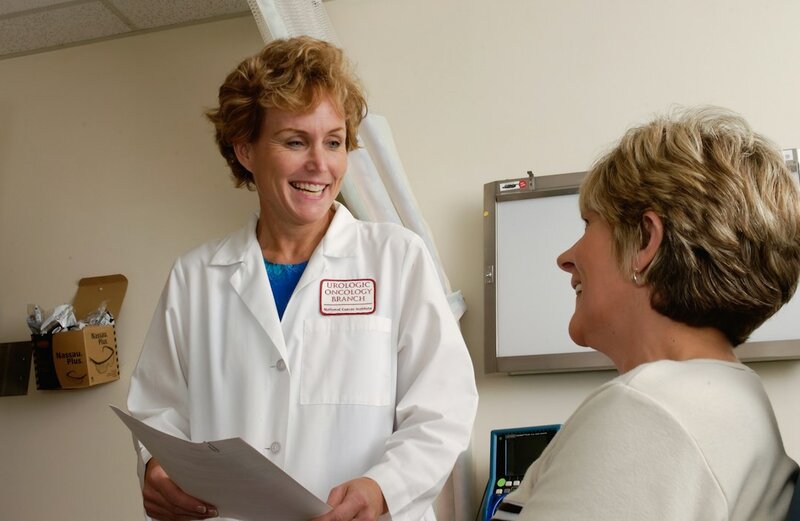
📷 Photo by National Cancer Institute on Unsplash