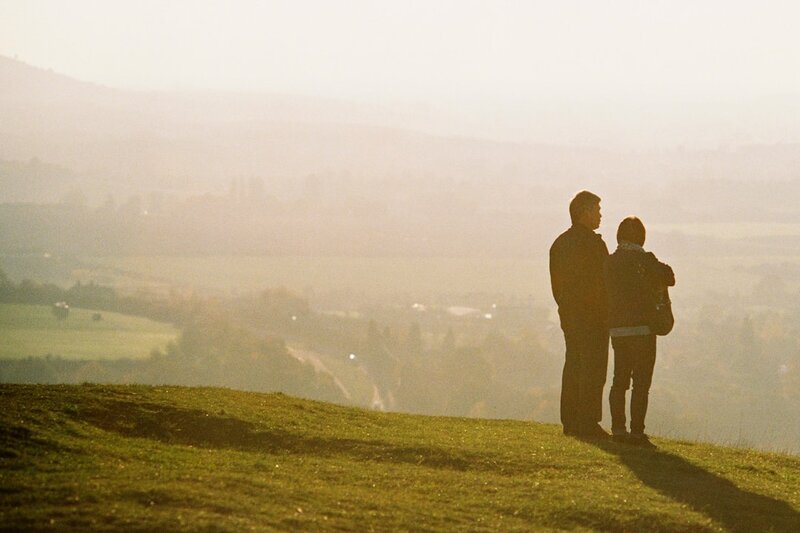
There is something deeply Irish about the smell of smoke on a cold, still evening: a fire lit in the front room, the chimneys going along the terrace, the air heavy and quiet. It reads as comfort, and for generations it has been exactly that. It is also, according to the Environmental Protection Agency, the largest single source of the most damaging air pollutant we breathe. That is uncomfortable to sit with if the open fire is the warm centre of your home, but it deserves a clear-eyed look, particularly for anyone in their 60s and beyond already living with a heart or lung condition.
TL;DR
- The EPA attributes roughly 1,700 premature deaths a year in Ireland to fine particulate (PM2.5) pollution.
- Burning solid fuel in homes is the dominant source, accounting for around 59% of national PM2.5 emissions.
- Ireland meets EU legal limits but not the tougher WHO health guidelines, which set the annual PM2.5 value at 5 µg/m³.
- Check the free Air Quality Index for Health at airquality.ie: a 1 to 10 score updated hourly from 115 stations, with a three-day forecast.
- The Solid Fuels Regulations 2022 restrict the sale of smoky coal, turf and wet wood nationwide, with limits tightened again in September 2025.
- Older adults with asthma, COPD or heart disease are in the at-risk group and may feel symptoms even on a “fair” day.
Why this matters more after 60
Fine particulate matter, or PM2.5, is the soot and dust small enough to travel past the nose and throat, deep into the lungs and from there into the bloodstream. Age changes how much damage that does: lung tissue loses elasticity, the cilia that sweep the airways clean slow down, and the immune response becomes less precise. Layer a long-standing condition on top, such as COPD, late-onset asthma or angina, and a polluted day stops being an abstraction. It is a tighter chest on the walk to the shop, a reliever inhaler used twice instead of once, an exacerbation that turns into a hospital admission.
The cardiovascular picture matters just as much: short spikes in particulate pollution are associated with heart attacks and strokes in the days that follow, which is why heart disease is named alongside asthma in the official at-risk guidance.
There is a growing cognitive signal too. The 2024 Lancet Commission on dementia prevention included air pollution among its fourteen modifiable risk factors, and a 2025 Nature Aging meta-analysis of 28 cohort studies found a minimum 14% increase in dementia risk across the PM2.5 range studied. That is population-level evidence, not a prediction about any one person, and the effect is modest next to hearing loss or blood pressure. It belongs on the list all the same.
What Ireland actually measures, and how to check it
The EPA runs 115 monitoring stations and publishes the results as the Air Quality Index for Health (AQIH), a number from 1 to 10 in four bands: good, fair, poor and very poor. It is calculated hourly, mapped by colour at airquality.ie, and comes with a three-day forecast and separate advice for the general population and for people at risk.
The advice is built on WHO guideline values rather than the looser EU legal limits, so a “fair” reading is a genuine prompt to be careful, and people who are highly sensitive can get symptoms even in the “good” band.
In its September 2025 report the EPA confirmed that Ireland meets all EU legal requirements but falls well short of WHO guidelines, projecting only 93% compliance for PM2.5 and 78% for nitrogen dioxide against the 2030 EU targets. Ireland’s first Clean Air Strategy, approved in 2023, aims for interim WHO targets by 2026 and full guideline values by 2040. The EPA has been blunt that 2026 now looks very challenging.
The rules that changed, and what they do not cover
The Dublin smoky coal ban, in place for over thirty years, went nationwide on 31 October 2022 under the Air Pollution Act 1987 (Solid Fuels) Regulations 2022, which set standards for what can be sold in shops, online and commercially:
- Coal and manufactured solid fuels must emit less than 10 grams of smoke per hour, and manufactured part-biomass products less than 5 grams per hour.
- Sulphur content must be under 2% by weight, reduced to 1% from 1 September 2025.
- Wood sold in units of two cubic metres or less must be under 25% moisture, reduced to under 20% from 1 September 2025.
Note the wording: these rules govern sale and supply, are enforced by local authorities, and do not police what you burn in your own grate. People cutting turf for their own use under turbary rights are not caught by them either. The fire in the front room remains your decision, which is why the choices below matter.
Practical steps that actually move the needle
None of this requires ripping out a fireplace.
- Check before you plan. Read airquality.ie the way you read the weather forecast. Still, cold winter evenings are the worst conditions, because there is no wind to disperse anything.
- Shift your walk. Mid-morning or early afternoon is usually cleaner than the 6pm to 10pm window when fires are lit and traffic peaks, and a route one street back from a busy road cuts nitrogen dioxide exposure.
- Burn better, or less. Properly seasoned wood under 20% moisture produces a fraction of the smoke of damp wood, and a smouldering fire is far dirtier than a brisk one. On a stove, an air intake open enough for a lively flame is both cleaner and warmer.
- Get the chimney swept annually. A fire-safety and carbon-monoxide measure first, an emissions one second.
- Ventilate while cooking and burning. Indoor and outdoor air are the same problem seen from two sides, so this pairs naturally with testing your home for radon.
- Do not sit in a cold house instead. A cold home is its own serious health risk, and warmth wins. If cost is the obstacle, the Fuel Allowance, SEAI Warmer Homes Scheme and Housing Aid for Older People exist for this reason.
When to bring it to your GP
If you are using a reliever inhaler more often, waking breathless, noticing ankle swelling, or finding your usual walk now stops you, that is a GP conversation and not a weather complaint. Anyone with COPD or asthma should have a written action plan and an in-date inhaler technique check, and most people living with a chronic respiratory or cardiac condition are eligible for structured reviews under the HSE’s Chronic Disease Management Programme, free through their GP practice with a medical card or GP visit card. Sudden severe breathlessness or chest pain is a 999 or 112 call.
The wider fix is not an individual one. It sits with heating policy, retrofit funding and public transport, and the EPA’s Clean Air Together citizen science campaigns in Dublin, Cork, Galway, Limerick and Waterford exist to build the evidence that drives it. Knowing which evenings to stay in, and what you put on the fire, is the immediate piece.
At Críonna Health we write about the practical, unglamorous decisions that protect health over decades. This one is less obvious than diet or exercise, and every bit as worth knowing.
This article is for general information and is not a substitute for advice from your GP or pharmacist.