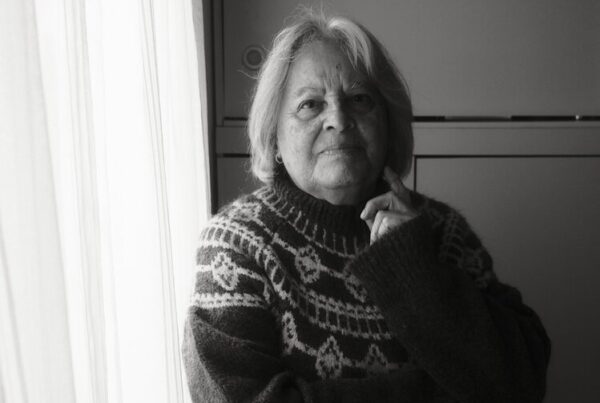
Ask most people to picture someone with an eating disorder and they will describe a teenage girl. That picture is doing real damage. It shapes who gets asked the question in a GP surgery, who recognises what is happening to them, and who feels entitled to look for help. It leaves out a great many people in their forties, fifties, sixties and beyond, living with an illness that has either never left them, quietly returned, or arrived for the first time in the second half of life.
TL;DR
- Eating disorders do not have an upper age limit. A large UK cohort study of women in their forties and fifties, published in 2017, found that more than 15% had experienced an eating disorder at some point in their lives, and around 3.6% met the criteria in the previous year.
- Later-life presentations fall into three broad groups: a long-standing illness that never fully resolved, a relapse triggered by change, and genuine first onset after 50.
- They are routinely missed after 50 because weight loss in an older adult is investigated as a physical problem, and once the scans come back clear, the question often stops being asked.
- This is not the same thing as the appetite loss that can come with ageing, though the two can look alike from the outside and can overlap.
- Bodywhys is the national support organisation in Ireland: helpline 01 210 7906, alongside online support groups and the PiLaR programme for families. The HSE also offers a free Eating Disorder Self-Care app.
Three ways it shows up after 50
Clinicians in this area tend to describe three patterns. The first, and probably the most common, is a long-standing illness. Someone developed anorexia or bulimia at nineteen, was never treated or treated only briefly, and has spent thirty years managing a relationship with food that nobody would describe as healthy but that has never quite tipped into crisis. It has simply become how they are.
The second is relapse. The illness settled decades ago, then something in midlife knocked it loose: a bereavement, a marriage ending, children leaving home, retirement, redundancy, a diagnosis, becoming a carer. Eating disorders are, among other things, coping mechanisms. When the ground shifts, old mechanisms return.
The third is first onset in later life. It is less common but it is real, and it is the one clinicians are slowest to consider.
Why midlife is a vulnerable window
Several things converge. Perimenopause brings hormonal change and a real change in body shape, weight distribution and metabolism, and researchers have described this stage as a period of heightened vulnerability in much the way adolescence is. Add a culture that treats visible ageing in women as a problem to be solved, and the pressure does not ease with age. It changes shape.
There is also the health advice itself. People in their fifties and sixties are told, often correctly, to watch their weight, cut sugar, control portions, get their cholesterol down. For most people that is useful. For someone with a history of restriction, a doctor’s instruction to lose weight can be the permission slip that reopens the whole thing. The prominence of weight-loss injections has added another route into rigid, rule-bound eating for people who were already susceptible.
Men are in this picture too. Roughly a quarter of people with eating disorders are male, and they are diagnosed later and less often, partly because neither they nor the people treating them expect it.
Why it gets missed
When an older adult loses a significant amount of weight, the response is, quite rightly, a physical workup: thyroid function, coeliac screening, cancer, malabsorption, diabetes, medication effects, dementia. That is good medicine. The problem is what happens next. When the results come back unremarkable, the conversation often ends there rather than moving to the question that would be asked automatically in a nineteen-year-old: what is your relationship with eating actually like?
There is a second confusion worth naming. Appetite genuinely does decline with age, driven by changes in the hormones that regulate hunger, altered taste and smell, medication side effects, dental problems and eating alone. We have written separately about appetite changes after 50, and that is a different problem with different solutions. The distinction is not how much someone eats. It is whether food, weight and body shape have become a source of fear, control or shame. Someone with reduced appetite would eat if they could. Someone with an eating disorder is managing something else through food. The two can also coexist, which is exactly why the question needs asking rather than assuming.
The body has less room to absorb it
This matters more after 50, not less. Bone density is already falling after menopause, and prolonged undernutrition accelerates it, so the osteoporosis risk we cover in our piece on bone health after 50 compounds rather than adds. The heart is less tolerant of the electrolyte disturbances caused by purging or severe restriction, particularly alongside diuretics or heart medicines. Repeated vomiting erodes enamel that is already thinning. Muscle loss lands on top of the age-related loss happening anyway, which means falls, frailty and slower recovery from any illness. Eating disorders carry among the highest mortality rates of any mental illness, and the reserve to withstand them narrows with age.
What to do about it
If you recognise yourself here, the first step is a GP appointment where you say the actual thing out loud. That is enormously hard after decades of privacy around it, and it is still the fastest route to help. Bring specifics: what you avoid, whether you weigh yourself, whether you compensate afterwards, how much mental space it takes up.
Primary care commonly uses a short five-question screen known as SCOFF: making yourself sick when uncomfortably full, losing control over how much you eat, recent weight loss of a stone or more in three months, believing yourself fat when others disagree, and whether food dominates your life. Two or more yes answers warrants a fuller conversation, and you are entitled to ask for it yourself.
On services: the HSE’s National Clinical Programme for Eating Disorders, developed with the College of Psychiatrists of Ireland and Bodywhys, set out a Model of Care in 2018 built around sixteen specialist teams nationally. Rollout has been considerably slower than planned and provision remains patchy by region, so what is available to you will depend heavily on where you live. Your GP refers into the local community mental health team, and onward to a specialist team where one exists.
Alongside that, Bodywhys is the national voluntary organisation and does not require a referral or a diagnosis. The helpline is 01 210 7906, and they run online and in-person support groups, email support, and PiLaR, a programme specifically for family members and partners who are trying to help. The HSE also publishes a free Eating Disorder Self-Care app, which is useful while you are waiting for anything else.
If it is someone you love
Do not lead with weight, food or a plan. Lead with what you have noticed: that they seem anxious around meals, that they have stopped coming to things where food is involved, that they seem exhausted. Ask, then be quiet. Expect to be told it is nothing, and expect to have to come back to it. Denial is a symptom, not a personal rebuff. Offer to sit in the car park while they go into the GP. That practical, unglamorous support is usually what moves things.
The most useful thing any of us can do is stop assuming this is a young person’s illness. A fifty-eight-year-old who has not eaten a meal in company since 1994 deserves the same question a teenager would be asked. At Críonna Health we write about the parts of ageing well in Ireland that go unspoken, and this is one of the most unspoken of all.
This article is general information, not medical advice. If you are concerned about your own eating or someone else’s, please speak to your GP. If you are in crisis, contact your GP, call 112 or 999, or ring Samaritans free on 116 123.
📷 Photo by Annie Spratt on Unsplash