Ireland’s relationship with religion has changed more in the past thirty years than in the previous three hundred. For some people that has been a relief. For others it has been a quiet loss. And for a great many older adults in Ireland, faith remains one of the steadiest things in their week: the Saturday evening vigil Mass, the rosary at a removal, the walk up to a holy well that their grandmother walked before them.
Whatever your own position, there is a practical health story here that rarely gets talked about. Spiritual life, whether religious or not, touches sleep, loneliness, grief, resilience and how people cope with serious illness. It deserves the same honest attention we give to blood pressure or bone density.
TL;DR
- Census 2022 found around 69% of people in Ireland identified as Roman Catholic and roughly 14% as having no religion, with older cohorts far more likely to hold a religious affiliation than younger ones.
- Research consistently links regular participation in a faith or values-based community with lower loneliness and better mental wellbeing, though much of the benefit appears to come from the social connection and sense of purpose rather than belief alone.
- Practical barriers, not lost faith, are what stop many older adults attending: transport, hearing, mobility and confidence. Parish livestreams, hearing loops, Local Link and the Free Travel Pass all help.
- HSE healthcare chaplaincy is a free, multi-faith and non-religious service available in acute hospitals and specialist palliative care, and you can ask for it directly.
- For people carrying institutional or clerical abuse, faith can be a source of pain rather than comfort. Towards Healing, Connect Counselling and HSE mental health services offer confidential support.
What the evidence actually shows
Be sceptical of anyone who tells you prayer lowers your cholesterol. The honest summary of the international research, including work from the World Health Organization on social participation in later life, is more modest and more interesting: people who take part regularly in a community that shares their values tend to report less loneliness, stronger social networks, more practical support in a crisis and a clearer sense of purpose. All four of those are well-established contributors to healthy ageing.
The Irish Longitudinal Study on Ageing (TILDA) at Trinity College Dublin has repeatedly found that social participation and a sense of purpose track with better mental health and slower functional decline among adults over 50. Religious attendance is one of the most common forms of regular social participation in this country, particularly in rural areas and among people in their 70s and 80s. That is not a small thing when you consider how few weekly, unpaid, walk-in gatherings are left in Irish life.
What researchers cannot cleanly separate is belief from belonging. Someone who goes to Mass every Sunday gets a ritual, a routine, a walk, a chat at the gate and a body of people who will notice if they are absent for two weeks. Untangling which ingredient does the work is genuinely difficult, and anyone who claims certainty is overselling it.
The parish as quiet infrastructure
Step back from theology for a moment and look at what a functioning parish actually provides: lifts to appointments, a funeral organised within 48 hours, a choir, a hall for the active retirement group, the Society of St Vincent de Paul calling discreetly to a house where money is tight, someone noticing that the curtains have not been opened.
In many Irish towns and villages this remains one of the few networks that reaches people who are not online and not in the workforce. Even for those who no longer believe, it is worth recognising the practical role it plays, and worth asking what fills the gap where parish life has thinned out.
When practice gets harder
Very often people stop attending not because their faith has faded but because the logistics defeated them. Each of these has a workaround:
- Transport. The Free Travel Pass, Local Link rural services and parish lift rotas all exist. Ask the sacristan or parish office; someone in the congregation is almost certainly driving past your door.
- Hearing. Most Irish churches have an induction loop. If you wear hearing aids, switch to the T setting and sit within its range. If the loop is broken, say so. Nobody will fix what nobody reports.
- Mobility and stamina. Weekday Masses are shorter and quieter than Sunday ones. Sitting at the back near a door is not a failure of devotion.
- Getting out at all. Churchservices.tv streams hundreds of Irish parishes, and RTÉ Radio 1 and RTÉ News Now carry regular services. Many parishes will arrange a visit from a minister of the Eucharist for people who are housebound.
Spiritual care inside the health system
If you or a family member is admitted to hospital, you can ask for the healthcare chaplaincy service. HSE healthcare chaplains are trained professionals rather than clergy on call, they work with people of all faiths and of none, and their role is to sit with whatever is on your mind: fear, regret, unfinished business, a decision about treatment. You do not need to be religious to use the service and you do not need a family member to request it for you.
Specialist palliative care teams in Ireland treat spiritual wellbeing as a formal part of assessment alongside physical symptoms. That is also the natural moment to revisit an advance healthcare directive, since beliefs about what a good death looks like are exactly what those documents are meant to record.
Meaning without religion
Roughly one in seven people in Ireland now report no religion, and that share is rising in every age group. The health benefits described above are not locked behind a church door. What they require is regular, reciprocal contact with people who share something that matters to you, plus a reason to get up on a Tuesday.
That might be a Men’s Shed, a choir, a sea swimming group, a Tidy Towns committee, a book club, a meditation or mindfulness class, or volunteering with an organisation whose work you believe in. The Humanist Association of Ireland provides celebrants for funerals and other ceremonies, which matters more than people expect: ritual at the end of a life is a psychological need, not a denominational one.
When faith is complicated
It would be dishonest to write about religion and older adults in Ireland without acknowledging the harm. For survivors of industrial schools, Magdalene laundries, mother and baby homes and clerical abuse, a church building is not a comfort. Some carry a faith they cannot practise in the institution that damaged them. Others carry anger that has never had anywhere to go, sometimes for fifty years or more.
Support is available and it is confidential. Towards Healing offers counselling and a support line for people affected by institutional and clerical abuse. Connect Counselling provides free telephone counselling for adults who experienced abuse or trauma in childhood. Your GP can refer you into HSE mental health services, and Samaritans is available free at any hour on 116 123.
Three things worth doing this month
- Name the barrier honestly. If you have stopped going somewhere that mattered to you, work out whether the reason is belief, health, transport or confidence. Only one of those requires a change of heart. The other three have solutions.
- Ask about chaplaincy before you need it. If a hospital stay or a serious diagnosis is on the horizon, know that the service exists and that it is free.
- Protect one weekly gathering. Religious or otherwise, defend one fixed, in-person, unpaid appointment in your week. It is the single most transferable finding in the whole research literature.
At Críonna Health we write about ageing well as a whole picture, and that includes the parts that do not appear on a blood test. Purpose, belonging and a settled mind are not soft extras. They are among the strongest predictors of how the next twenty years will go.
This article is for general information and is not a substitute for advice from your GP or another qualified health professional.
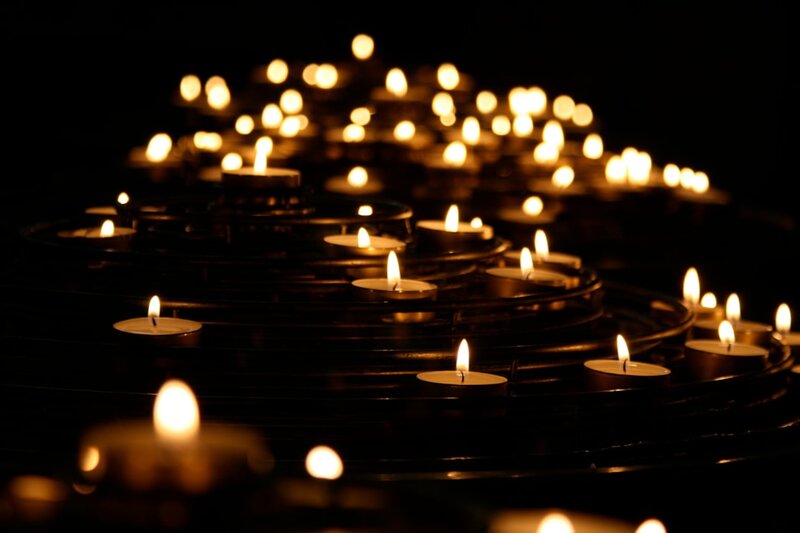
📷 Photo by Mike Labrum on Unsplash