When most of us think about cancer screening, we think of BreastCheck, BowelScreen, or perhaps a PSA test at the GP. Mouth cancer — also called oral cancer — rarely gets the same attention, yet it is one of the cancers that is increasing in incidence across Ireland and Europe, particularly among people over 50. The good news is that mouth cancer caught early has a significantly better prognosis, and knowing what to look for could genuinely save your life.
TL;DR
- Mouth cancer incidence is rising in Ireland, with over 500 new cases diagnosed each year — most in people over 50.
- Key risk factors include tobacco use, alcohol consumption, HPV infection, and prolonged sun exposure (lip cancer).
- Warning signs include persistent mouth ulcers (lasting more than three weeks), unexplained lumps, red or white patches, and difficulty swallowing.
- Regular dental check-ups are your first line of defence — your dentist screens for oral cancer at every visit.
- The HSE Dental Treatment Services Scheme (DTSS) and PRSI Treatment Benefit provide free or subsidised dental check-ups for eligible adults.
Why Mouth Cancer Matters After 50
According to the National Cancer Registry Ireland, over 500 people are diagnosed with mouth and oropharyngeal cancer each year in this country. The majority of cases occur in people aged 50 and older, with men historically more affected than women — though the gap is narrowing. Unlike some cancers that require specialist imaging to detect, mouth cancer can often be spotted during a routine dental examination, making regular check-ups one of the most effective preventive steps you can take.
The five-year survival rate for mouth cancer detected at an early stage is around 80–90 per cent. When diagnosed late, that figure drops dramatically. This is why awareness matters — knowing the signs and acting on them promptly can make a real difference.
Understanding the Risk Factors
Several factors increase the likelihood of developing mouth cancer, and many of them become more significant as we age:
Tobacco use: Smoking, pipe smoking, and chewing tobacco are the single biggest risk factors. Even people who smoked years ago carry a higher risk than those who never smoked, though the risk does reduce over time after quitting.
Alcohol: Heavy or regular alcohol consumption significantly increases risk, and when combined with tobacco use, the risk multiplies rather than simply adds up. Research from TILDA (The Irish Longitudinal Study on Ageing) shows that alcohol consumption patterns among older adults in Ireland are often higher than people realise, making this a particularly relevant factor.
HPV (Human Papillomavirus): Certain strains of HPV — particularly HPV-16 — are increasingly linked to oropharyngeal cancers (cancers at the back of the mouth and throat). This is a growing area of research, and it partly explains why mouth cancer rates are rising even as smoking rates fall.
Sun exposure: Prolonged sun exposure increases the risk of cancer on the lips, particularly the lower lip. This is relevant for anyone who has spent years working outdoors — farming, construction, or simply enjoying the Irish outdoors.
Poor oral health: Chronic irritation from ill-fitting dentures, broken teeth, or poor oral hygiene may contribute to increased risk over time.
What to Watch For: The Warning Signs
Mouth cancer can appear in several areas — the tongue, floor of the mouth, gums, inside of the cheeks, lips, or palate. The key is to know what is normal for you so that you notice when something changes. See your GP or dentist promptly if you notice any of the following:
- A mouth ulcer that does not heal within three weeks — this is the most common warning sign
- A persistent lump or thickening anywhere in the mouth, on the lip, or in the neck
- Red or white patches on the lining of the mouth or tongue (known as erythroplakia and leukoplakia respectively)
- Unexplained bleeding in the mouth
- Numbness or tingling on the lip, tongue, or anywhere in the mouth
- Difficulty or pain when swallowing, chewing, or moving the jaw
- A persistent sore throat or feeling that something is caught in the throat
- Changes in your voice — particularly hoarseness lasting more than three weeks
- Unexplained weight loss
Most of these symptoms will have a perfectly harmless explanation, but the three-week rule is important: if any symptom persists beyond three weeks, have it checked. Early investigation is always better than a delayed diagnosis.
The Role of Your Dentist
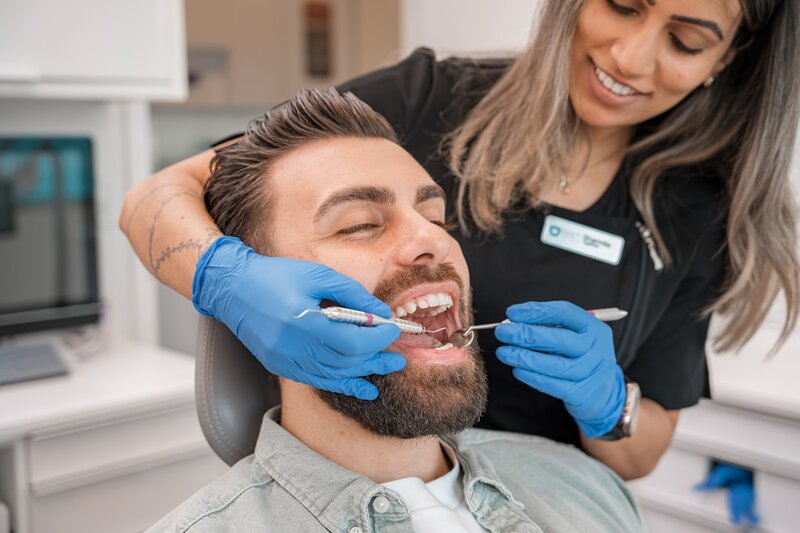
Many people do not realise that their dentist performs a soft tissue screening for oral cancer at every routine check-up. During your examination, your dentist checks the tongue, floor of the mouth, cheeks, palate, gums, and throat for any abnormalities. This takes just a minute or two and is one of the most accessible forms of cancer screening available.
If your dentist spots anything concerning, they will refer you to an oral and maxillofacial specialist at your local hospital for further investigation, which may include a biopsy. The referral process through the HSE is straightforward, and urgent suspected cancer referrals are prioritised.
How often should you go? The Irish Dental Association recommends check-ups at least once a year, though your dentist may suggest more frequent visits depending on your individual risk factors. If you have dentures, regular check-ups are equally important — your dentist will check that they fit properly and examine the tissues underneath.
Self-Examination: A Simple Monthly Habit
Between dental visits, you can perform a simple mouth self-examination at home. It takes less than five minutes and costs nothing:
- Stand in front of a mirror in good light
- Remove any dentures so you can see all the surfaces
- Look at and feel your lips — outside and inside
- Check your gums — front and back
- Open wide and look at the roof of your mouth
- Stick out your tongue and look at all surfaces — top, bottom, and sides
- Feel the floor of your mouth and the insides of your cheeks
- Feel both sides of your neck and under your jaw for any lumps or swelling
If you notice anything unusual — a patch, lump, sore, or change in colour — note it and see your dentist or GP if it has not resolved within three weeks.
Reducing Your Risk
While not all mouth cancers are preventable, you can take meaningful steps to reduce your risk:
Stop smoking: It is never too late to benefit from quitting. The HSE’s QUIT service (Freephone 1800 201 203) offers free support, including nicotine replacement therapy and counselling. Your GP can also prescribe stop-smoking medications.
Moderate your alcohol intake: The HSE recommends no more than 11 standard drinks per week for women and 17 for men, with at least two alcohol-free days per week. Reducing intake — even modestly — lowers your risk.
Eat a balanced diet: A diet rich in fruits and vegetables provides antioxidants and vitamins that support healthy oral tissues. Research consistently links higher fruit and vegetable consumption with lower mouth cancer risk.
Protect your lips from the sun: Use a lip balm with SPF 30 or higher when spending time outdoors, even on overcast Irish days. This is particularly important if you have fair skin.
Maintain good oral hygiene: Brush twice daily, use interdental brushes or floss, and ensure dentures are cleaned daily and fit properly.
Irish Supports and Entitlements
Cost should never be a barrier to dental check-ups. Several schemes support older adults in Ireland:
DTSS (Dental Treatment Services Scheme): If you hold a medical card, you are entitled to a free dental examination and certain treatments through HSE-contracted dentists.
PRSI Treatment Benefit Scheme: If you have sufficient PRSI contributions, you may be entitled to a free dental examination and a contribution towards certain treatments. Check your eligibility on the Department of Social Protection website or call their helpline.
HSE QUIT Service: Free smoking cessation support at 1800 201 203 or through your local GP and pharmacist.
Irish Cancer Society: Offers a Freephone Cancer Nurseline at 1800 200 700 for information and support on any cancer-related concern, including mouth cancer. They also provide practical support such as transport to hospital appointments through their Volunteer Driver Service.
Mouth, Head and Neck Cancer Ireland: A patient-led support organisation that connects people affected by oral and head and neck cancers with peer support and practical information.
When to Act
The single most important message about mouth cancer is this: do not wait. If you notice a persistent change in your mouth — an ulcer that will not heal, a lump, a patch, unexplained pain — see your dentist or GP within three weeks. Most changes will turn out to be nothing serious, but the ones that are serious respond far better to early treatment.
At Críonna Health, we believe that awareness is the first step towards prevention. Adding a simple monthly mouth self-check to your routine, keeping up with regular dental visits, and knowing your risk factors are practical steps that anyone can take — and they could make all the difference.
📷 Photo by D Dental Office on Unsplash