Losing a job at any age is stressful. But when redundancy arrives after 50, it can feel uniquely daunting. You may have spent decades with one employer, built your identity around your role, and assumed the path ahead was clear. Suddenly, everything shifts — and the emotions that follow can be overwhelming.
The good news? You are far from alone, and there is more support available in Ireland than you might think. Whether you are processing the shock, weighing your options, or already dusting off the CV, this guide is here to help you navigate what comes next.
TL;DR
- Job loss after 50 is increasingly common in Ireland and carries unique emotional, financial, and identity-related challenges
- Irish employment law protects older workers — the Employment Equality Acts 1998–2015 prohibit age discrimination in recruitment, promotion, and dismissal
- Intreo centres, JobsPlus, and local ETBs offer free, tailored employment supports including retraining and upskilling
- Redundancy entitlements in Ireland include statutory lump sums based on years of service, plus Jobseeker’s Benefit/Allowance
- Looking after your mental health during this transition is just as important as updating your CV — organisations like ALONE, Aware, and MABS can help
Why Job Loss Hits Differently After 50
Research from the Irish Longitudinal Study on Ageing (TILDA) confirms that involuntary job loss in midlife and beyond is associated with poorer mental health outcomes, including increased rates of depression and anxiety. For many people, work is not just income — it is routine, social connection, purpose, and identity.
When that structure disappears, it is natural to feel grief, anger, shame, or fear. These reactions are entirely normal and do not reflect weakness. What matters is how you respond — and giving yourself permission to feel unsettled before pushing forward.
Know Your Rights: Irish Employment and Redundancy Law
If you have been made redundant, it is important to understand your legal entitlements. In Ireland, the Redundancy Payments Acts 1967–2014 provide for a statutory lump sum if you have at least two years of continuous service with your employer. The formula is straightforward:
- Two weeks’ pay per year of service, plus one additional bonus week
- Subject to a weekly earnings cap (currently €600 per week)
Your employer may also offer an ex-gratia payment on top of the statutory amount. Always check your contract and consult the Workplace Relations Commission (WRC) if you believe your redundancy was unfair or if age discrimination played a role.
The Employment Equality Acts 1998–2015 make it unlawful to discriminate on grounds of age in recruitment, conditions of employment, promotion, or dismissal. If you suspect your redundancy was influenced by your age, you can lodge a complaint with the WRC within six months.
Financial First Steps
Once the initial shock subsides, practical financial steps can help you regain a sense of control:
- Apply for Jobseeker’s Benefit through your local Intreo centre as soon as possible. If you have sufficient PRSI contributions, you may qualify for Jobseeker’s Benefit for up to nine months (or 12 months if you are over 65)
- Review your pension — if you have an occupational pension, contact the scheme trustees to understand your options. The Pensions Authority can advise on your rights
- Talk to MABS (Money Advice and Budgeting Service) — a free, confidential service that can help you restructure your finances, negotiate with creditors, and plan ahead. MABS has offices nationwide and operates a helpline at 0818 07 2000
- Check your entitlements — you may now qualify for the medical card, Fuel Allowance, or Household Benefits Package depending on your circumstances. Citizens Information Centres can guide you through these
Getting Back to Work: Supports and Retraining
The Irish labour market has changed enormously, and the idea that employers only want younger workers is simply not borne out by the evidence. In fact, many employers value the reliability, experience, and institutional knowledge that older workers bring. Several schemes are designed to help:
Intreo
Your local Intreo centre is a one-stop-shop for employment supports. Caseworkers can help you with job searching, interview preparation, CV writing, and identifying suitable retraining options. The service is free and available to all jobseekers.
JobsPlus
JobsPlus is a Department of Social Protection scheme that provides financial incentives to employers who hire people who have been unemployed for 12 months or more. If you qualify, it makes you a more attractive candidate — effectively reducing the cost of hiring you for a new employer.
Education and Training Boards (ETBs)
Ireland’s 16 ETBs offer a wide range of free or heavily subsidised courses, from digital skills and project management to healthcare and trades. Many courses are specifically designed for adults returning to education. The Skills to Advance programme is particularly useful for people looking to upskill in their current field or pivot to a new one.
Springboard+
Springboard+ offers free and subsidised higher education courses in areas of identified skills need. If you are unemployed, courses are entirely free. Even if you are in employment, many courses are available at reduced cost. Areas include technology, data analytics, healthcare, and green energy — all sectors with strong demand in Ireland.
Considering Self-Employment?
Redundancy can sometimes be the nudge you needed to pursue something of your own. If you have been thinking about starting a business or offering freelance services, the Back to Work Enterprise Allowance (BTWEA) lets you retain a percentage of your social welfare payment for up to two years while you build your venture.
Your Local Enterprise Office (LEO) can provide mentoring, training, and even small grants to help you get started. Many LEOs run specific programmes for people starting a business later in life — and the experience and networks you have built over decades can be your greatest asset.
Looking After Your Mental Health
This is not a footnote — it is central. The psychological impact of job loss after 50 can be profound, particularly for men, who are statistically less likely to seek support. TILDA research shows that involuntary retirement is associated with significantly lower life satisfaction and higher rates of depressive symptoms compared with voluntary retirement.
Practical steps that help:
- Maintain a daily routine — structure protects mental health. Get up at a regular time, get dressed, and plan your day
- Stay socially connected — isolation compounds the problem. Men’s Sheds, Active Retirement groups, walking clubs, and community volunteering all provide purpose and connection
- Talk to someone — whether it is a trusted friend, your GP, or a professional counsellor. Aware (1800 80 48 48) and Pieta House (1800 247 247) offer free, confidential support
- ALONE runs a befriending service and support line (0818 222 024) that can connect you with local services and provide a listening ear
- Consider HSE talking therapies — your GP can refer you for free counselling through the HSE’s Counselling in Primary Care (CIPC) service
Reframing the Narrative
It can be tempting to see redundancy after 50 as the beginning of the end. But many people who have been through it describe it, in retrospect, as a turning point — the moment they finally pursued work that aligned with their values, retrained in something they were genuinely curious about, or simply gave themselves permission to slow down and reconsider what mattered.
You have decades of skills, knowledge, and life experience. Those do not disappear with a P45. Whether you return to full-time employment, go part-time, retrain, volunteer, or start something new, the next chapter is yours to write.
Where to Turn: Key Irish Resources
- Intreo — Find your local centre
- Citizens Information — citizensinformation.ie or call 0818 07 4000
- MABS — 0818 07 2000 or mabs.ie
- Workplace Relations Commission — workplacerelations.ie
- Local Enterprise Offices — localenterprise.ie
- Springboard+ — springboardcourses.ie
- Aware — 1800 80 48 48
- Pieta House — 1800 247 247
- ALONE — 0818 222 024
At Críonna Health, we believe that every stage of life deserves support, information, and dignity — including the unexpected transitions. If you or someone you know is navigating job loss after 50, share this guide. You do not have to figure it out alone.
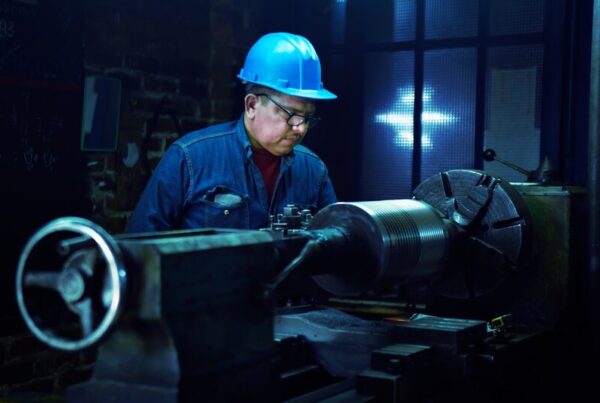
📷 Photo by Vitaly Gariev on Unsplash