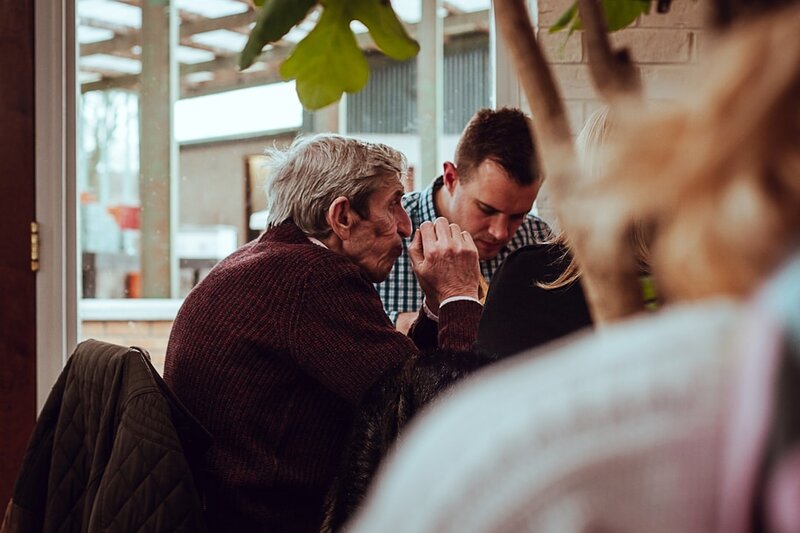
When someone you love is diagnosed with dementia, the world shifts. The person is still there — their laugh, their habits, the way they take their tea — but gradually, the terrain changes. If you’re caring for someone with dementia at home in Ireland, you’re not alone. An estimated 64,000 people in Ireland are living with dementia today, and the majority are cared for at home by family members. This guide is for you: the spouse, the daughter, the son, the neighbour who has stepped into the role of carer.
TL;DR
- Around 64,000 people in Ireland live with dementia, and most are cared for at home by family members
- Practical daily routines, familiar environments, and gentle communication techniques make a real difference to quality of life
- The Alzheimer Society of Ireland offers day care centres, home care support, a national helpline (1800 341 341), and carer training programmes
- HSE supports include public health nurses, home support packages, the Carer’s Support Grant (€1,850 in 2026), and respite care
- Looking after yourself as a carer is not a luxury — it’s essential for sustaining the care your loved one needs
Understanding What Dementia Means Day to Day
Dementia is not a single disease but a term covering a range of conditions — Alzheimer’s disease being the most common — that progressively affect memory, thinking, and the ability to carry out everyday tasks. What this means in practice varies enormously from person to person and from one stage to the next.
In the early stages, you might notice your loved one repeating questions, misplacing items, or struggling with familiar tasks like managing bills. As the condition progresses, they may need more help with personal care, become confused about time or place, or experience changes in mood and behaviour. Understanding that these changes are part of the condition — not deliberate or personal — is one of the most important shifts a carer can make.
Creating a Supportive Home Environment
One of the great advantages of caring for someone at home is the familiarity of their surroundings. Research from the Irish Longitudinal Study on Ageing (TILDA) consistently highlights the importance of familiar environments for cognitive wellbeing. Here are some practical steps:
- Keep things consistent. Resist the urge to rearrange furniture or redecorate. Familiar layouts help your loved one navigate their home with confidence.
- Improve lighting. Good lighting reduces confusion and the risk of falls. Nightlights along hallways and in the bathroom are particularly helpful.
- Use visual cues. Labels on cupboards, photographs on doors (e.g., a picture of a toilet on the bathroom door), and colour-contrast grab rails can support independence.
- Reduce hazards. Remove loose rugs, secure trailing cables, and consider fitting a key safe and door sensor if your loved one is at risk of wandering.
- Create a calm space. Reduce background noise from televisions or radios when having conversations. A calmer environment helps with focus and reduces agitation.
The HSE’s Occupational Therapy service can carry out a home assessment and recommend adaptations. The Housing Adaptation Grant for People with a Disability (available through your local authority) can help fund necessary modifications.
Communication: The Art of Connection
As dementia progresses, communication changes — but connection doesn’t have to disappear. The Alzheimer Society of Ireland recommends these approaches:
- Speak slowly and clearly, using short, simple sentences. Give one instruction at a time rather than a string of requests.
- Use names rather than pronouns. “Mary is coming for tea” is clearer than “She’s coming over.”
- Listen with patience. Allow extra time for responses. Resist the urge to finish sentences.
- Validate feelings, not facts. If your loved one believes they need to collect the children from school (children who are now grown), respond to the feeling (“You’re thinking about the children — you were always such a wonderful parent”) rather than correcting the fact.
- Use touch and tone. A warm hand on the arm, a smile, a gentle tone of voice — these communicate care even when words become difficult.
Daily Routines: Structure Without Rigidity
Routine provides a reassuring scaffold for someone living with dementia. A predictable rhythm to the day — meals at similar times, a morning walk, afternoon tea, an evening ritual — reduces anxiety and confusion.
That said, flexibility matters too. If your loved one is having a difficult morning, it’s perfectly fine to adjust the plan. The goal is not a perfect schedule but a day that feels manageable and, where possible, enjoyable for both of you.
Activities that draw on long-term memory can be particularly rewarding: looking through old photographs, listening to music from their youth, gardening, or baking a familiar recipe together. These aren’t just pastimes — research shows they can reduce agitation and improve mood.
Managing Difficult Moments
Caring for someone with dementia inevitably involves challenging situations — agitation, sundowning (increased confusion in the late afternoon or evening), resistance to personal care, or repetitive behaviours. A few principles can help:
- Stay calm. Your emotional state is contagious. If you can remain composed, it often helps de-escalate the situation.
- Don’t argue or correct. Entering the person’s reality, rather than insisting on yours, usually leads to a better outcome.
- Look for triggers. Pain, hunger, needing the toilet, overstimulation, or boredom can all manifest as “difficult behaviour.” Address the underlying need.
- Distraction and redirection often work better than confrontation. A cup of tea, a change of scene, or a favourite song can shift the mood.
If behaviours become very distressing or involve risk, speak with your GP or the person’s consultant. Sometimes medication adjustments or a referral to a psychiatry of later life service is appropriate.
Irish Supports You Should Know About
Ireland has a growing network of supports for people with dementia and their carers. Key resources include:
Alzheimer Society of Ireland (ASI) — The ASI operates day care centres across the country, provides home care and dementia-specific support, runs carer training programmes, and maintains a national helpline at 1800 341 341. Their Dementia Adviser Service offers one-to-one information and support in your local area.
HSE Home Support Service — You can apply through your local health office for home support hours, which provide practical help with personal care, meals, and household tasks. This service can be a lifeline, giving you time to rest or attend to your own needs.
Carer’s Support Grant — Paid annually by the Department of Social Protection (€1,850 in 2026), this grant is available to carers providing full-time care and attention. You don’t need to be in receipt of Carer’s Allowance to qualify.
Respite care — Both the HSE and the ASI offer respite options, including in-home respite and residential respite stays. Taking regular breaks is not a sign of failure — it’s essential for sustainability.
Memory Technology Resource Rooms — Located in communities across Ireland, these ASI-run centres offer information on assistive technology, practical demonstrations, and support for both the person with dementia and their carer.
ALONE and Age Action — Both organisations offer befriending, advocacy, and support services that can complement dementia-specific supports.
Looking After Yourself
This is the section carers tend to skip — and the one that matters most. Caring for someone with dementia is physically, emotionally, and psychologically demanding. Research from TILDA has shown that family carers of people with dementia report significantly higher levels of stress, depression, and social isolation than the general population.
You cannot pour from an empty cup. Practical steps include:
- Accept help. When someone offers, say yes — and be specific about what would help (a meal, sitting with your loved one for an hour, a lift to an appointment).
- Use respite. Regularly. Not just when you’re at breaking point.
- Stay connected. Carer support groups — in person or online — provide understanding that friends and family, however well-meaning, may not be able to offer. The ASI runs support groups nationwide.
- Mind your own health. Keep your GP appointments. Eat properly. Move your body. These aren’t luxuries.
- Acknowledge your feelings. Grief, guilt, frustration, love, exhaustion — they can all coexist. That’s normal, not something to feel ashamed of.
At Críonna Health, we believe that supporting carers is inseparable from supporting the people they care for. A well-supported carer provides better care — and deserves a good quality of life too.
Planning Ahead
If your loved one is in the early stages of dementia, now is the time to have important conversations about their wishes — while they can still participate meaningfully. Consider:
- Enduring Power of Attorney (EPA) — This legal arrangement allows your loved one to appoint someone to make decisions on their behalf if they become unable to do so. It must be set up while the person still has capacity. The Decision Support Service (DSS) now oversees this process.
- Advance Healthcare Directive — A written statement of their wishes regarding future medical treatment.
- Fair Deal Scheme — Understanding how the Nursing Homes Support Scheme works, even if residential care isn’t needed now, helps reduce panic if circumstances change suddenly.
These conversations are difficult, but they honour your loved one’s autonomy and reduce the burden of decision-making later on.
You’re Doing a Remarkable Thing
Caring for someone with dementia at home is one of the most demanding — and most loving — things a person can do. There will be hard days. There will also be moments of unexpected tenderness, shared laughter, and quiet connection that make the difficult days worthwhile.
You don’t have to do it perfectly. You don’t have to do it alone. Reach out, use the supports available, and remember that looking after yourself is part of looking after them.
📷 Photo by Cathal Mac an Bheatha on Unsplash