Ireland is getting older — and that’s not a crisis, it’s an opportunity. By 2051, the number of people aged 65 and over is projected to more than double, reaching over 1.5 million. The question isn’t whether our communities will need to adapt, but how quickly and how well they do so. That’s where the Age Friendly Ireland programme comes in — a nationwide initiative that’s quietly reshaping how our towns, cities, and rural areas support people as they age.
TL;DR
- Age Friendly Ireland is a national programme operating in all 31 local authorities, making communities more accessible and inclusive for older adults.
- The programme is part of the WHO Global Network for Age-friendly Cities and Communities, with Ireland recognised as a global leader.
- Age-friendly communities focus on eight key domains: outdoor spaces, transport, housing, social participation, respect, civic participation, communication, and health services.
- Older People’s Councils in every county give older adults a direct voice in local decision-making.
- You can get involved through your local Age Friendly Programme, Older People’s Council, or by contacting Age Friendly Ireland directly.
What Does ‘Age-Friendly’ Actually Mean?
An age-friendly community is one where policies, services, and infrastructure are designed to support people of all ages — but with particular attention to the needs of older adults. The concept was developed by the World Health Organisation (WHO), which identified eight interconnected domains that determine how well a community supports ageing:
- Outdoor spaces and buildings — accessible parks, pavements, benches, and public toilets
- Transport — reliable, affordable, and accessible public transport
- Housing — suitable, affordable housing with options for ageing in place
- Social participation — opportunities to stay engaged and connected
- Respect and social inclusion — a culture that values older adults
- Civic participation and employment — meaningful roles in community life
- Communication and information — accessible, timely information in all formats
- Community support and health services — integrated, person-centred care
It’s a simple idea with profound implications: if you design communities that work for an 80-year-old, they work better for everyone — parents with buggies, people with disabilities, and anyone who’s ever struggled with a broken lift or an uneven footpath.
Ireland’s Age Friendly Programme: A National Effort
Ireland was one of the first countries to adopt the WHO framework at a national level. The Age Friendly Ireland programme, housed within the Local Government Management Agency, now operates across all 31 local authorities. Each county and city council has its own Age Friendly Programme Manager, a dedicated Alliance (bringing together the HSE, Gardaí, transport providers, and community organisations), and — crucially — an Older People’s Council.
These Older People’s Councils are one of the programme’s most significant achievements. They give older adults a formal, structured voice in local decision-making. Rather than having policies designed for older people, they’re designed with them. There are now over 10,000 members of Older People’s Councils across Ireland, and their input shapes everything from footpath repairs to local transport timetables.
What’s Changed on the Ground?
The programme has delivered tangible, practical improvements in communities across Ireland. Some examples:
- Age Friendly Towns: Over 30 towns and villages have undergone age-friendly audits, leading to improvements like better seating, clearer signage, accessible pedestrian crossings, and age-friendly business training for local shops.
- Age Friendly Housing: Working with local authorities and the Department of Housing, the programme has developed age-friendly housing design guidelines. Several councils have built dedicated age-friendly housing developments — not institutional care, but well-designed homes that allow people to live independently in their own communities.
- Age Friendly Parking Spaces: Wider parking spaces near shop entrances for older drivers — a small change that makes a significant difference.
- Walkability audits: Older adults walk their own neighbourhoods with engineers and council staff, identifying hazards and suggesting improvements. These audits have led to better lighting, smoother surfaces, and rest stops along popular walking routes.
- Age Friendly Businesses: A recognition programme for shops, restaurants, and service providers that make simple adjustments — offering a chair, providing clear pricing, training staff in communication — that make older customers feel welcome.
The Irish Context: Why This Matters Now
Ireland’s demographic shift is well underway. According to TILDA (The Irish Longitudinal Study on Ageing), the over-65 population will increase by 60% between 2020 and 2040. Meanwhile, research consistently shows that the vast majority of older adults want to remain living in their own homes and communities for as long as possible — what’s often called ‘ageing in place’.
The Age Friendly programme directly supports this preference. By making communities more walkable, more connected, and more inclusive, it reduces the factors that push people towards residential care prematurely. It’s also closely aligned with several national policy frameworks, including:
- The National Positive Ageing Strategy — Ireland’s overarching policy on ageing, which emphasises participation, health, and security
- Housing for All — the Government’s housing plan, which includes specific commitments to age-friendly housing
- Sláintecare — the health service reform programme, which prioritises community-based care over hospital-based care
How to Get Involved
One of the strengths of the Age Friendly programme is that it’s built on participation. You don’t need to wait for change — you can help shape it:
- Join your local Older People’s Council: Every county has one. Contact your local authority or visit agefriendlyireland.ie to find your local programme manager.
- Request a walkability audit: If your neighbourhood has accessibility issues, your local Age Friendly programme can help organise a community walkability audit.
- Suggest your town for an age-friendly audit: Town audits are led by older adults and supported by council staff. They’ve proven to be one of the most effective ways to identify and fix everyday barriers.
- Support age-friendly businesses: Look for the Age Friendly Business recognition in your area, and let local businesses know you value their efforts.
- Spread the word: Many people — including older adults themselves — don’t know the programme exists. Sharing information with neighbours, friends, and community groups can make a real difference.
A Community That Works for Everyone
The beauty of the age-friendly approach is that it’s not about creating special provisions for one group — it’s about designing communities that work for everyone. A bench in a town centre helps an older person rest on the way to the shops, but it also helps a pregnant woman, a runner, or a parent with a tired child. A clear bus timetable helps someone with reduced vision, but it helps everyone who’s ever squinted at a schedule.
At Críonna Health, we believe that healthy ageing doesn’t happen in isolation — it happens in communities. The Age Friendly Ireland programme is one of the most practical, people-centred initiatives shaping how Ireland supports its ageing population. If your community isn’t yet involved, now is the time to ask why — and to help make it happen.
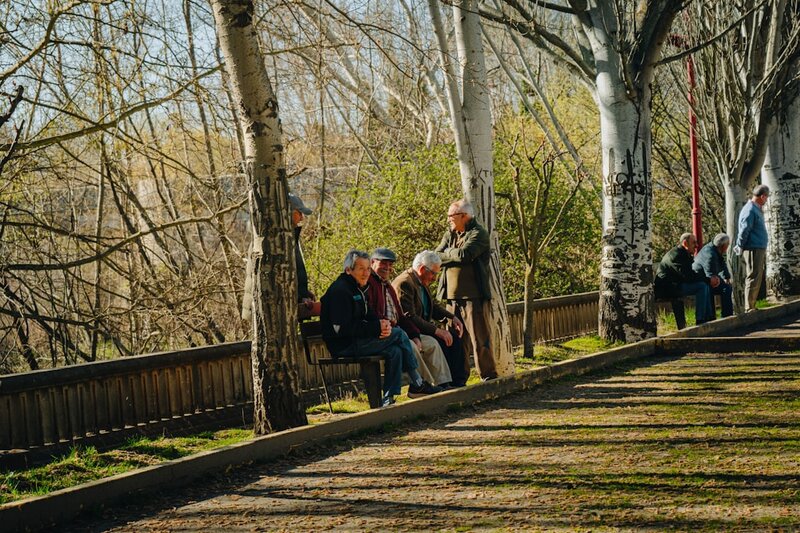
📷 Photo by Aldara Gutiérrez Pol on Unsplash