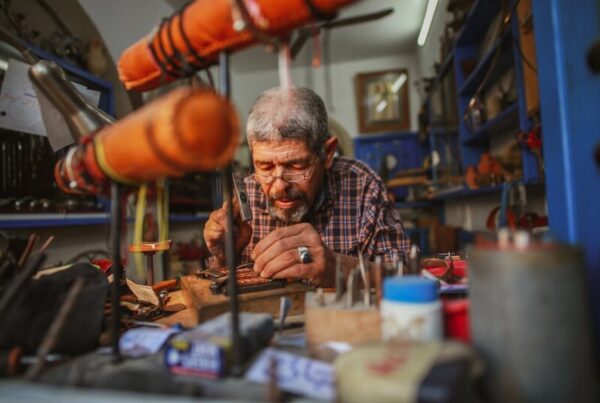
Retirement was supposed to be the finish line — but for a growing number of people in Ireland, it turns out to be more of a pit stop. Whether it’s financial necessity, a desire for purpose, or simply missing the camaraderie of the workplace, more adults over 60 are choosing to return to work. And there is absolutely nothing wrong with that.
In fact, the trend even has a name: unretirement. According to the Irish Longitudinal Study on Ageing (TILDA), around one in ten retired adults in Ireland has considered returning to some form of paid work. Across the EU, labour force participation among over-65s has risen steadily over the past decade, and Ireland is no exception.
If you’re thinking about going back — or you’ve already started exploring your options — this guide covers the practical steps, your rights, and what to watch out for.
TL;DR
- More people in Ireland are returning to work after retirement — driven by purpose, finances, and social connection
- The State Pension (Contributory) is not means-tested, so you can work and still receive it, but tax applies to combined income
- The Employment Equality Acts protect workers over 65 from age discrimination in hiring and the workplace
- Part-time, consultancy, and flexible roles are often the best fit — and many employers actively value experienced workers
- Supports like Intreo, SOLAS, Skillnet Ireland, and local Employment Services can help you retrain or find suitable roles
Why People Come Back
The reasons are as varied as the people themselves. For some, it’s about money — the rising cost of living in Ireland means a pension alone doesn’t always stretch far enough. For others, it’s the loss of routine, identity, or daily social contact that comes as a surprise after retirement.
Research from TILDA consistently shows that staying engaged — socially, mentally, and physically — is one of the strongest predictors of wellbeing in later life. Paid work ticks all three boxes, provided it’s the right fit.
Common motivations include:
- Financial top-up — supplementing pension income to cover rising costs
- Purpose and structure — having a reason to get up, a schedule, a goal
- Social connection — workplaces provide daily interaction that can be hard to replace
- Using skills and experience — decades of expertise don’t switch off at 65
- Giving back — mentoring, training, or contributing to a cause
Your Rights as an Older Worker in Ireland
If you’re returning to the workforce, it’s important to know that Irish law is firmly on your side. The Employment Equality Acts 1998–2015 prohibit discrimination on nine grounds, including age. This means an employer cannot refuse to hire you, offer you lesser terms, or treat you differently because of your age.
Since 2016, the mandatory retirement age in the public sector has been abolished for new entrants — and there is growing pressure to extend this across the private sector. The Workplace Relations Commission (WRC) handles complaints of age discrimination, and their services are free.
A few key rights to be aware of:
- You’re entitled to the same minimum wage, working conditions, and leave entitlements as any other employee
- You cannot be forced to retire solely because of your age (though some legacy contracts may still contain retirement age clauses)
- You have the right to request flexible working arrangements under the Work Life Balance and Miscellaneous Provisions Act 2023
What Happens to Your Pension?
This is often the first question — and the good news is straightforward. The State Pension (Contributory) is not means-tested. You can work full-time, part-time, or freelance and still receive your full pension. However, your pension is treated as income for tax purposes, so your combined earnings (pension plus wages) will be subject to income tax, USC, and potentially PRSI.
If you’re on the State Pension (Non-Contributory), which is means-tested, earnings from employment will affect your payment. It’s worth speaking to your local Intreo Centre or a Citizens Information office to get a clear picture before you start.
For occupational pensions, check with your scheme administrator — some pensions have rules about re-employment, particularly if you’re returning to the same employer.
Tax Considerations
Revenue treats the State Pension as taxable income. When you take on additional paid work, your employer will deduct tax through PAYE. You may want to:
- Contact Revenue to ensure your tax credits are split correctly between your pension and your new employment
- Be aware that additional income could push you into the higher rate of tax (currently 40% on income above €44,000 for a single person)
- Consider whether self-employment or freelance work might offer more flexibility — you’ll need to register for self-assessment and file an annual tax return
A chat with an accountant or a free consultation at your local Citizens Information Centre can save headaches down the line.
Finding the Right Role
You don’t have to go back to what you did before. Many people returning after retirement find that a shift in pace, sector, or role suits them far better. Options worth exploring include:
- Part-time work — many retail, hospitality, and community organisations actively seek experienced part-time staff
- Consultancy or freelancing — leverage your expertise on your own terms
- Portfolio careers — a mix of part-time work, volunteering, and personal projects
- Social enterprises and charities — meaningful work with flexible hours
- Mentoring roles — formal programmes exist through Skillnet Ireland, Enterprise Ireland, and local enterprise offices
Websites like ActiveLink.ie (for the nonprofit sector) and mainstream platforms like Indeed and Jobs.ie all carry suitable roles. Don’t overlook word of mouth — your network is one of your greatest assets.
Upskilling and Retraining
If it’s been a while since you were in the workforce, a short course can boost both your confidence and your CV. Ireland has excellent options for older learners:
- SOLAS and Education and Training Boards (ETBs) — free or subsidised courses in everything from digital skills to business administration
- Skillnet Ireland — industry-led training networks, many of which welcome career returners
- Springboard+ — free higher education courses in areas of skills need (open to all ages)
- Local libraries and community centres — often run digital literacy workshops and CV clinics at no cost
At Críonna Health, we believe that the skills and wisdom accumulated over a lifetime don’t have an expiry date. If anything, they become more valuable with experience.
Practical Tips for a Smooth Return
Going back after a break — whether it’s been two years or ten — can feel daunting. Here are some practical steps to make the transition smoother:
- Update your CV — focus on achievements and transferable skills, not just job titles. Include any volunteering or community work from retirement.
- Get comfortable with technology — most workplaces now use email, video calls, and digital tools as standard. A short digital skills course can help.
- Start small — a few hours a week or a short-term contract lets you test the waters without overcommitting.
- Talk to your GP — if you have any health considerations, a quick check-up and honest conversation can help you plan realistically.
- Set boundaries — you’re returning on your terms. Be clear about what you want from work this time around.
Where to Get Help
You don’t have to figure this out alone. Free supports available across Ireland include:
- Intreo Centres — employment support services, including job matching and career guidance (find your nearest centre at gov.ie)
- Citizens Information — advice on pensions, tax, employment rights, and entitlements (call 0818 07 4000)
- Age Action Ireland — advocacy and information for older adults
- Local Enterprise Offices — if you’re considering self-employment or starting a small business
Returning to work after retirement isn’t a step backwards — it’s a choice to stay active, connected, and engaged with life. Whatever your reason for considering it, you’ve earned the right to do it on your own terms.
📷 Photo by Vitaly Gariev on Unsplash