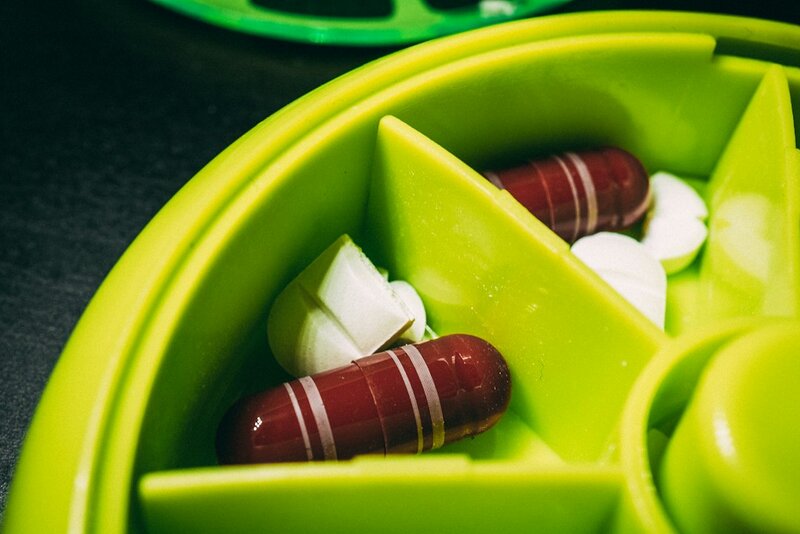
She is seventy-eight, and the family have noticed she is not quite herself. A little vague in the afternoons. Slower on the stairs. Two near-falls in the hall since the spring, one of them a proper fall that left a bruise the size of a side plate. The GP ran bloods a month ago and nobody rang, so everyone assumed the bloods were fine.
They were not quite fine. The sodium was 129. On most Irish lab reports that prints as a low result with no alarm attached to it, sitting quietly below the kidney function numbers that people actually look at. It is the commonest electrolyte abnormality in clinical practice, it is strongly linked to falls, and in older adults it is very often caused by a tablet that somebody prescribed with the best of intentions.
TL;DR
- Low sodium (hyponatraemia) means a blood sodium below 135 mmol/L. Mild is 130 to 134, moderate 125 to 129, severe below 125.
- Even mild, long-standing low sodium is not harmless. In one landmark study, 21.3% of people with chronic hyponatraemia were admitted after a fall, against 5.3% of matched comparisons, with gait and attention impairment comparable to the effects of alcohol, and it reversed when the sodium was corrected.
- Common culprits include thiazide diuretics (indapamide, bendroflumethiazide), SSRI and SNRI antidepressants, carbamazepine, proton pump inhibitors, trimethoprim, tramadol and desmopressin for night-time urination.
- In a study of medical inpatients at an Irish tertiary hospital, 32.9% had hyponatraemia, median age 78. In the moderate and severe cases the cause was not documented at all in 37%, and a potentially causative drug was stopped in only 10.4%.
- “Drink plenty of fluids” is the wrong instruction for some causes of low sodium, where water is the problem rather than the salt. Never self-treat with salt or fluids. Ask for the number, ask for the reason, and ask for a repeat test.
What the number actually means
Sodium is the mineral that governs how much water sits inside and outside your cells. A normal blood level is roughly 135 to 145 mmol/L. Below 135 is hyponatraemia, and the usual grading runs mild at 130 to 134, moderate at 125 to 129, and severe below 125.
The trap is that nothing dramatic happens at 134. There is no cliff edge, no symptom that announces itself, and no number that triggers a phone call from the surgery. The body is remarkably good at adapting to a sodium that falls slowly over weeks or months, and that adaptation is exactly why chronic hyponatraemia goes unnoticed. The person adapts, the family adapts, and the slight unsteadiness and the slight haze get filed under getting older.
Why mildly low is not harmlessly low
The study that changed thinking on this was published in the American Journal of Medicine in 2006. Researchers compared 122 people with chronic hyponatraemia, mean age 72 and mean sodium 126, against 244 matched comparison patients. Among the group with low sodium, 21.3% had been admitted after a fall. In the comparison group the figure was 5.3%.
They then measured why. People with low sodium swayed significantly more on a tandem gait test, and they were slower and less accurate on attention testing: mean response time 673 milliseconds against 615 when their sodium was normal, with a 1.2-fold increase in errors. The researchers compared the size of these changes to what they measured in volunteers after drinking alcohol. Most importantly, the impairment lifted when the sodium was corrected.
That is the part worth holding onto. This is not an inevitable feature of ageing. It is a reversible cause of unsteadiness in a population where unsteadiness leads to fractures, hospital stays and the loss of confidence that quietly ends independent living.
The medicines most often behind it
Older adults in Ireland take a lot of tablets, and the figures are not a scandal so much as a fact of successful medicine. The Irish Longitudinal Study on Ageing found that 92% of adults aged 75 and over take at least one regular medication, and 48% take five or more, more than twice the rate among those aged 58 to 64. Antihypertensive use runs at 49% across all adults over 50 and rises to 69% in the over-75s. Around 11% take an antidepressant.
Several of the most commonly prescribed classes in those groups can lower sodium:
- Thiazide and thiazide-like diuretics, including indapamide and bendroflumethiazide, and the combination blood pressure tablets that contain hydrochlorothiazide. These are the classic cause, and the risk is highest in the first few weeks after starting or increasing a dose.
- SSRI and SNRI antidepressants: citalopram, escitalopram, sertraline, fluoxetine, venlafaxine, duloxetine, and also mirtazapine. Again, the early weeks carry the highest risk.
- Carbamazepine and oxcarbazepine, used for epilepsy and for nerve pain such as trigeminal neuralgia.
- Proton pump inhibitors such as omeprazole and esomeprazole, taken by a very large number of people for years at a time.
- Trimethoprim, prescribed for urinary infections, and tramadol for pain.
- Desmopressin, prescribed for night-time urination.
None of this is obscure. The STOPP/START criteria, the European standard for spotting potentially inappropriate prescribing in older people, were developed by a panel led from University College Cork and Cork University Hospital, and the third version published in 2023 names this risk directly. One criterion flags a thiazide diuretic in someone with a sodium below 130. Another flags an SSRI in someone with “current or recent significant hyponatraemia i.e., serum Na+ < 130 mmol/l”. A third flags vasopressin analogues such as desmopressin given for urinary frequency because of “risk of symptomatic hyponatraemia”.
The tools exist. The question is whether anyone looks.
What Irish practice looks like in the data
A study published in Endocrine Connections in 2025 reviewed every adult admitted under medical services at an Irish tertiary hospital over a two-month period with a sodium below 135. There were 486 episodes, and the prevalence of hyponatraemia was 32.9%. The median age was 78. Of those, 17.9% had moderate hyponatraemia and 9.9% had severe.
The management findings are the uncomfortable part. Among the moderate and severe cases, the cause of the low sodium was not documented anywhere in the chart in 37% of patients. A potentially causative drug was discontinued in only 10.4%. Just 24.4% had input from a specialist service. Length of stay rose with severity, from a mean of 15 days in mild cases to 21.2 days in severe ones, and overall inpatient mortality was 7%.
The authors’ conclusion is blunt: hyponatraemia is often incompletely investigated and suboptimally managed. That is not a reason to lose faith in Irish hospitals, which are under pressures everybody can see. It is a reason to be the person in the room who asks what the sodium was and why it is low, because that question is frequently not being asked for you.
The advice that can make it worse
Here is where the usual healthy-ageing message inverts. “Make sure you drink plenty of fluids” is sensible, well-meant advice that is given constantly, and for one important group of people with low sodium it is precisely the wrong instruction.
In syndrome of inappropriate antidiuretic hormone, the body holds on to water it should be passing. The salt is not missing; it is diluted. Treatment in that situation usually means restricting fluid, not increasing it, which is the opposite of what most people have been told for years. In the Irish study, fluid restriction was the treatment in 31.3% of severe cases.
There is a second pattern worth naming. Older adults living alone on a very limited diet, the tea-and-toast pattern, take in so little protein and salt that the kidney loses its ability to excrete water normally. Appetite loss, bereavement and the simple effort of cooking for one all feed into it.
Two warnings follow. First, do not treat yourself with salt, salt tablets or sports drinks on the basis of a blood result. Second, sodium that is corrected too quickly can cause serious and sometimes permanent brain injury, which is why specialists limit the rise to no more than 10 mmol/L in 24 hours. This is a problem to be fixed deliberately and slowly by someone watching the numbers, not urgently at the kitchen table.
It is not always the tablets
A new low sodium deserves a reason, because sometimes the reason matters more than the sodium. Dehydration from vomiting, diarrhoea or a hot spell is the commonest cause, and in the Irish study hypovolaemia accounted for 22.2% of moderate and severe cases. Heart failure, liver disease and kidney disease all feature. So do an underactive thyroid and adrenal insufficiency, both of which are treatable and both of which are easy to miss.
And some cases of SIADH are the first visible sign of a chest infection, a stroke, or a lung cancer. A sodium of 128 in someone who has never had one before is a question, not a result.
What to do about it
- Ask for the number. You are entitled to your results. Ask what the sodium was, not just whether the bloods were “fine”, and ask for the previous reading so you can see whether it has drifted.
- Get a check after starting or increasing a drug. If a thiazide, an SSRI or desmopressin has been started or the dose changed, ask your GP when the bloods should be repeated. Most of the risk falls in the first few weeks.
- Get a check after a bad few days. Vomiting, diarrhoea, a chest infection or a heatwave are all worth a set of U&Es in someone on these medicines.
- Bring everything to the review. Every prescription, every over-the-counter tablet, every supplement, in the bag. Your pharmacist can print a full list of what you are dispensed, and that list is often more accurate than memory.
- Do not stop anything on your own. Stopping an antidepressant or a blood pressure tablet abruptly causes its own harm. The conversation is about swapping or adjusting, and it is a conversation with your GP.
- Know the urgent signs. Drowsiness that is new, confusion, repeated vomiting, severe headache, a seizure or a serious fall all need same-day assessment, not a routine appointment.
If cost is the barrier, it may not be. In Ireland, anyone aged 70 or over qualifies for a medical card if gross income is no more than €550 a week for a single person or €1,050 a week for a couple, which covers GP visits and the blood tests that go with them. Where a couple’s combined income falls between €1,050 and €1,400 a week, both qualify for a GP visit card instead.
The wider point
Almost everything in this post is a variation on one theme. A great deal of what gets written off as ageing is a side effect, an interaction or an untreated condition wearing a convincing disguise. Unsteadiness, slowed thinking and a vague sense of not being oneself are the three symptoms most readily attributed to the calendar, and they are also the three that a sodium of 128 produces.
At Críonna Health we keep coming back to the same practical instruction, because it keeps working: ask for the number, ask for the reason, and ask what happens next. A blood test that nobody rang about is not the same as a blood test that was normal.
This article is for general information and is not a substitute for individual medical advice. If you are concerned about your blood results or your medicines, speak to your GP or pharmacist.
📷 Photo by Mika Baumeister on Unsplash




