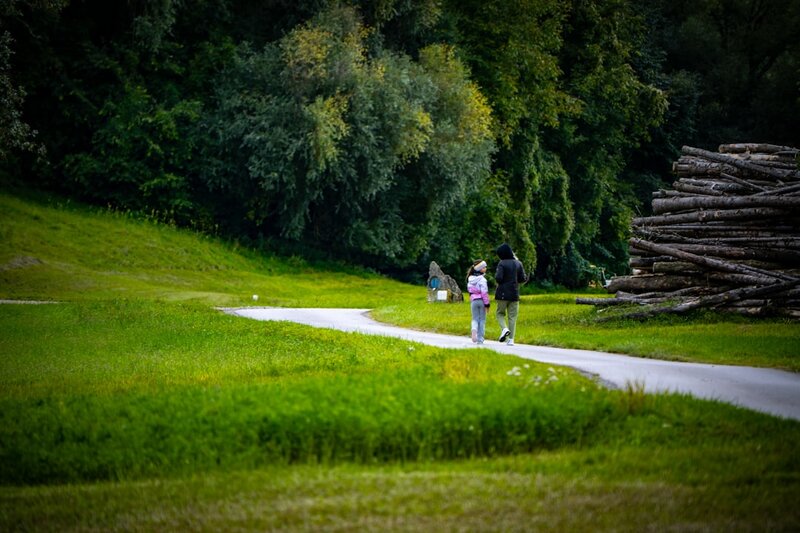
Ireland is at its best for walking right now, and the trails through Wicklow, Killarney and Connemara are exactly where you want to be on a late August afternoon. There is just one small resident of that landscape worth knowing about, and it is roughly the size of a poppy seed.
Most tick bites cause no harm. But a small proportion of Irish ticks carry the bacteria behind Lyme disease, and the people most likely to spend hours in long grass and gardens are very often in their 50s, 60s and 70s. What to look for takes five minutes to learn.
TL;DR
- Irish ticks are active from spring to autumn in woodland edges, bracken, long grass and rough grazing. Kerry, Wicklow and Galway are long-identified higher-risk counties.
- A tick usually needs around 24 hours attached before Lyme transmission risk becomes meaningful, so prompt removal is the single most effective thing you can do.
- Around three quarters of people with Lyme disease get an expanding red rash (erythema migrans), 3 to 30 days after the bite, usually 5cm or more across and often not itchy or sore.
- Lyme neuroborreliosis, the serious nervous-system form, is notifiable in Ireland at roughly 8 to 21 cases a year. Milder forms are not notifiable and are estimated in the hundreds annually.
- Treated early with antibiotics, Lyme disease responds very well. The risk after 50 is not a worse illness, but fatigue and joint aches being written off as “just getting older”.
What ticks actually are, and where they live
Ticks are not insects. They are tiny arachnids, related to spiders and mites, and the species you will meet in Ireland is Ixodes ricinus, the sheep or deer tick. They do not jump or fly. They climb to the tip of a grass blade or bracken frond and wait for something warm to brush past.
That tells you where the risk sits: woodland path edges, bracken, long grass, rough grazing and shaded, humid clearings. Deer and sheep carry ticks around the landscape, which is why upland and wooded areas tend to have more of them. Ticks collected in Kerry, Galway, Connemara and Wicklow have been confirmed to carry Borrelia bacteria, and a 2010 study found Connemara notably endemic. The season runs from roughly March to October, so late summer is firmly in it.
Why this matters more after 50
Lyme disease is not age-specific. What changes with age is exposure and detection. Exposure goes up, not down: retirement often means more gardening, more hillwalking, more golf, more time with grandchildren in fields and woods, and, for many in Ireland, farming well past 65. All good for health. It just comes with this one caveat.
Detection is the harder part. A nymph tick is about the size of a poppy seed. Spotting one behind your knee or along your hairline is difficult at any age, and harder if your eyesight has changed or twisting to check your own back is not as easy as it once was. Plenty of people never see the tick and never see the rash, because it appeared somewhere they cannot see.
Then there is the diagnostic trap worth naming plainly. Early Lyme symptoms are tiredness, aching joints, headache and a flu-like heaviness: exactly the symptoms people over 50 are most often encouraged to accept as normal ageing. They are not normal ageing. A new, persistent change in how you feel deserves a look, whatever your age.
The rash worth knowing by sight
The classic early sign is erythema migrans: a red patch spreading outwards from the bite, often with a clearer centre, giving the well-known bullseye look. The details that catch people out:
- It appears 3 to 30 days after the bite, most often around 7 to 14 days, so it will not be there the evening you get home.
- It is usually 5cm or more across and keeps expanding over days.
- It is often not itchy and not painful, which is precisely why it gets ignored.
- It does not always have a bullseye; it can be a solid, evenly red patch.
Roughly three quarters of people with Lyme disease develop this rash, and it is enough on its own for a GP to diagnose and treat on clinical grounds. Left untreated, the infection can go on to affect the nerves, joints or heart, which is the outcome early treatment exists to prevent.
How to remove a tick properly
Do it calmly and mechanically. Folk remedies make things worse.
- Use fine-tipped tweezers or a purpose-made tick remover. Grasp the tick as close to the skin as you can.
- Pull steadily upwards. Do not twist, jerk or squeeze the body of the tick.
- Clean the area with soap and water or antiseptic, and wash your hands.
- Note the date and where on your body it was. That is genuinely useful to a GP three weeks later.
Do not apply Vaseline, alcohol, a lit match or nail varnish; these can make the tick regurgitate into the bite. If a mouthpart stays behind, leave it. The skin deals with it much as it would a splinter.
After a bite: what to watch and when to ring the GP
Most bites need nothing but removal and a note in the diary. Routine preventive antibiotics after a bite with no symptoms are not generally recommended in Ireland.
Contact your GP if, in the weeks after a bite or after time in tick country, you develop a spreading rash, an unexplained flu-like illness, facial weakness or drooping, new nerve pain or numbness, or joint swelling. Mention the walk, even if you never saw a tick. It changes how a clinician reads your symptoms.
One point on testing, because it causes real frustration. Blood tests look for your immune response rather than the bacteria, and antibodies take weeks to build, so a test taken too early can come back negative in someone who genuinely has Lyme disease. If the rash is there, treatment should not wait on a result.
Prevention that fits a real life
None of this should keep you indoors. The benefits of walking, gardening and time in green space comfortably outweigh the risk of a tick bite. A few habits cover most of it:
- Walk the centre of paths rather than brushing through bracken and long grass.
- Light-coloured trousers tucked into socks look unfashionable and work extremely well, because you can see a tick crawling.
- Use a DEET-based repellent on exposed skin if you are heading into rough ground.
- Do a tick check when you get home, before the shower: behind the knees, groin, waistband, armpits, navel, hairline and behind the ears. Use a hand mirror or ask a partner for your back.
- Check dogs too. They bring ticks into the house and onto laps.
For reliable Irish information, the HSE’s Health Protection Surveillance Centre publishes factsheets and surveillance reports and runs a “be tick aware” campaign each season. Tick Talk Ireland, the country’s first Lyme disease charity, set up in 2009 by two people who had the illness themselves, offers awareness resources and peer support.
At Críonna Health we keep coming back to the same principle: the goal is never to make later life smaller or more cautious. It is to give you the handful of facts that let you carry on doing what is good for you. A tick check at the back door is a small price for a life spent outdoors.
This article is general information, not individual medical advice. If you are concerned about a bite, a rash or new symptoms, contact your GP.
📷 Photo by Scorn Pion on Unsplash