Most of us have a story about someone fainting. A warm church, a long queue, a bad bit of news, and down they went. For most of life, a faint is exactly what it looks like: dramatic, brief, and harmless. After 50, that assumption stops being safe.
Syncope (pronounced “SIN-co-pee”) is the medical word for a temporary loss of consciousness caused by a drop in blood flow to the brain. It is one of the most common reasons older adults end up in an Irish emergency department, and one of the most commonly brushed off. Here is what is actually going on, and what to do about it.
TL;DR
- Syncope is a brief loss of consciousness caused by reduced blood flow to the brain. After 50 it is more likely to have a cardiovascular cause than a harmless one.
- TILDA research found orthostatic hypotension in 6.9% of older adults in Ireland, rising to 18.5% of those aged 80 and over. Impaired blood pressure stabilisation affected 15.6%, rising to 41.2% in the over-80s.
- Red flags include fainting with no warning, while sitting or lying down, during exertion, or with palpitations beforehand. These warrant urgent assessment, not reassurance.
- Ireland has specialist Falls and Syncope Units, including the service at St James’s Hospital, which sees more than 7,000 patients a year on GP referral through Healthlink.
- Driving rules apply. Blackouts likely to be cardiovascular in origin mean no driving for six months if no cause is found, or four weeks if a cause is identified and treated, and the licensing authority must be told.
What actually happens during a faint
Your brain has no meaningful fuel reserve. Interrupt its blood supply for six to eight seconds and consciousness goes. The body’s response is elegantly practical: you fall over, which puts your head level with your heart, and blood flow is restored. That is why people come round within seconds of hitting the ground, and why holding someone upright during a faint is the wrong instinct.
Recovery should be quick and complete. Prolonged confusion, tongue biting, incontinence, or unconsciousness lasting more than five minutes point away from a simple faint and towards a seizure, which is a different pathway entirely.
Why it changes after 50
Several things shift with age at once. The baroreceptors that sense blood pressure and correct it become less responsive. Blood vessels stiffen. The thirst signal weakens, so mild dehydration becomes routine rather than exceptional. Layer on the medications many people take by their sixties, and the margin for error narrows considerably.
The result is a group of causes that barely register in younger people:
Orthostatic hypotension. Blood pressure drops on standing and does not recover quickly enough. The Irish Longitudinal Study on Ageing (TILDA), which has done some of the world’s best work here, found it in 6.9% of older adults overall and 18.5% of those aged 80 and over. Impaired blood pressure stabilisation, a related problem, affected 15.6%, rising to 41.2% in the over-80s. TILDA has also linked it to recurrent, injurious and unexplained falls.
Post-prandial hypotension. Blood diverts to the gut after a large meal and pressure falls. Faints in the hour after lunch are a classic and under-recognised pattern.
Carotid sinus hypersensitivity. Pressure receptors in the neck become oversensitive, so turning the head sharply, shaving, or a tight collar can trigger a blackout. It is largely a condition of later life.
Cardiac causes. Heart rhythm disturbances, a slow heart rate, or narrowed valves such as aortic stenosis can reduce output enough to cause collapse. These matter most, because they are treatable and because leaving them untreated carries real risk.
Medications. Blood pressure tablets, diuretics, nitrates, alpha-blockers such as tamsulosin, some antidepressants and Parkinson’s medications are common culprits. So is alcohol. This is the most fixable cause on the list, which is why a medication review is often the single most useful step.
The red flags
A faint deserves urgent medical attention rather than a cup of tea if it happened:
- With no warning at all, so you had no chance to sit down
- While sitting or lying down, rather than standing
- During physical exertion
- With palpitations or chest pain beforehand
- Causing a significant injury, because that usually means there was no protective warning
- In someone with known heart disease or an abnormal ECG
- In a family where someone died suddenly and unexpectedly before 40
- More than once in the past six months
The classic benign faint has what clinicians call the three Ps: a clear provocation (heat, pain, standing too long), a prodrome (that sweaty, nauseated, tunnel-vision warning), and a postural trigger, meaning it happened while upright. When all three are present each time, the picture is reassuring. When they are not, it needs investigating.
Getting it looked at in Ireland
Start with your GP. Bring a written account of what happened, ideally including what a witness saw, since you were unconscious for the interesting part. Bring a full list of your medications, including anything bought over the counter. Your GP will typically check lying and standing blood pressure, do an ECG, and take bloods.
From there, Ireland has genuinely excellent specialist services. Falls and Syncope Units, including the unit at St James’s Hospital led by Professor Rose Anne Kenny and Professor Conal Cunningham, offer head-up tilt table testing, carotid sinus massage and prolonged cardiac monitoring. That service alone sees more than 7,000 patients a year, taking GP referrals nationwide through Healthlink. St Vincent’s University Hospital runs a falls and syncope clinic too. Ask about a referral if the cause is not obvious.
The driving question
This is the part people most want to avoid, and the part with legal weight. Under the Sláinte agus Tiomáint medical fitness to drive guidelines, developed by the Road Safety Authority with the Royal College of Physicians of Ireland, a straightforward reflex vasovagal faint with the three Ps present carries no driving restriction and no requirement to notify anyone.
But where a blackout is likely to be cardiovascular in origin, the rules for car and motorcycle drivers are firm: no driving for six months if no cause is identified, or driving may resume four weeks after the event if a cause has been found and treated. You must notify the driving licensing authority yourself. Rules for bus and lorry drivers are stricter again, and the guidelines are revised periodically, so confirm the current position with your doctor or the RSA.
Practical things that help
If orthostatic hypotension is the diagnosis, small habits do real work. Stand up in stages, sitting on the edge of the bed for a minute before rising. Drink enough fluid, particularly in warm weather or during illness. Eat smaller, more frequent meals if faints cluster after eating. Learn counter-pressure manoeuvres for when the warning signs start: cross your legs and tense them, or grip one hand hard with the other and pull. Both push blood back towards the brain and can abort a faint.
Raising the head of your bed by 10 to 20 centimetres helps some people, and compression stockings help others. Ask about salt and fluid intake rather than deciding alone, since the advice changes completely if you have heart failure or high blood pressure. And never stop a prescribed medication yourself, even one you suspect is the cause. Bring that to your GP or pharmacist instead.
The point worth holding onto
A single faint in a hot room after standing for an hour is probably what it looks like. A blackout that arrives without warning, or happens while you are sitting down, is a different event wearing the same costume. The instinct to downplay it is understandable, especially when a driving licence and a sense of independence feel like they are on the line. But an unexplained blackout that turns out to be a treatable heart rhythm problem is very good news, provided somebody looks for it. At Críonna Health we write about ageing as something to navigate well rather than endure quietly, and this is a clear example: the investigation is straightforward, the services exist, and the answer is usually something that can be fixed.
This article is for general information and is not a substitute for individual medical advice. If you have lost consciousness, speak to your GP.
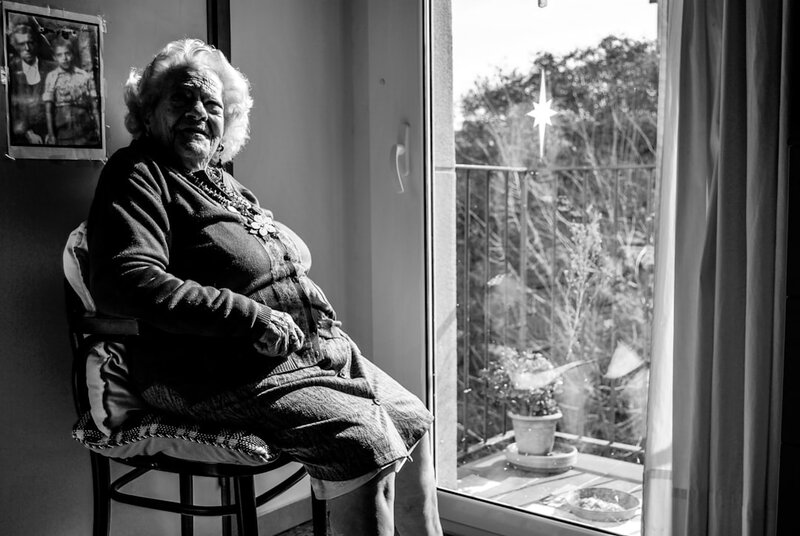
📷 Photo by Maica Capdevila on Unsplash