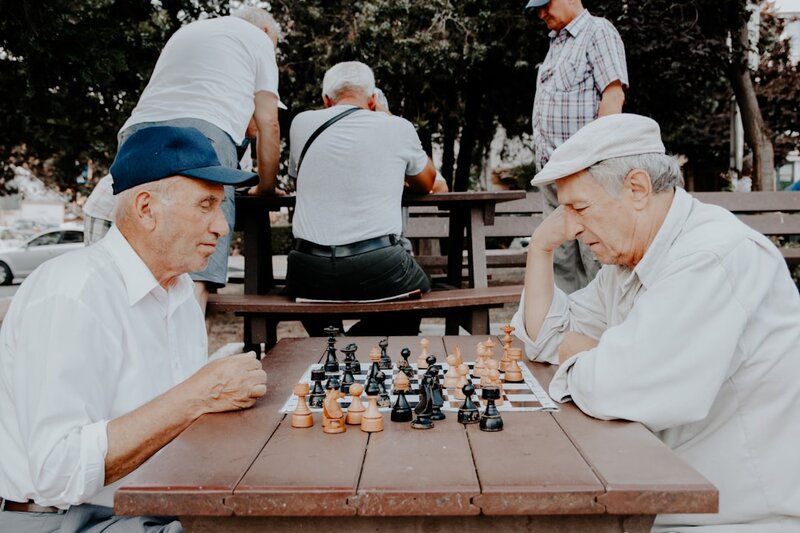
There is a question that comes up time and again in conversations about ageing well: can puzzles and brain games really keep your mind sharp? It is a fair question. Walk into any bookshop and you will find shelves of crossword collections, Sudoku books and brain-training guides, all promising to ward off cognitive decline. Meanwhile, apps like Lumosity and Peak claim to sharpen your memory in minutes a day.
But what does the evidence actually say? And more importantly, what practical steps can you take — right here in Ireland — to give your brain the best chance of staying well as you get older?
TL;DR
- Puzzles, crosswords and brain games can strengthen specific cognitive skills, but the evidence that they prevent dementia is limited
- The biggest brain benefits come from combining mental stimulation with physical activity, social connection and good nutrition
- Novelty matters — learning something genuinely new (a language, a musical instrument, a new card game) challenges the brain more than repeating familiar puzzles
- Social games like chess, bridge and card groups offer a double benefit: mental challenge plus human connection
- Ireland has excellent free and low-cost options through Active Retirement groups, Men’s Sheds, public libraries and ETBs
What the Research Tells Us
The short answer is: mental stimulation is good for your brain, but it is not a magic shield against dementia.
A landmark 2019 study published in JAMA Internal Medicine, drawing on data from nearly 20,000 adults over 65, found that people who regularly engaged in intellectually stimulating activities — reading, puzzles, games, writing letters — experienced slower rates of memory decline than those who did not. The TILDA (The Irish Longitudinal Study on Ageing) research at Trinity College Dublin has consistently shown that cognitive engagement, alongside physical activity and social participation, is one of the key pillars of healthy ageing in Ireland.
However, it is important to be honest: most brain-training apps have not been shown to reduce dementia risk. What they can do is improve performance on the specific tasks you practise. If you do Sudoku every day, you will get better at Sudoku — but that improvement does not necessarily transfer to remembering where you left your keys or recalling a name at a social gathering.
The concept researchers use is cognitive reserve — the idea that a lifetime of mental engagement builds resilience in the brain, giving it more capacity to cope with age-related changes. Think of it as a buffer. The more varied and challenging your mental activity over the years, the larger that buffer tends to be.
Why Novelty Matters More Than Repetition
Here is something that surprises many people: doing the same crossword puzzle format every morning may be enjoyable, but it is not the most effective way to challenge your brain. Your brain thrives on novelty — on being asked to do something it has not done before.
This is why learning a new skill in your 50s, 60s or 70s is so powerful. Whether it is picking up Irish through an ETB class, learning to play chess for the first time, joining a bridge club, or trying your hand at a jigsaw puzzle after years of crosswords, the act of doing something unfamiliar creates new neural pathways.
A 2013 study from the University of Texas found that older adults who learned a complex new skill — such as digital photography or quilting — showed greater improvements in memory than those who simply did familiar puzzles or socialised. The key word is complex: activities that require sustained effort, problem-solving and learning from mistakes.
The Social Advantage: Why Playing with Others Beats Playing Alone
One of the most consistent findings in ageing research is that social connection protects the brain. This is where games like chess, bridge, card games, board games and even pub quizzes come into their own.
When you sit across a table from someone — whether it is a game of 45s in a community hall or a chess match in a library — you are not just exercising your memory and strategic thinking. You are also reading facial expressions, engaging in conversation, laughing, negotiating and sharing stories. That combination of mental and social stimulation is far more powerful than any app.
TILDA research has highlighted that social isolation and loneliness are significant risk factors for cognitive decline among older adults in Ireland. Conversely, regular social participation — including group games and activities — is associated with better cognitive outcomes.
In Ireland, there are wonderful opportunities to combine brain exercise with social connection:
- Active Retirement Ireland groups run chess clubs, bridge groups, quiz nights and board game sessions in communities across the country
- Men’s Sheds often organise chess, draughts and card game mornings alongside their workshop activities
- Public libraries increasingly host board game afternoons, chess clubs and puzzle groups — all free of charge
- ICA guilds (Irish Countrywomen’s Association) run quiz nights and card evenings in rural communities
- Age Action and ALONE offer befriending programmes that can include shared activities
A Practical Menu for Brain Health
Rather than relying on any single activity, the evidence points towards a varied approach. Think of it as a menu rather than a prescription — choose what appeals to you and mix things up regularly.
Word and Number Puzzles
Crosswords, Sudoku, word searches and acrostics all exercise language processing, pattern recognition and working memory. The Irish Times, Irish Independent and RTÉ all offer free daily puzzles online. If you prefer paper, most newsagents stock puzzle books. Try alternating between different types rather than sticking to the same format.
Strategic Games
Chess, draughts, backgammon, bridge and card games like 25s and 45s require forward planning, pattern recognition and adapting to an opponent’s moves. These are particularly valuable because they combine cognitive challenge with social interaction. Many libraries and community centres run free chess clubs.
Jigsaw Puzzles
Often underestimated, jigsaw puzzles engage visual-spatial reasoning, fine motor skills and concentration. A 2018 study found that jigsaw puzzling was associated with better visuospatial cognition in older adults. They are also wonderfully meditative — a form of mindfulness in disguise.
Digital Brain Training
Apps like Lumosity, Peak, Elevate and BrainHQ offer structured exercises targeting memory, attention, processing speed and problem-solving. While the evidence for preventing dementia is limited, they can be a convenient daily mental workout, especially if you are housebound or have limited mobility. Most offer free versions. If you are new to smartphones or tablets, Age Action runs free digital literacy classes, and ALONE’s technology support line (0818 222 024) can help you get set up.
Learning Something New
This is the gold standard. Education and Training Boards (ETBs) across Ireland offer free or low-cost courses in languages, art, music, computing and more for adults of all ages. Many are specifically designed for people over 50. Learning Irish, picking up a musical instrument, or joining a creative writing class all provide the kind of sustained, novel cognitive challenge that research suggests is most beneficial.
The Bigger Picture: Brain Health Is Whole-Body Health
It is worth stepping back and remembering that your brain does not exist in isolation. The single most evidence-backed intervention for brain health is not a puzzle — it is physical exercise. Regular aerobic activity (brisk walking, swimming, cycling) increases blood flow to the brain, promotes the growth of new brain cells and reduces the risk of vascular dementia.
The HSE’s Chronic Disease Management (CDM) Programme, available through your GP for those with a medical card or GP visit card, supports the management of conditions like diabetes and cardiovascular disease that directly affect brain health.
A balanced approach to brain health after 50 includes:
- Moving your body — at least 150 minutes of moderate activity per week
- Staying socially connected — through clubs, volunteering, family, friends
- Challenging your mind — with varied, novel activities
- Eating well — the Mediterranean and MIND diets are associated with better cognitive outcomes
- Sleeping well — 7-8 hours of quality sleep supports memory consolidation
- Managing health conditions — keeping blood pressure, cholesterol and blood sugar in check
Getting Started: Small Steps That Add Up
If you are not currently doing much in the way of mental stimulation, do not feel you need to overhaul your life overnight. Start small:
- Pick one new activity this week — a crossword, a chess app, a jigsaw puzzle
- Make it social — ask a friend, partner or neighbour to join you for a card game or quiz
- Ring your local library — ask what free activities they run for adults. You may be surprised
- Check your local Active Retirement group — visit activeretirementireland.com to find your nearest branch
- Try something unfamiliar — if you always do crosswords, try Sudoku. If you play cards, try chess. The novelty is what counts
The most important thing is not which activity you choose, but that you keep your brain engaged, curious and — ideally — having fun while doing it. At Críonna Health, we believe that ageing well is not about fighting decline — it is about embracing the things that keep life interesting, stimulating and connected.
Your brain is remarkably adaptable, even well into your 70s, 80s and beyond. Give it something new to chew on today.
📷 Photo by Vlad Sargu on Unsplash