There is something remarkable about what happens when a group of people raise their voices together. Whether it is a handful of neighbours gathering in a parish hall or a packed community choir belting out a favourite tune, music has a way of lifting spirits that few other activities can match. And the good news? Science increasingly backs up what musicians have long known — that making music is genuinely good for your health, particularly as you get older.
If you have ever hummed along to the radio and thought I’d love to do more of that, this guide is for you. Here at Críonna Health, we believe that healthy ageing is about far more than diet and exercise — it is about joy, connection, and keeping your whole self engaged.
TL;DR
- Singing and music-making have proven benefits for lung function, cardiovascular health, cognitive sharpness, and mental wellbeing after 50
- Group music activities reduce loneliness and social isolation — a major health risk for older adults in Ireland
- Community choirs, music therapy, and programmes like Music Generation and Bealtaine Festival make music accessible regardless of experience or ability
- TILDA research shows that cultural participation is linked to better self-rated health and lower depression rates among older adults in Ireland
- You do not need any musical background to start — community groups across Ireland welcome complete beginners
What the Research Says: Music and Healthy Ageing
A growing body of international research highlights the health benefits of active music-making for older adults. A landmark review published in the British Journal of Psychiatry found that group singing programmes significantly reduced anxiety and depression in adults over 60. Meanwhile, research from the University of Helsinki has shown that even listening to music activates multiple brain regions simultaneously, supporting memory, attention, and emotional regulation.
Closer to home, findings from TILDA (The Irish Longitudinal Study on Ageing) consistently show that cultural participation — including music — is associated with better self-rated health, greater life satisfaction, and lower rates of depression among Irish adults aged 50 and over. In fact, TILDA data suggests that socially engaged older adults have measurably better cognitive function than those who are more isolated.
Physical Health: More Than Just a Good Time
Singing is a surprisingly physical activity. When you sing, you engage your diaphragm, intercostal muscles, and core — effectively giving your respiratory system a workout. Research published in the European Respiratory Journal found that regular singing improved lung capacity and breathing control in people with chronic obstructive pulmonary disease (COPD). For older adults, this translates to better breath support, stronger respiratory muscles, and improved posture.
Playing instruments offers similar benefits. Even something as simple as a hand drum or a bodhrán engages fine motor skills, coordination, and rhythm — all of which support neuroplasticity and help maintain dexterity as we age.
There is also emerging evidence linking group singing to cardiovascular benefits. A Swedish study found that choir members’ heart rates tended to synchronise during singing, promoting a calm, meditative state similar to guided breathing exercises. The deep, controlled breathing involved in singing naturally lowers cortisol levels and can help manage blood pressure.
Cognitive Benefits: Keeping Your Mind Sharp
Learning a new song, reading lyrics, keeping time with others, and remembering melodies — music engages an extraordinary number of cognitive processes simultaneously. This makes it one of the most effective forms of brain training available.
A 2020 study in the Journal of the American Geriatrics Society found that older adults who participated in regular music activities showed slower rates of cognitive decline compared with non-participants. Music therapy, in particular, is now used in dementia care settings across Ireland and internationally, helping people with Alzheimer’s disease access memories and emotions through familiar songs even when verbal communication has become difficult.
The HSE recognises the therapeutic value of music, and music therapists work within many Irish health services, including mental health teams, disability services, and older adult care settings. The Irish Association of Creative Arts Therapists (IACAT) maintains a register of qualified music therapists across the country.
Mental Wellbeing: Connection, Confidence, and Joy
Perhaps the most powerful benefit of music after 50 is what it does for your mental health. Loneliness and social isolation are significant health risks for older adults — ALONE Ireland reports that loneliness can be as harmful to health as smoking 15 cigarettes a day. Music offers a natural antidote.
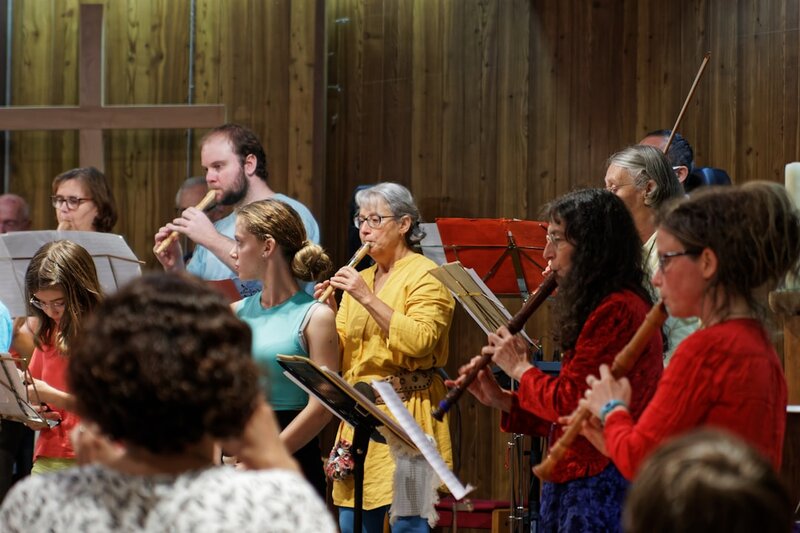
Joining a choir or music group creates an immediate sense of belonging. You share a common purpose, you rely on one another, and there is something deeply bonding about making music together. Research from the University of Oxford found that singing in a group bonded people more quickly than other shared creative activities, thanks to the release of endorphins and oxytocin during group singing.
For people navigating retirement, bereavement, or major life transitions, music can provide structure, purpose, and a reason to get out of the house each week. Many choir members describe it as the highlight of their week — not because of the music alone, but because of the friendships and sense of community it fosters.
Getting Involved: Music Opportunities Across Ireland
One of the best things about music is that it is genuinely accessible. You do not need to read music, own an instrument, or have any formal training to get started. Here are some avenues worth exploring:
- Community choirs: Groups like Sing Ireland (the national body for group singing) can help you find a choir near you. Many welcome complete beginners and do not audition.
- Active Retirement Ireland: Many local Active Retirement groups include music sessions, sing-alongs, and instrument classes as part of their weekly programmes.
- Men’s Sheds: Some Sheds have introduced music-making as an activity, from ukulele groups to traditional Irish music sessions.
- Bealtaine Festival: This annual Age & Opportunity festival each May celebrates creativity in older age, with music workshops, performances, and participatory events held nationwide.
- Music Generation: While primarily focused on young people, some Music Generation partnerships run intergenerational programmes that welcome older adults.
- Local Education and Training Boards (ETBs): Many ETBs offer affordable music courses for adults, from guitar for beginners to voice workshops.
- Music therapy: If you are managing a health condition, ask your GP about referral to a music therapist. Music therapy is available through some HSE services and private practitioners listed on the IACAT register.
Traditional Irish Music: A Living Heritage
Ireland has a particularly rich musical culture, and traditional music sessions (seisiúin) in pubs and community centres across the country offer a warm, inclusive way to engage with music at any age. Comhaltas Ceoltóirí Éireann, the national body for traditional Irish music, has over 400 branches throughout Ireland, many of which run classes for adults of all levels.
Learning to play a tin whistle, concertina, or bodhrán can be a wonderfully social experience, and the seisiún tradition is built on participation rather than performance — everyone is welcome to join in at their own level.
Practical Tips for Getting Started
- Start where you are. Sing along to the radio, hum in the shower, tap rhythms on the kitchen table. You are already making music.
- Try a taster session. Most choirs and music groups offer a free trial. There is no commitment required to give it a go.
- Do not worry about being “good enough.” Community music is about participation, not perfection. Everyone starts somewhere.
- Consider your interests. Do you love classical? Folk? Pop? Gospel? There is likely a group near you that sings what you enjoy.
- Check local libraries and community centres. Many run free or low-cost music events and workshops.
- Talk to your GP. If you are recovering from an illness or managing a mental health condition, ask about social prescribing — your GP may be able to connect you with local music programmes.
A Note from Críonna Health
At Críonna Health, we are passionate about the things that make ageing well not just possible but genuinely enjoyable. Music is one of those things. Whether you find your way to a community choir, pick up a tin whistle for the first time, or simply sing a little louder on your evening walk, you are doing something wonderful for your health — body, mind, and spirit.
The evidence is clear: music is medicine. And in Ireland, with our deep musical traditions and thriving community groups, the opportunity is right on your doorstep.